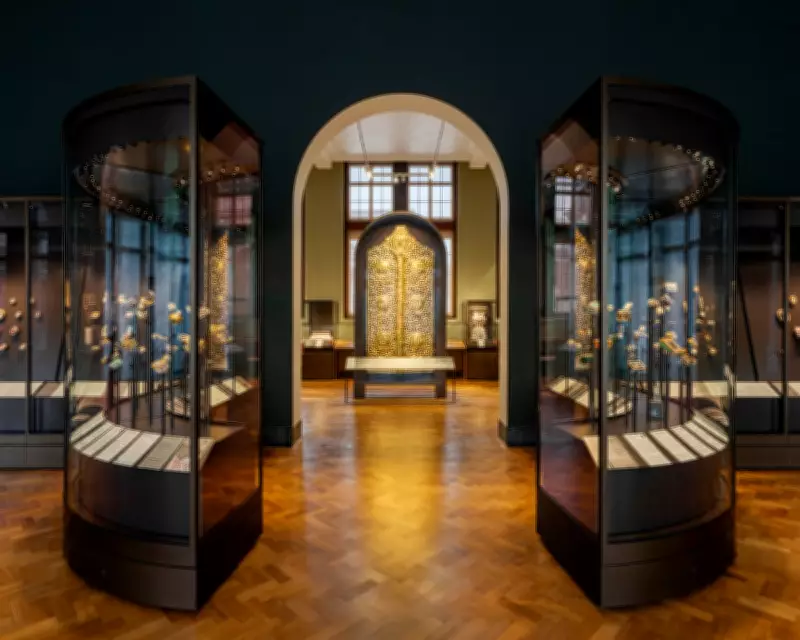
V&A's Gilbert Galleries Reopen with a Transformative Display
The Victoria and Albert Museum in London has unveiled a major redesign of the Rosalinde and Arthur Gilbert Collection, expanding its presentation to seven rooms in collaboration with Citizens Design Bureau. This revamp not only showcases the exquisite decorative items but also boldly addresses the critical question of their origins and acquisition history.
A Legacy of Beauty and Wealth
Bequeathed by Sir Arthur Gilbert after his wife Rosalinde's death in 1995, the collection began in the 1960s, driven by a passion for what Rosalinde termed beautiful things. The Gilberts, who started as fashion entrepreneurs in wartime London before achieving success as property developers in Los Angeles, amassed over 1,000 items. These include European gold and silver works, Italian micromosaics, and enamelled portrait miniatures, often linked to historical figures like Tsarina Catherine II or Napoleon.
Highlights include Frederick the Great's 1765 mother-of-pearl snuffbox adorned with gold and rubies, and a 1781 enamel miniature of Queen Charlotte. The redesigned space now displays roughly half the collection, organized by craft, with reduced silver displays to counter shiny-fatigue and expanded micromosaic galleries that must be seen to be believed.

Provenance Takes Center Stage
The reopening marks a significant shift in museum curation, reflecting a growing collective conscience about artifact acquisition. While UK museums typically resist deaccessioning contested items like the Parthenon marbles, the V&A has introduced a nuanced approach. In 2018, the museum created a provenance and spolia curator role, funded by the Gilbert Trust for the Arts, to research and disclose item histories.
New dual captions now reveal both the provenance known at acquisition and the full story, often detailing Nazi-looted origins. This is particularly poignant given the Gilberts' Jewish heritage. Additionally, the display addresses fakes and forgeries with secondary captions that identify less genuine components, such as a c.1580 tabernacle broken down into its real and fabricated parts.
Implications for the Heritage Industry
This honest approach represents a sea change in museum practices, encouraging visitors to question labels and consider how items came to be displayed. The V&A plans to apply this methodology across its other collections, setting a precedent for the wider heritage sector. The Gilbert Galleries not only offer aesthetic pleasure in a spacious setting with tactile exhibits but also foster a deeper, more critical engagement with history.
The Rosalinde and Arthur Gilbert Collection at V&A South Kensington reopens on 14 March, inviting the public to explore a treasure trove that challenges conventional museum narratives.