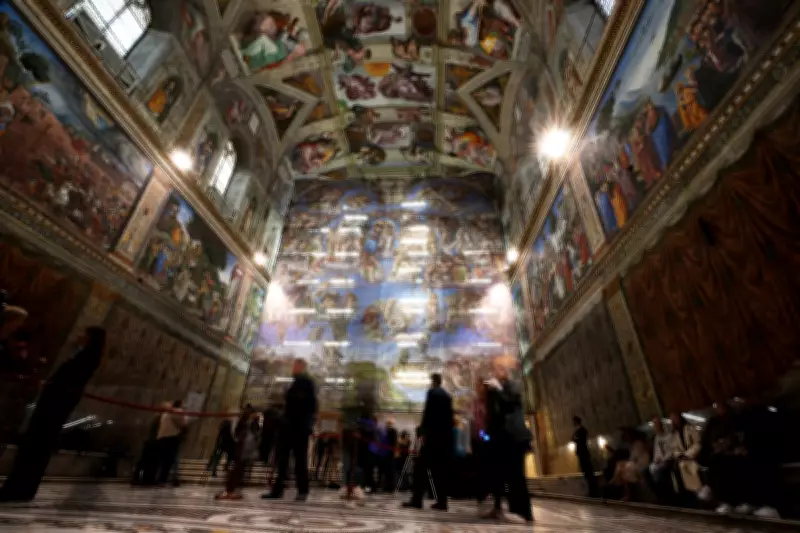
In a meticulous conservation effort, Vatican restorers are carefully removing a pervasive salty white film that has coated Michelangelo's monumental fresco, "The Last Judgment," within the Sistine Chapel. This chalky accumulation, resulting from decades of visitor presence and environmental factors, is being delicately cleaned ahead of Easter, with the public still able to view a digital reproduction during the process.
The Cleaning Operation Unveiled
The Vatican provided media access to the restoration site on Saturday, revealing a floor-to-ceiling scaffolding that currently obscures the iconic depiction of heaven and hell. Officials anticipate completing the cleaning by early April, allowing the masterpiece to be fully visible once more. In the interim, visitors will see a screen covering the scaffolding, displaying a high-quality reproduction of the fresco.
Causes of the Salt Buildup
Vatican Museum experts explained that the white film is primarily composed of salt, formed through a chemical reaction. Fabio Moresi, head of the scientific research team overseeing the project, detailed that lactic acid from human sweat interacts with calcium carbonate in the wall, leading to this deposition. With nearly 25,000 daily visitors to the Vatican Museums, the issue has intensified over time.

Climate change exacerbates the problem, as increased temperatures cause more sweating and higher humidity levels, accelerating the reaction with the fresco's surface. Barbara Jatta, chief of the Vatican Museums, likened the film to a "cataract" that obscures the artwork's original vibrancy.
Restoration Techniques and Visible Results
Restorers are employing a gentle method to cleanse the fresco: applying sheets of Japanese rice paper soaked in distilled water to dissolve and wipe away the salt film. Viewed up close from the scaffolding, the contrast is stark. Uncleaned sections appear dusty and muted, while cleaned areas reveal Michelangelo's vivid colors and intricate details, such as the hair and crucifixion wounds on the central figure of Jesus.
Historical Context of the Sistine Chapel
The Sistine Chapel, named after Pope Sixtus IV who commissioned its construction in the 15th century, houses multiple Renaissance masterpieces. Pope Julius II later enlisted Michelangelo to paint the famed ceiling, including "The Creation of Adam," between 1508 and 1512. Subsequently, Pope Clement VII commissioned "The Last Judgment" in 1533, which now dominates the altar wall.
While other frescoes in the chapel undergo annual nighttime cleanings using removable cherry-pickers, "The Last Judgment" presents unique logistical challenges. Its position behind the raised altar necessitates a fixed scaffolding for full access, unlike the more flexible equipment used elsewhere.
Past and Future Preservation Efforts
The Sistine Chapel previously underwent a comprehensive restoration from 1979 to 1999, removing centuries of grime, smoke, and wax. Small preserved patches from before that restoration remain visible on the upper scaffolding, showcasing a nearly blackened wall as a reminder of the fresco's prior state.
Rather than limiting visitor numbers, the Vatican is exploring technological solutions to manage humidity, such as advanced filtration systems, to prevent future salt buildup. This proactive approach aims to balance public access with the long-term preservation of this cultural treasure, ensuring that Michelangelo's vision endures for generations to come.