Unravelling the Unlucky Friday the 13th: Origins and Superstitions
The second Friday the 13th of 2026 has arrived, a date deeply ingrained in popular culture as a symbol of misfortune and ill omens. This year presents a particularly ominous triple threat, with the 13th day of the month falling on Fridays in February, March, and November, amplifying anxieties for the superstitious among us.
The Biblical Roots of the Number 13
The superstition surrounding the number 13 is widely believed to trace back to the Last Supper, where Jesus Christ and his 12 disciples gathered on Maundy Thursday. This event, occurring the night before Christ's crucifixion on Good Friday, involved 13 individuals, linking the number to Judas Iscariot, the betrayer. Consequently, 13 has been deemed imperfect and unlucky, contrasted with the number 12, which represents completeness, such as the months in a year or the signs of the zodiac.
The Knights Templar and the Cursed Date
The fusion of Friday and the 13th as an unlucky date is often attributed to a dark historical event: the arrest of hundreds of Knights Templar by King Philip IV of France on Friday, October 13, 1307. Under pressure from Pope Clement V, the Catholic crusaders were apprehended based on allegations from an excommunicated former member. These claims, which accused new recruits of spitting on the cross, denying Christ, and engaging in homosexual acts during initiations, were likely fabricated.

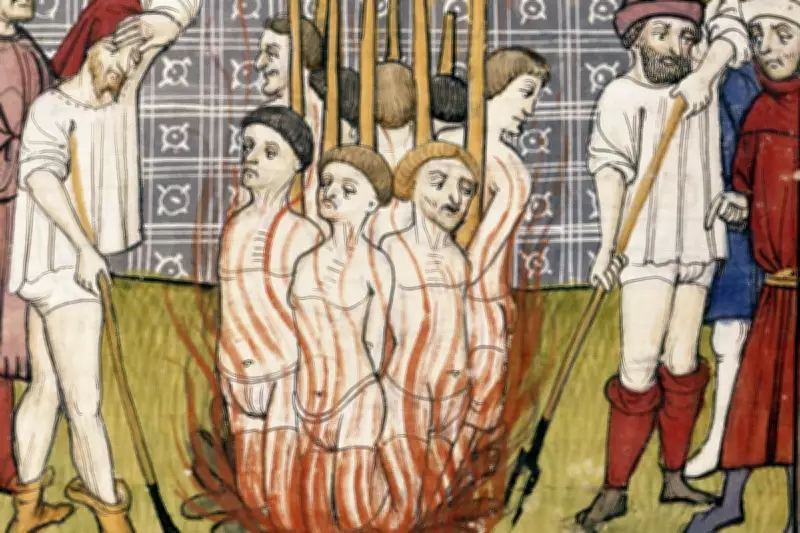
They served as a convenient pretext for King Philip to persecute the wealthy order and erase debts he owed them following conflicts with England. Charged with moral and financial corruption, as well as worshipping false idols—often through confessions obtained under torture—many knights were later burned at the stake in Paris.
The Curse of Jacques de Molay
The Grand Master of the Knights Templar, Jacques de Molay, faced execution by burning in front of Notre Dame Cathedral. Legend holds that he cried out a curse on his persecutors, declaring, "God knows who is wrong and has sinned. Soon a calamity will occur to those who have condemned us to death." According to tradition, this event cemented Friday the 13th as a universally unlucky date, with De Molay's hex echoing through centuries.
Global Variations and Other Superstitions
An irrational fear of Friday the 13th is known as paraskevidekatriaphobia, but this superstition varies across cultures. In Spanish-speaking countries and Greece, Tuesday the 13th is considered unlucky, while in Italy, it is Friday the 17th that evokes fear. Other common indicators of bad luck include a black cat crossing your path, breaking a mirror, walking under a ladder, opening an umbrella indoors, and uttering the name of Shakespeare's "Scottish play" in a theatre.
These beliefs, though often dismissed as folklore, continue to influence behaviour and cultural practices worldwide, highlighting humanity's enduring fascination with omens and fate.