The Hermès Birkin has long been marketed as an exquisite leather handbag, yet in reality it functions more like a diplomatic passport—a tangible document that verifies one's membership within elite social circles. This iconic accessory is not merely expensive; it is deliberately difficult to obtain. Its scarcity is not accidental but carefully orchestrated, withheld through a theatrical purchasing process that determines who is worthy, when they may buy, and under what precise conditions.
Scrutiny Over Secret Vetting Practices
This month, Hermès faced renewed investigation after a French publication reported that boutique staff might be conducting covert background checks on potential customers. Allegations suggest employees Google clients' home addresses and scrutinise social media profiles to assess whether their prestige merits an invitation to purchase a Birkin. This quiet vetting process transforms what should be a simple retail transaction into a rigorous social evaluation for one of fashion's most conspicuous status symbols.
From Humble Origins to Royal Accessory
The Birkin made its official debut in 1984, born from relatively modest beginnings as a practical travel bag. Despite its subsequent elevation to luxury icon, the bag's adoption among European royalty presents a curiously patchy pattern. While many aristocratic women maintain a respectful distance, certain royal figures have embraced the Birkin with particular enthusiasm.

The Duchess Who Defied Convention
If any British royal-adjacent figure has appeared completely unimpressed by the Birkin's velvet-rope mystique, it is Sarah Ferguson, the former Duchess of York. Often dubbed the 'Duchess of Greed' by tabloids, Fergie has demonstrated legendary spending habits, frequently acquiring luxury items with funds she didn't possess. During a 2018 outing at Lou Lou's, an exclusive Mayfair members' club, she carried a sophisticated taupe Birkin with palladium hardware. On another occasion at the same venue, she accessorised with a vibrant fuchsia pink version.
While most Windsor women have kept the Birkin at arm's length—perhaps wary of its conspicuous consumption connotations—the title-stripped duchess has been the notable exception. She didn't merely break the British royal pattern of Birkin avoidance; she doubled down, swinging the bag with breezy confidence as someone who treats luxury as her everyday vernacular.
The Continental Royal Embrace
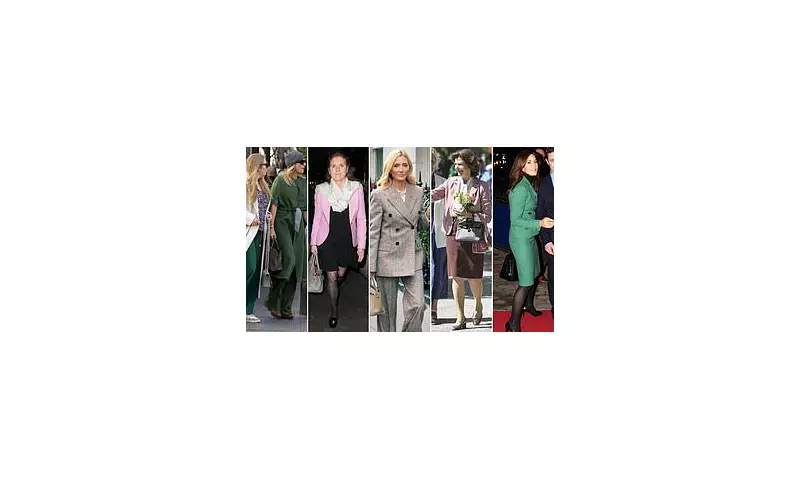
Across northern Europe, the Birkin enjoys more consistent royal patronage. In the Netherlands, Queen Máxima—never known for timid fashion choices—has been photographed with discreet grey and other coloured Birkins. Scandinavian royals have similarly embraced the accessory: Sweden's Crown Princess Victoria carries an orange Birkin, Queen Silvia prefers dark brown, and Princess Madeleine opts for taupe. Denmark's Queen Mary possesses perhaps the most exotic royal iteration—a black crocodile skin Birkin.
A Cosmopolitan Pocket of Ownership
The Greek royal diaspora represents another significant pocket of Birkin enthusiasm. Crown Princess Marie-Chantal of Greece maintains a notable collection, recently spotted in London with her Birkin 25 in Sauge green. Princess Tatiana of Greece and Denmark favours a classic tan Birkin 30, perfectly aligned with old-money aesthetics of camel leather and subtle hardware.
Mapping these sightings reveals a distinct pattern: among European royalty, the Birkin serves less as a Buckingham Palace staple and more as a continental calling card—a discreet badge of sophisticated taste among the discreetly wealthy.
The Evolution of Exclusivity
Hermès has consistently maintained that Birkin scarcity stems from artisanal craftsmanship, with each bag requiring 12-18 hours of meticulous hand-stitching by master artisans who undergo 2-6 years of training. The brand's signature saddle-stitching technique ensures unparalleled quality, but also limits production.

Yet the financial ecosystem surrounding Birkins enhances their exclusivity beyond mere craftsmanship. Retail prices begin at £8,800, while secondary markets command premiums nearing 200 percent for immediate availability. This wasn't always the case—during the early 1990s, Birkins were relatively accessible, displayed on boutique shelves. The transformation occurred between 2008-2009 during the financial crisis, when limited editions acquired dramatically higher price tags and mystique.
The Invisible Queue System
Today's Hermès purchasing experience has largely abandoned traditional waiting lists in favour of something more elusive: the wish list. Clients may express preferences for size, leather, and colour, but receive no guarantees about fulfilment timing—or even if fulfilment will occur at all. The queue hasn't disappeared; it has simply become invisible, transforming acquisition into a test of patience, access, and social standing.
Why Some Royals Abstain
This context explains why certain royal women, particularly in Britain and Jordan, might avoid the Birkin despite its luxury appeal. When a handbag allegedly comes with postcode vetting and social media scrutiny, it ceases to be merely beautiful leatherwork and becomes instead a social examination. Not every royal wishes to be seen submitting to such a test, regardless of their means or status.
The recent allegations about address verification have resonated powerfully because they confirm what many already suspected: that Birkins are awarded rather than sold, with geographical and social factors potentially tipping the scales. In northern Europe, the bag represents immaculate, controlled luxury—a discreet badge among the discreet. For the internationally mobile Greek royals, it complements a lifestyle already fluent in global fashion codes.
Ultimately, the Birkin's enduring allure stems precisely from its hard-to-get reputation. It tests more than financial capacity; it examines patience, access, social capital, and—if recent reports prove accurate—even postcode prestige. The question isn't why certain royal women carry Birkins, but why others deliberately choose not to participate in this elaborate social ritual.