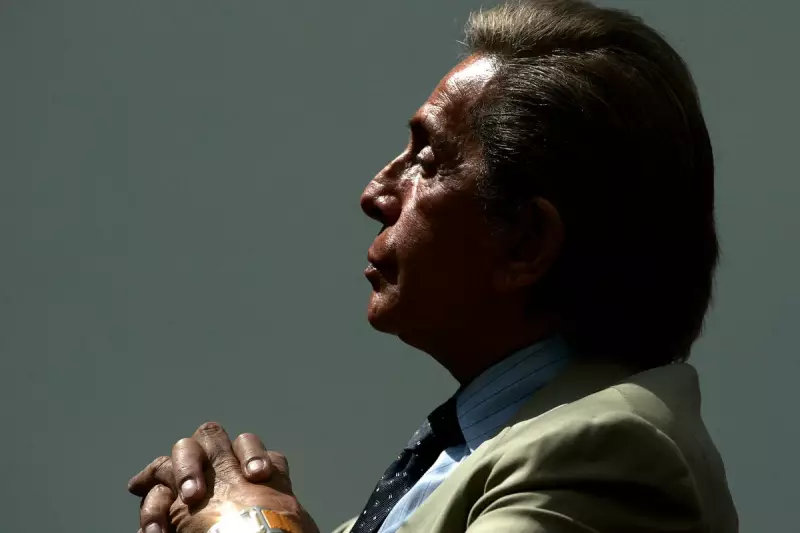
The opening day of Paris Fashion Week menswear was overshadowed by profound sadness on Tuesday as news spread of Valentino Garavani's passing. The Italian designer, who died at 93 in his Rome residence, represented one of the final towering figures from couture's golden age, leaving industry insiders and front-row guests reflecting on an irreplaceable loss to fashion history.
A Bridge Between Capitals of Elegance
While Valentino established his fashion house in Rome, his career remained deeply entwined with Parisian runways for decades. He became a rare bridge figure—Italian by origin yet completely fluent in the rituals that established Paris couture as a global institution. His work brought Roman grandeur into a system that treats fashion not merely as commerce, but as ceremonial art.
The Valentino Garavani and Giancarlo Giammetti Foundation confirmed his death in an official statement. Pierre Groppo, fashion editor-in-chief at Vanity Fair France, described him as "one of the last big couturiers who really embodied what was fashion in the 20th century." On a day dedicated to showcasing fashion's future, many attendees found themselves contemplating what the industry has lost: the couturier as a living institution.

Defining Codes and Celebrity Culture
Groppo highlighted the distinctive visual codes that made Valentino's work instantly recognisable—"the dots, the ruffles, the knots"—and credited his generation with inventing modern celebrity culture. Valentino's vision centered on a simple yet powerful principle: make women appear luminous and create unforgettable moments.
He dressed iconic figures including Jacqueline Kennedy Onassis and Elizabeth Taylor, cemented his signature "Valentino red" in public consciousness, and—through his enduring partnership with Giancarlo Giammetti—transformed the designer into part of the spectacle, as recognisable as the elite clients occupying his front rows.
The End of a Fashion Era
Prominent fashion writer Luke Leitch framed the loss in monumental terms, calling Valentino "the last of the fashion 'leviathans of that generation'" and declaring it absolutely the conclusion of a particular class of designer. These were figures whose names alone could sustain global fashion houses, whose authority derived not from viral trends but from enduring permanence.
Even as he aged, Valentino maintained his presence at his house's couture and ready-to-wear shows, radiating quiet grandeur from his front-row seat until eventually withdrawing from public life. For many in Paris on Tuesday, the loss felt deeply personal precisely because Valentino's world transcended national boundaries.
A Lifestyle Beyond Fashion
Groppo remembered the designer as "very much more than a fashion brand," adding "It was a lifestyle." That lifestyle—characterised by couture polish, social glamour, and the belief that elegance constitutes a form of power—remains a reference point even as fashion accelerates toward louder branding and faster production cycles.
Chinese fashion influencer Lolo Zhang, attending Louis Vuitton's show in Paris, expressed her sorrow: "It's quite sad as he's so important to the fashion industry, and he contributed a lot and I cannot forget the stunning red he created. He always celebrated pure beauty, and architecture for the silhouette, and how he used color. The old era just passed by."
Delayed Realisation and Emotional Resonance
Other guests described experiencing a delayed realisation—the kind that only surfaces when a figure who seemed permanent suddenly disappears. Fashion insider Gee Claude observed: "There are some people who want to be Yves Saint Laurent, Chanel. ... There are also people who are spontaneously Valentino. It's a question of identity."
For Paris fashion observer Benedict Apinay, grief intertwined with memory, particularly the emotional charge of Valentino's final bow. "It was such a great moment. I was lucky enough to attend the last show he gave," Apinay recalled. "It was so moving because we knew at that time it was the last show."

Enduring Legacy for Younger Designers
Fashion observer Arfan Ghani highlighted what Valentino represented to emerging designers: a "classy" standard of restraint in an era that often rewards noise. "Because it was very classical materials," Ghani explained. "It wasn't as loud as a lot of other of these brands are with branding."
Paris-based sculptor Ranti Bam described Valentino using the language of form, seeing him less as a trend-follower and more as a structural artist. "As a sculptor I saw Valentino as an artist," Bam said. "He transcended fashion into sculpture. He didn't follow trends, he pursued form. That's why his work doesn't date, it endures."
The fashion house Valentino continues under new generational leadership and design direction, still showcased prominently in Paris. Yet Tuesday's atmosphere confirmed that an irreplaceable chapter in fashion history has definitively closed.