Major Artists Launch Eurovision 2026 Boycott Campaign Over Israel Participation
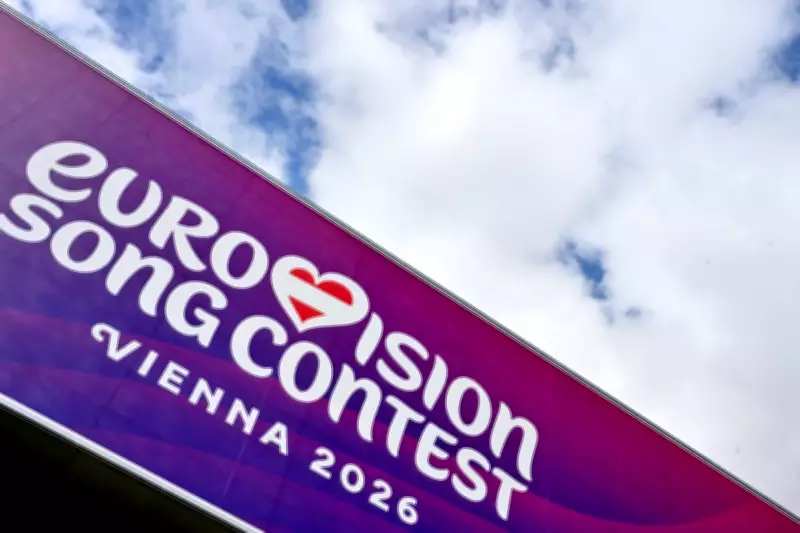
Prominent musicians including Massive Attack, Kneecap and Brian Eno have spearheaded a significant open letter campaign calling for a comprehensive boycott of the 2026 Eurovision Song Contest. The letter, organised by campaign groups No Music for Genocide and the Boycott, Divestment and Sanctions (BDS) movement, demands that the European Broadcasting Union (EBU) expel Israeli public broadcaster KAN from the competition. This development comes as the 2025 contest concluded with Austria's victory in Vienna, following a tense final where Israel's entry narrowly missed winning.
Artists Take Collective Stand Against Israeli Participation
The open letter has garnered signatures from over 1,000 artists and cultural workers, representing a substantial coalition within the music industry. Notable signatories include trip-hop pioneers Massive Attack, Irish hip-hop trio Kneecap, ambient music composer Brian Eno, pop vocalist Paloma Faith, rock musician Paul Weller, former Genesis frontman Peter Gabriel, electronic group Hot Chip, rock band IDLES, musician Nadine Shah, former Pink Floyd member Roger Waters and rapper Macklemore. The letter explicitly states: "As musicians and cultural workers, many living within the reaches of the [EBU], we reject Eurovision being used to whitewash and normalise Israel's genocide, siege and brutal military occupation against Palestinians."
Organisers have praised five countries – Spain, Ireland, Iceland, Slovenia and the Netherlands – for withdrawing from the 2025 contest in protest over Israel's participation. They also commended "the many national selection finalists committing to refuse to go to Eurovision." The artists collectively declared: "As artists, we recognise our collective agency – and the power of refusal. We refuse to be silent. We refuse to be complicit. We call on others in our industry to join us. And we stand in solidarity with all principled efforts to end complicity in every industry."

Controversy Surrounds Israel's Eurovision Involvement
Israel has consistently denied allegations of genocide in Gaza, framing its military actions as self-defence against Hamas following the 7 October 2023 attacks. However, a United Nations inquiry concluded in September 2025 that Israel is committing genocide in Gaza. In March 2025, Israel's parliament passed legislation approving the death penalty for Palestinians convicted of murdering Israelis, a measure condemned by Palestinian rights groups as racist and draconian.
Israeli analyst Dahlia Scheindlin, a visiting scholar at the University of Pennsylvania, highlighted the potential impact of a Eurovision boycott, stating: "It is a cultural phenomenon in Israel. They love it. It's seen as a total source of national pride that Israel participates and does a good job and has occasionally won. I don't have a precedent for how Israel would react if they were kicked out."
EBU Maintains Stance Amid Growing Pressure
The European Broadcasting Union has repeatedly defended its decision to permit Israel's participation in Eurovision, despite facing allegations of hypocrisy after banning Russia in 2022 following its invasion of Ukraine. The EBU did not conduct a vote regarding Israel's participation for the 2026 contest. Instead, broadcasters voted on implementing new rules designed to prevent governments and third parties from disproportionately promoting songs to influence voters.
Following its general assembly on 5 December 2025, the EBU issued a statement indicating that a "large majority" of members agreed there was no need for a further vote on participation, asserting that "the Eurovision Song Contest 2026 should proceed as planned, with the additional safeguards in place." These safeguards include modifications to the public voting system after Israel faced accusations of violating the contest's spirit by encouraging citizens abroad to use their 20 allotted votes for Israeli representative Yuval Raphael during the 2025 competition. For future contests, including Eurovision 2026, viewers will be limited to casting a maximum of 10 votes on the night.

Eurovision's Global Significance and Recent Developments
Eurovision stands as the world's largest music event, attracting 166 million viewers in 2025 – surpassing the combined viewership of the Super Bowl halftime show and the Grammy Awards. Last year's final in Basel, Switzerland proved particularly contentious, with Austrian entrant JJ securing victory with his song "Wasted Love," narrowly defeating Israel's singer Yuval Raphael.
The United Kingdom will be represented at the 2025 Eurovision Song Contest by electronic artist and producer Look Mum No Computer, whose real name is Sam Battle, performing his song "Eins, Zwei, Drei." As preparations continue for the 2026 event, the artist-led boycott movement represents one of the most significant challenges to Eurovision's political neutrality in recent years, raising fundamental questions about cultural participation amid ongoing international conflicts.