The Era of Mega Tours: Live Music's Unprecedented Boom
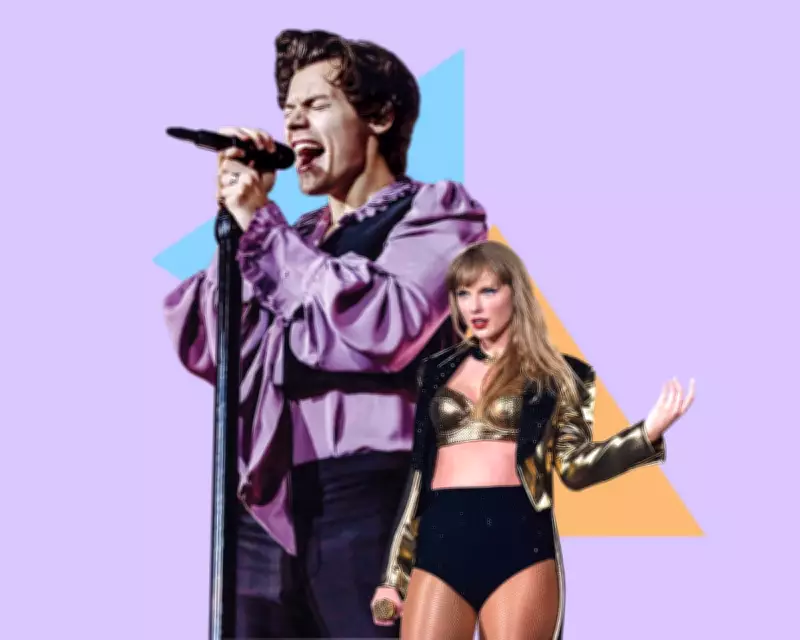
In today's music landscape, selling out a single night at London's O2 Arena is no longer the pinnacle of success it once was. Artists like Raye and Olivia Dean are now booking six nights each at the 20,000-capacity venue, while Dave secures four and Ariana Grande an astonishing ten. The scale has shifted dramatically, with Harry Styles recently announcing a staggering 30 dates at New York's Madison Square Garden, attracting over 11 million presale applications, alongside a record-breaking 12 nights at Wembley Stadium. Even Taylor Swift's eight-night run seems modest by comparison.
Billion-Dollar Tours Become the Norm
Swift's Eras tour, which generated more than $2 billion, no longer stands alone as an outlier. Coldplay's Music of the Spheres tour has spanned four years and earned $1.5 billion, while the Weeknd's After Hours Til Dawn tour has also crossed the $1 billion mark over a similar period. The phenomenon has even captured the attention of world leaders, with Mexican President Claudia Sheinbaum requesting South Korean President Lee Jae Myung's assistance in booking more BTS shows, mirroring former Canadian Prime Minister Justin Trudeau's public appeal to Swift. Singapore's government further underscored the trend by funding Swift's six shows as an exclusive Southeast Asian engagement.
Post-Pandemic Demand and Social Media Influence
Emma Bownes, senior vice-president of venue programming at AEG, attributes part of this surge to pent-up demand following the Covid-19 pandemic. "When arenas and stadiums reopened, there was a massive surge of people eager to experience live music again," she explains. The O2 Arena hosted 239 shows last year, its busiest ever, with no slowdown anticipated. "We're looking at a very busy 2026 and are already booking for 2027," Bownes adds, noting that promoters are now scheduling tours further in advance and utilizing previously quiet periods like August.

Archie Marks, a 20-year-old university student from Birmingham, exemplifies this new generation of concert-goers. He attends approximately one arena show monthly, alongside several stadium events annually, dedicating nearly all his disposable income to tickets. Marks points to TikTok as a key driver, where viral clips of special guests or new song debuts create intense fear of missing out (FOMO). "It's about having access to something exclusive," he says, citing his sister's interest in Sabrina Carpenter's tour despite minimal engagement with her music.
Tickets as Status Symbols and Production Pressures
An anonymous artist manager, who works with arena-selling acts, observes that tickets have become status symbols. "Being able to say you attended the Eras tour or a Beyoncé concert is hugely significant," she notes. While this demand benefits the industry, she expresses concern for smaller artists playing theatres and clubs, whose audiences may be diverted by costly arena shows. "Some tickets reach $600, which limits the funds available for other live music experiences," she warns.
Artists like Styles are increasingly opting for residency tours, such as Adele's 10 consecutive dates in Munich, which reduce logistical costs by setting up production once. However, this shifts travel expenses to fans. Marks expects high production values for triple-figure tickets, praising Lady Gaga's elaborate Mayhem Ball but feeling shortchanged by Lana Del Rey's simpler stadium show. "With Gaga, I saw where my money went; with Lana, it wasn't as clear," he remarks.
The artist manager highlights the pressure on acts to deliver spectacular, social-media-friendly productions. "Audiences today are easily distracted, so investing in production is essential," she says, noting that touring costs remain high post-Covid, with teams sometimes expanding to hundreds of specialists. "Even at this scale, production costs are insane, and artists aren't necessarily getting super rich from it."

Challenges and Backlash in the Ticketing Ecosystem
Ariel King, a reporter for Pollstar, notes that while demand has tapered off slightly in the US, big artists continue to dominate because they can afford to tour consistently. Mid-level acts face greater challenges with high costs and limited production budgets. Despite efforts, fan satisfaction isn't guaranteed. Styles faced backlash over ticket prices, with standing tickets at Wembley starting at £144 and some seats exceeding £440. Olivia Dean publicly criticized Ticketmaster, Live Nation, and AEG after her US tour sold out quickly, only for tickets to appear on resale sites at inflated prices—a practice the UK government plans to outlaw.
The artist manager acknowledges the difficulty of avoiding major ticketing services due to venue contracts. "It's nearly impossible to mount large shows without them," she admits, praising Dean's stance and calling for more artist boycotts to challenge their monopoly. Yet, demand persists, with Marks recalling his mother being 300,000th in line for Styles tickets. He emphasizes that bigger isn't always better, citing a £15 Perfume Genius show in Manchester as one of his best concert experiences. "It was just him, his band, and a chair—and it was immense," he reflects.