Turkish Cinema's Defiant New Wave Confronts Erdoğan's Autocracy
In a powerful display of artistic resistance, Turkish film-makers are boldly challenging the autocratic regime of President Recep Tayyip Erdoğan through a new wave of politically charged cinema. Two standout films, İlker Çatak's Yellow Letters and Emin Alper's Salvation, recently captured top honours at the prestigious Berlin International Film Festival, signalling that dissenting voices in Turkish cinema are not only surviving but thriving amidst severe political repression.
Berlin Festival Triumphs for Outspoken Turkish Films
At this year's Berlinale, Çatak's Yellow Letters secured the coveted Golden Bear award, while Alper's Salvation claimed the Silver Bear grand jury prize. These films, both co-produced by the independent Turkish company Liman, represent a significant artistic movement emerging from the remnants of Yeşilçam, Turkey's national film industry that collapsed in the late 1980s. Producers Nadir Öperli and Enis Köstepen, key figures in this cinematic renaissance, have created works that are both aesthetically bold and deeply rooted in Turkey's rich tradition of political dissent.
Examining Life Under Autocratic Rule
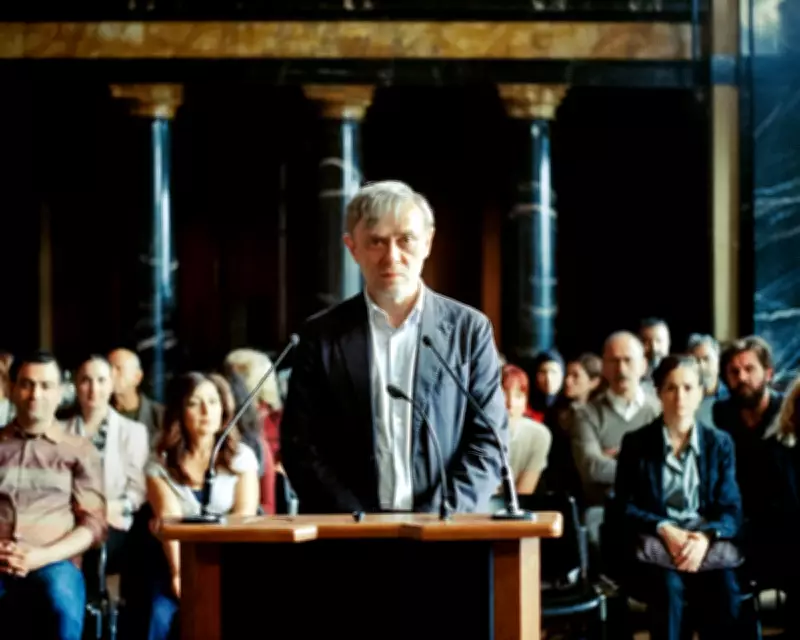
Yellow Letters offers a grimly precise depiction of the climate of fear permeating Turkish society. The film centres on Aziz, a university professor played by Tansu Biçer, who is abruptly dismissed from his position after encouraging students to participate in anti-war protests. His wife Derya, portrayed by Özgü Namal, faces similar persecution when she is purged from the state theatre. The couple's story mirrors the real-life experiences of over 1,000 academics who were condemned to "civil death" following a 2016 peace petition, losing their livelihoods and civil rights under accusations of spreading terrorist propaganda.

Çatak's film, shot in Germany but representing Turkish cities through Berlin and Hamburg, explores how fear of economic ruin and career termination can compel ordinary citizens to defend the status quo. Even the film's accused rebels begin questioning their convictions, contemplating safer, apolitical alternatives to survive within the oppressive system.
Historical Resonance and Contemporary Warnings
This new wave of Turkish cinema consciously embraces the legacy of Yılmaz Güney, the imprisoned and exiled Kurdish director whose masterpiece The Road won the Palme d'Or at Cannes in 1982 despite being banned in Turkey until 1999. Like Güney, contemporary film-makers are breaking silences about political repression, though they operate in a dramatically different Turkey than the optimistic early 2000s when economic liberalisation promised European integration.
Today, most political scientists classify Turkey as an electoral autocracy, where Istanbul's leftist mayor Ekrem İmamoğlu has been jailed for over a year, LGBTQ+ activities are banned, and rainbow flags are treated as terrorist symbols. Since the violent crackdown on the Occupy Gezi protests in 2013, an unsettling quiet has dominated Turkey's cultural sector, making these films' emergence particularly significant.
Salvation's Chilling Examination of Tribal Conflict
Emin Alper's Salvation, filmed in the eastern Anatolian town of Mardin, offers a similarly dark perspective through the lens of fictional Kurdish tribal conflict. Loosely based on the 2009 Bilge village massacre where village guards employed by the Turkish state killed at least 44 people, the film examines how leaders can weaponise religious rhetoric and irrational fears to incite violence.
The protagonist Mesut, portrayed by Caner Cindoruk, raises panic about a rival tribe and promises "salvation" through their elimination, conducting political messaging through dream interpretation and prophetic visions. Alper's film serves as a chilling warning against strongmen worldwide who employ similar tactics against perceived enemies, from university professors to NGO workers.

Defiance in the Face of Censorship
The Turkish film industry has faced significant challenges in addressing these sensitive topics. When director Nejla Demirci tackled academic purges in her documentary The Decree in 2023, the government responded by banning all screenings and distribution. Turkey's leading Antalya Golden Orange film festival was cancelled that same year after refusing to show the documentary, with several directors withdrawing their films in solidarity.
Despite these obstacles, Çatak and Alper continue their work. Alper teaches at Istanbul Technical University and runs the influential arthouse theatre Sinematek, while Çatak, born in Berlin to Turkish immigrants, has been making films in Germany since 2005. Their courageous cinema, now receiving international recognition, demonstrates that artistic defiance persists even under the most challenging political circumstances.
Yellow Letters is currently showing in German cinemas and will be released in Turkey on 27 March, marking a significant moment for this defiant new wave of Turkish film-making that refuses to keep the peace in the face of autocracy.