Fuel Crisis Grips Regional Australia: Could Horse-Drawn Harvesters Return?
In regional Australia, a mounting fuel crisis is pushing communities to the brink, with soaring diesel prices threatening agriculture, mining, tourism, and everyday essentials. The situation has grown so dire that some are looking back to historical alternatives, such as horse-drawn harvesters, as a potential solution.
The Stark Comparison: Modern Machinery vs. Historic Methods
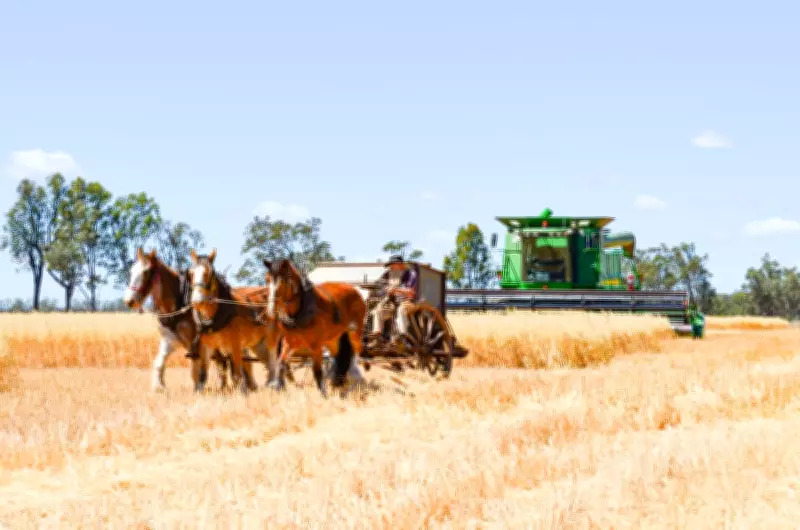
In 2013, a field day near North Star in northern New South Wales showcased a striking contrast: a brand-new, diesel-guzzling John Deere S670 header faced off against a team of three Clydesdale horses pulling an 1860s Meadowbank stripper. At the time, the comparison drew laughter, but in 2026, the humour has faded as fuel costs skyrocket.
A John Deere header can consume up to 1,000 litres of diesel daily, leading to a recent cost increase of $1,500 per day. With road transport in Queensland alone burning approximately 11 million litres of fuel daily, the reliance on diesel is becoming unsustainable for many.

Agricultural and Economic Impacts
The National Farmers Federation (NFF) has expressed deep concern over the fuel squeeze, warning it could jeopardise food security. Hamish McIntyre, NFF president, stated, "If farmers can’t access diesel, they can’t harvest crops, plant crops, or move food and fibre to market." As of recent reports, one in seven service stations in New South Wales were out of at least one type of fuel, exacerbating the crisis.
Beyond agriculture, industries like mining and tourism are feeling the pinch. In Lightning Ridge, NSW, opal miner Sam Mehan faces daily fuel costs of $64 for her 80km commute, with prices climbing above $3.20 per litre. She notes, "Every morning I wake up to see the fuel price has gone up again," forcing tough choices between travel and basic comforts like air conditioning.
Broader Community Struggles
Remote Aboriginal communities are particularly hard-hit, with the Central Land Council estimating living costs 40% higher than in capital cities. Despite government subsidies, fuel prices exceeding $4 per litre in some areas threaten to erode savings and drive up food costs. Dr Josie Douglas, CLC general manager, highlighted, "Prices for key items like fresh food will rise sharply, and families will struggle to keep up."
Childcare and education are also affected. Bessie Thomas, living near Wilcannia, NSW, sees travel costs nearly doubling for trips to Broken Hill, 300km away. Neighbours relying on weekly travel for childcare and school face uncertainty, with fuel savings prioritised for farm work.
Supply Concerns and Safety Issues
The Queensland Trucking Association CEO, Gary Mahon, warns that panic buying is straining supply chains, with stations selling fuel faster than it can be delivered. While no thefts from trucks have been reported in northern NSW and Queensland, drivers are taking extra precautions, such as locking tanks and choosing secure rest stops.
With harvest and sowing seasons approaching, the demand for diesel and other inputs like urea fertiliser is set to increase. John Walters, CEO of Rural Aid, emphasised that sustained prices above $3 per litre are "simply not sustainable for farming businesses."
Looking Ahead: Viable Alternatives?
As the crisis deepens, the once-laughable idea of horse-drawn harvesters is gaining traction as a potential economic alternative. The fuel crisis underscores the broader challenges of distance and dependency in regional Australia, prompting urgent calls for solutions to ensure community resilience and food security.