Japan's Oyster Industry Faces Crisis as Warming Seas Cause Mass Die-Offs
In Kure, Hiroshima Prefecture, the annual oyster festival is bustling with activity, yet a shadow looms over the celebration. Chefs grill piles of mottled shellfish, but the queues at oyster stalls belie a troubling reality: the oysters are scarcer and smaller than ever before. Nobuyuki Miyaoka, a festival attendee, notes the decline in size, saying, "The local oysters were fine until this year. They used to be a lot bigger ... look how small they are." This observation underscores a broader crisis threatening Japan's oyster trade, driven by warming seas and extreme weather events.
Unprecedented Die-Offs Threaten Livelihoods
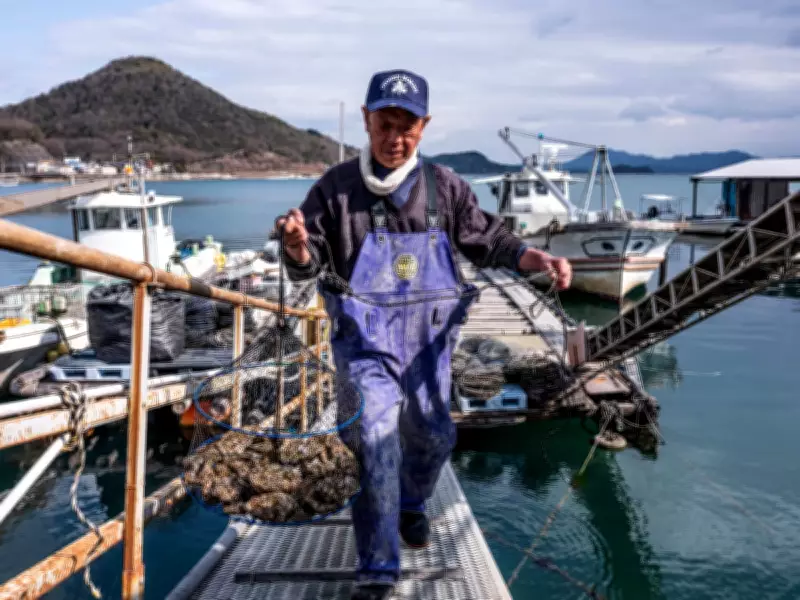
Taketoshi Niina, head of Niina Suisan, a family-run oyster-farming company with over 70 years of history, describes this season's harvest as a "disaster." From his fishery in Kure, he reports that about 80% of his oysters are dead upon retrieval, with survivors often in poor condition and unsellable. "This is something out of the ordinary," Niina explains. "It's beginning to hit us financially. The season isn't over yet, and next year is also looking bad. We're all exhausted. If this happens again next year, then it's going to threaten businesses." His experience is echoed across prefectures along the Seto Inland Sea, from Hiroshima to Hyogo, with Hiroshima bearing the brunt of the damage.
Hiroshima accounts for nearly two-thirds of Japan's farmed oyster supply, producing 89,000 tons in 2023. Together, fisheries in the Seto Inland Sea contribute 80% of the nation's oysters. However, this season, death rates have soared to as high as 90% in some areas, according to the fisheries ministry. Tatsuya Morio, a veteran oyster farmer with over two decades of experience, states, "I've never experienced this in my whole career." The crisis began last October, when unusually high numbers of dead oysters were noted at the start of the harvest season, which typically runs until May.

Climate Change and Environmental Factors
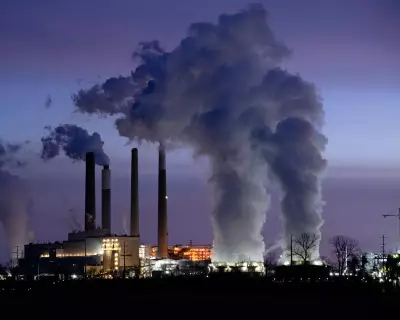
Experts attribute the mass die-offs to a combination of rising sea temperatures and last year's brutally hot summer, which set a record as Japan's hottest since 1898, with average temperatures 2.36°C above normal. Shoichi Yokouchi, head of the marine products division at the Hiroshima prefectural government, explains, "If higher temperatures remain for a few weeks, that weakens oysters and makes them more susceptible to viruses and bacteria." Data shows that from July to October 2023, crucial months for oyster cultivation, average water temperatures along Hiroshima's coast were 1.5°C to 1.9°C higher than the 1991-2020 average.
Kazuhiko Koike, a professor at Hiroshima University, elaborates on the environmental impacts: "It is possible to say that various abnormal environmental conditions caused by global warming and climate change – such as high air and water temperatures, low oxygen levels, insufficient rainfall, nutrient and food shortages – are causing oysters to die en masse." He notes that warm shallow water fails to mix with colder seabed layers, reducing oxygen supply and exacerbating the problem. Koike suggests potential adaptations, such as moving oyster rafts to cooler areas or suspending them at greater depths, but warns that without addressing climate change, these measures may offer only temporary relief.
Government Response and Economic Ripple Effects
In response to the crisis, Japan's fisheries agency announced support measures in December, including five-year government loans at virtually zero interest and access to mutual aid programmes for aquaculture businesses. Tomonori Uemoto, director of the fisheries promotion office at the Kure municipal government, highlights the broader economic impact: "Kure's oyster production is among the top in the country, and it supports a wide range of sectors – not only fisheries but also local employment in distribution and food tourism. So [the oyster deaths] are likely to have a significant impact."

The shortage has forced closures and adjustments in local businesses. For instance, Kure Oyster Land, a pop-up restaurant, will close earlier than usual this year, and participants in Japan's home town tax support programme will not receive their usual gift of raw oysters. This disruption affects not only fishers but also jobs in related industries, underscoring the interconnectedness of the local economy.
Future Uncertainties for the Next Generation
As the crisis deepens, the future of oyster farming hangs in the balance. Taketoshi Niina, who left a corporate job a decade ago to continue his family's legacy, expresses concern for his son, who plans to take over the business. "My son decided a couple of years ago that he wants to take over the business after I retire," Niina says. "But this year I've begun to really worry whether there is a future for him." This sentiment reflects broader anxieties in coastal communities dependent on oyster farming, as climate change poses an existential threat to a tradition spanning generations.
The mass die-offs in Hiroshima serve as a stark reminder of the vulnerabilities in Japan's seafood industry amid global warming. With predictions of more frequent extreme weather events, the need for sustainable practices and robust support systems becomes increasingly urgent to preserve both livelihoods and cultural heritage.