In a landmark verdict for food sovereignty, a Kenyan high court has declared key sections of a national seed law unconstitutional, effectively decriminalising the age-old practice of farmers sharing and selling indigenous seeds.
A Victory for Farmers and Food Heritage
On Thursday, Justice Rhoda Rutto presided over the ruling that dismantles parts of the 2012 seed law. This legislation had threatened farmers with penalties of up to two years in prison and fines of 1 million Kenyan shillings (approximately £5,900) for exchanging seeds through community-run seed banks.
The case was brought forward by a group of 15 smallholder farmers, who argued that the law infringed upon their rights and traditional farming practices. These community seed banks have operated for generations, preserving and distributing locally adapted seed varieties.

Corporate Control vs. Cultural Practice
The original law was introduced to combat the sale of counterfeit seeds, which had caused significant financial losses in Kenya's rain-fed agricultural sector. It granted exclusive seed trading rights to licensed companies and gave government officials the power to raid and seize seeds from community banks.
Justice Rutto ruled that these specific powers of raid and seizure were unconstitutional. The decision has been hailed by food campaigners as a critical step in protecting Kenya's agricultural biodiversity and food security.
A Resounding Endorsement of Indigenous Knowledge
For the farmers involved, the ruling is a profound validation. "My grandmother saved seeds, and today the court has said I can do the same for my grandchildren without fear of the police or of prison," said Samuel Wathome, one of the 15 petitioners.
Elizabeth Atieno, a food campaigner at Greenpeace Africa, celebrated the win as a "victory for our culture, our resilience, and our future." She stated, "By validating indigenous seeds, the court has struck a blow against the corporate capture of our food system. We can finally say that in Kenya, feeding your community with climate-resilient, locally adapted seeds is no longer a crime."
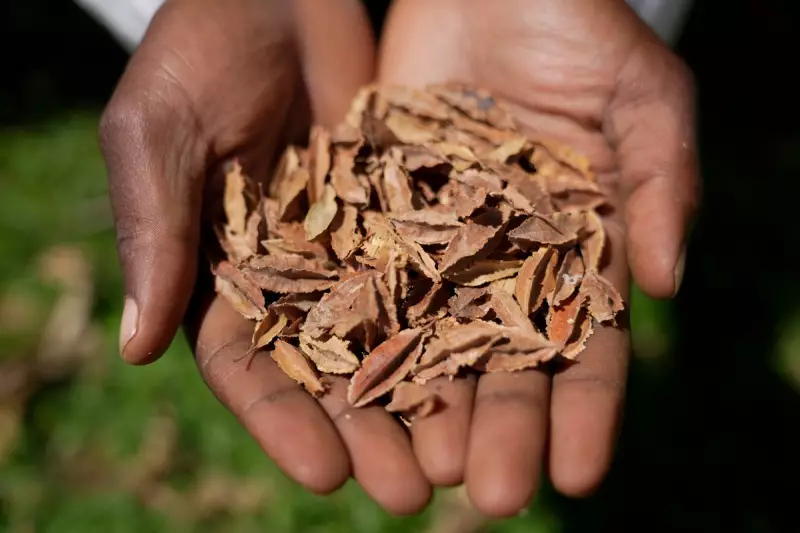
Indigenous seeds are widely recognised for their superior drought resistance and adaptability to local climate conditions, often outperforming commercial hybrid varieties. While Kenya maintains a national seed bank near Nairobi, farmers insist that community seed banks are vital for ensuring seed variety and immediate access.
This ruling not only safeguards a crucial tradition but also reinforces a sustainable path towards long-term food security in the face of climate change.