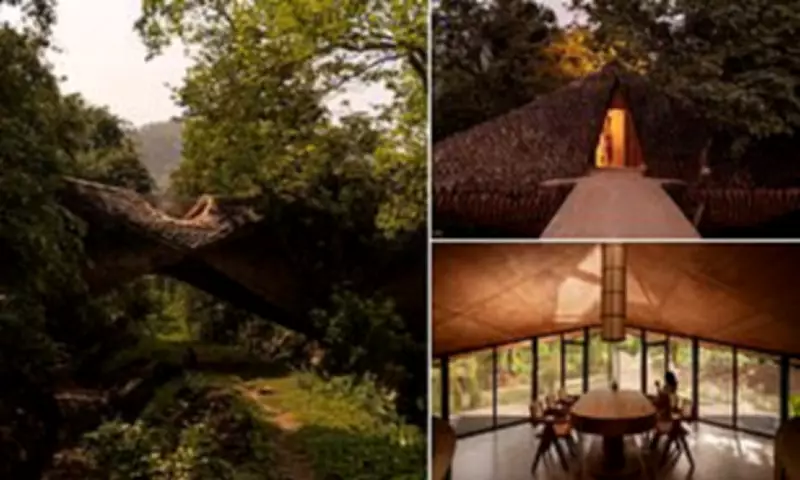
A couple seeking to build a sustainable home in rural southwest India encountered an unexpected obstacle when they discovered their chosen plot was bisected by a deep canyon. What initially seemed like a major setback has been transformed into an architectural triumph through innovative design thinking.
From Problematic Gorge to Gorgeous Home
Ashish Shah, 50, who operates a garment interlining business, and his wife Nipa, 48, who runs an organic farm-sourced food company, had been searching for land suitable for their own organic farm when they discovered a beautiful two-acre site nestled within the Western Ghats mountain range. The Mumbai-based couple, who live with their two daughters approximately two hours away from the site, purchased the land for 6 million Indian rupees (approximately £47,000) nearly a decade ago.
Their original vision involved creating a simple farmstead where they could cultivate mangoes and other crops. However, the 23-foot deep gorge presented immediate challenges. Local authorities insisted the chasm remain open as a throughway for construction equipment, complicating any plans to simply connect the two sections of land.

Architectural Innovation Meets Sustainability
Given the dense vegetation surrounding the plot and their personal commitment to eco-living, the couple sought an architect who could create a sustainable structure that harmonised with the natural environment. They eventually selected Vinu Daniel and his company Wallmakers, based in Kochi, which specialises in building with waste and alternative materials.
Daniel initially considered separate bridge and house structures before arriving at a more creative solution: designing a single structure that functions as both a bridge and a home. The resulting Bridge House in Karjat, Maharashtra, represents nearly a decade of planning and construction.
The unique 100-foot inhabitable suspension bridge doesn't rest on the ground but floats majestically above the gorge, which was originally carved for a nearby hydroelectric power project. This innovative approach turned what could have been a deal-breaking obstacle into the home's defining feature.
Sustainable Materials and Design Features
The architectural design incorporates four hyperbolic paraboloids shaped like saddles, which hang over the two plots of land. These structures are strengthened by steel tubing and tension cables typically found in lifts, creating unusual shapes within the home's interior.
All materials used in the sparsely-furnished house were sourced sustainably from within a five-mile radius of the site. Notable features include:
- A straw-and-mud composite roof inspired by pangolin scales that provides waterproofing, thermal insulation, and natural camouflage while deterring pests and rodents
- An oculus (circular opening) at the centre of the structure that allows natural light, air, and rain into the courtyard area
- Interior elements made from reclaimed shipwreck timber for flooring, jute screens, and metal meshes lining rooms and corridors
- A uniquely-designed Petty chair crafted from yarn woven from recycled plastic bottles and discarded fishing nets
- Four bedrooms that overlook either the forest or the watercourse below
- A triangular pool carved into the verdant surroundings
Construction Challenges and Timeline
When Daniel first presented his innovative concept to the couple, they admitted they "couldn't understand it" but decided to trust the architectural process. The construction faced numerous challenges from the outset.
Initial excavation work proved slow and messy, followed by the arrival of intense monsoon rainfall. The region typically receives between 2,000mm and 2,500mm of rainfall during monsoon season, creating extremely difficult working conditions.
"Our initial estimates went out of the park because during the monsoon season, it's impossible to even stand in the area, forget about working there," Daniel told The New York Times about the project.
The architect had originally estimated a two-year construction timeline, but the team was forced to re-evaluate this projection. In the end, the home required four years and 24 million rupees (approximately £190,000) to complete.

A Living Work of Art
Despite the setbacks and extended timeline, the couple express immense satisfaction with the final result. "When you're trying to create a piece of art, you really don't know how it's going to come out," Mr Shah reflected.
The family now enjoys a home that not only addresses the site's geographical challenges but does so while maintaining strong environmental principles. The structure serves as both a functional residence and a testament to innovative, sustainable architecture.
Looking to the future, Mr Shah plans to eventually open the property for artists' residencies and short-term rentals, though he first intends to "enjoy my house for some time, since we've worked so hard on it."
Bridge House stands as a remarkable example of how architectural creativity can transform environmental constraints into distinctive features, creating living spaces that harmonise with rather than dominate their natural surroundings.