US Farmers' Solar Ambitions Stalled by Federal Policy Shifts
American farmers operating on razor-thin margins have increasingly turned to renewable energy solutions to reduce electricity costs, but recent policy changes under the Trump administration have created significant obstacles. Programs critical for solar energy development on agricultural land have been rolled back, leaving many projects in limbo and forcing farmers to reconsider their investments.
The Rural Energy Grant Freeze
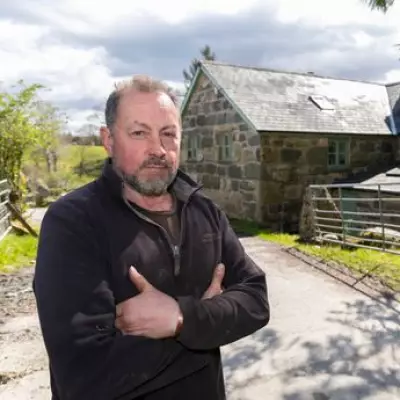
Kentucky sheep farmer Daniel Bell represents a growing number of agricultural producers who viewed solar energy as both an economic necessity and an opportunity for greater independence. When Bell needed to build a new barn for his expanding flock, he planned to install rooftop solar panels since his property sits far from conventional power lines. His strategy involved applying for funding through the Department of Agriculture's Rural Energy for America Program (REAP), only to discover the Trump administration had effectively halted grant distributions through this crucial initiative.
"For me, it's just been about freedom. Freedom to lower bills, freedom to control my own assets," Bell explained, expressing frustration that the grant freeze made his solar project financially unfeasible on his own land.

Federal Support Collapses
Within the first year of President Donald Trump's second term, two key federal programs supporting solar energy expansion—REAP and clean energy tax credits—have been substantially reduced. An analysis by The Associated Press and Grist reveals that the Department of Agriculture hasn't awarded a single dollar in rural energy grants or loan guarantees during the current fiscal year.
The investigation contacted approximately one-quarter of nearly 300 developers who proposed agricultural solar projects over the past two years. Findings indicate developers are either restructuring their businesses to operate without federal support or have already lost millions in investments due to new tax credit policies. The Energy Policy Act of 2005 originally established a 30% investment tax credit for large-scale clean energy projects, with extensions under Presidents Obama, Trump, and Biden. However, recent legislation has reset the timeline, requiring commercial solar projects to begin construction by July 2026 and become operational by late 2027 to maintain eligibility.
Project Abandonment and Developer Challenges
At least 126 solar projects proposed since early 2024 are awaiting regulatory approval, according to the analysis. These projects, primarily located on or near agricultural land, would collectively generate approximately 20 gigawatts of electricity—enough to power about 4.5 million homes. The tightened timeline has already prompted some developers to abandon projects entirely.
Bogdan Micu, CEO of German solar developer Alpin Sun, reported losing approximately $6 million in investments across 1,000 megawatts of planned projects in the U.S. Northeast. "Well. We lost our projects," Micu stated, explaining that meeting the new deadlines proved impossible despite efforts to accelerate development.
Farmers Caught in Policy Crossfire
Elisa Lane, a flower and fruit farmer in Hampstead, Maryland, experienced firsthand the uncertainty created by these policy shifts. In February 2025, she learned the Trump administration had frozen her $30,576 REAP grant, awarded in 2024 for solar panel installation, without explanation. "Man, was that so stressful," Lane recalled, describing months of worry about being financially responsible for contracted installation costs.
Although the USDA eventually released previously awarded grants in March 2025, recipients were invited to voluntarily revise proposals by "eliminating Biden-era DEIA and climate mandates." Lane proceeded without revisions after consulting with a USDA representative and ultimately installed $70,000 worth of panels by August 2025, receiving reimbursement that September—more than half a year after the initial freeze.
"It was so disruptive," Lane reflected. "I just want to have a farm and be able to focus on my business." Her experience highlights how policy instability compounds the challenges of an already difficult economic landscape for farmers.

Program Suspension and Rural Impact
The USDA announced a suspension of all REAP grant awards on March 31, citing the need to update regulations to comply with a Trump executive order from July. While loan guarantees continue, no new grants have been issued since September, and the agency hasn't reopened application cycles despite previous indications it would do so.
Robert Bonnie, former USDA undersecretary under the Biden administration, emphasized the broader consequences: "In places like Iowa and Texas, renewables matter, not just for additional power, and lower power bills, and clean energy, but also matters for farmers' pocketbooks. Anything you do to pull back on that is hugely problematic." Since its inception nearly two decades ago, REAP has funded over 19,000 grants totaling more than $1.8 billion, supporting tens of thousands of renewable energy projects nationwide.
Developers Race Against Deadlines
For some companies, the policy changes have triggered urgent efforts to advance projects before tax credits expire. Jon Rappe, CEO of RIC Energy North America, described an "all-out sprint" to move approximately 150 solar projects forward, primarily located on fallow land and former farmland. "The next generation of projects is not going to happen unless there's some change at the federal level," Rappe warned.
One RIC Energy project involves developing 15 acres of solar panels on Tim Covert's land in Sheridan, New York. For Covert, a former dairy farmer recovering from cancer treatment, the community solar project represents crucial supplemental income. "I'm 100% cancer-free, but with the treatments, there's some side effects that take a little while to get rid of," Covert explained, noting brain fog and energy depletion. "So it would be great if they did have it done by fall, and I started getting money."
Uneven Effects and Industry Adaptation
The policy changes have created uneven impacts across the agricultural solar sector. While some projects stall due to permitting issues or financial uncertainty, others proceed on schedule or even accelerate as developers race to meet deadlines. Some industry leaders argue that eliminating tax credits actually simplifies financing for certain projects.
Nick Cohen, president and CEO of solar developer Doral LLC, noted that solar energy remains economically competitive despite policy shifts. "All the new rules really favor the big guys like us," Cohen observed, suggesting larger developers with substantial resources may navigate the changes more successfully than smaller operations.
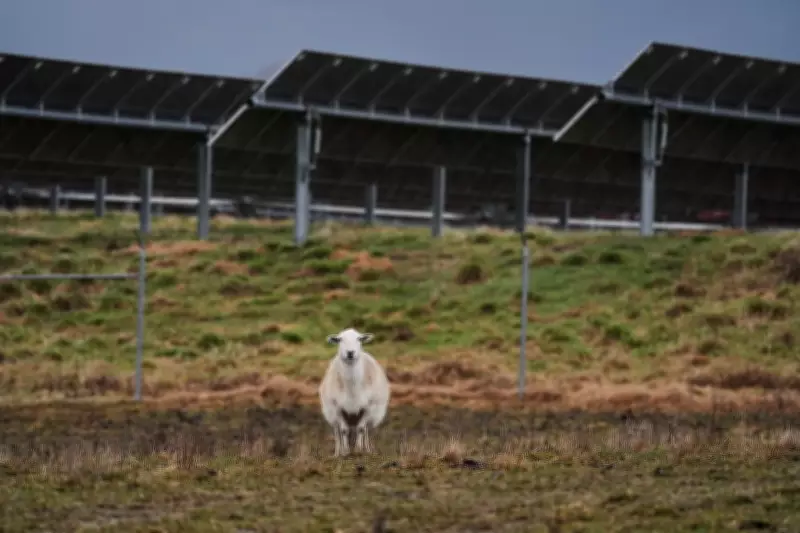
As American farmers continue seeking energy independence and cost savings through renewable solutions, the collapse of federal support programs creates uncertainty that extends from corporate agricultural operations to family farms. The coming years will reveal whether alternative approaches—like Daniel Bell's arrangement to graze sheep beneath commercial solar panels—can provide viable pathways forward in an evolving policy landscape.