Alaska's Coastal Communities Confront an Uncertain Future
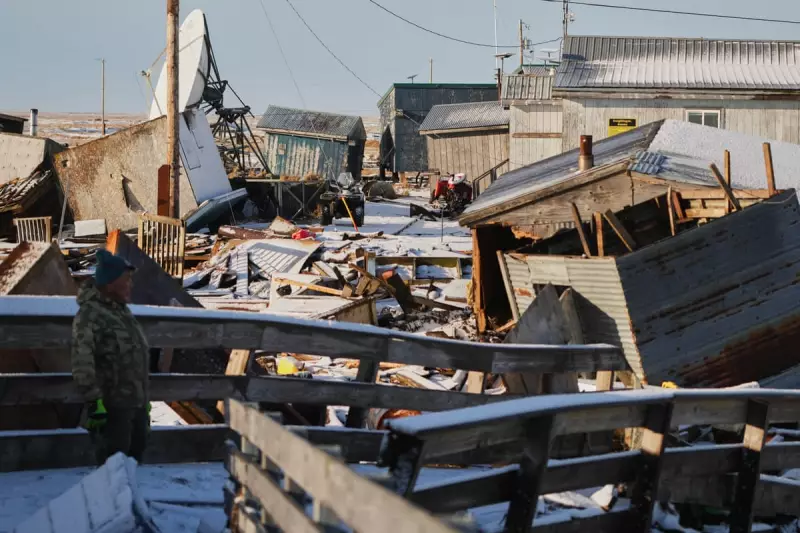
The remnants of Typhoon Halong unleashed devastation upon the western coast of Alaska in October 2025, leaving Native villages like Kwigillingok and Kipnuk grappling with destruction and a profound question about their future. The severe flooding, which occurred on the night of 11 October, uprooted homes, claimed at least one life, and left two people missing, forcing more than 1,600 residents to evacuate.
A Community Holds On Amid the Ruins
In the aftermath, Darrel John was one of only seven residents who chose to remain in Kwigillingok. "I just couldn't leave my community," John stated, working from the town's school which served as a shelter and command post. He walked home past debris piled on boardwalks, a testament to the storm's power that floated homes miles away, some with people still inside. The scene was one of utter disruption, with unmoored houses scattered across the tundra and coffins dislodged from above-ground cemeteries.
For 65-year-old resident Harry Friend, this flood was unlike any he had experienced. "When the water started coming in, my house was floating, shaking, floating, shaking," he recounted. The following morning, the homes of his siblings, which had stood next door, were simply gone. The US Coast Guard conducted dramatic rooftop rescues for dozens of survivors.
The Daunting Challenge of Relocation
As winter approaches, the focus for Alaska Governor Mike Dunleavy's office is on repairs and supporting the displaced, a process that could take up to 18 months. However, even with short-term fixes, residents are questioning the long-term viability of their villages. Rising seas, erosion, melting permafrost, and intensifying storms create a cycle of threat.
Louise Paul, a 35-year resident of the hardest-hit village, Kipnuk, voiced a common sentiment: "A lot of people have claimed they're not returning. They don't want to do this again... The climate warming is increasing the storms and they're just getting worse and worse."
Relocating entire villages is a monumental task. The village of Newtok began planning in the mid-1990s and only completed its move to Mertarvik last year, at a cost of over $160 million. A 2024 report from the Alaska Native Tribal Health Consortium identified 144 Alaska Native communities under threat from warming, estimating a need for $4.3 billion for mitigation over the next 50 years.
Despite the challenges, the connection to the land remains powerful. Harry Friend, who has since rejoined his family after the storm spoiled his food stocks and contaminated fresh water, encapsulates the dilemma: "This is our land. You've got to come back to your home." Yet, he acknowledges that relocation is likely the only path forward for communities like his, underscoring the urgent and costly decisions forced upon them by the climate crisis.