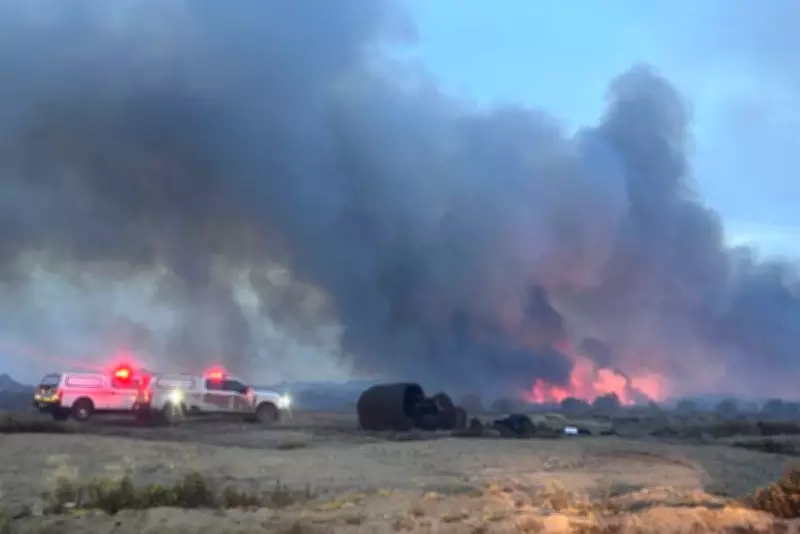
A massive wildfire burning south of Buckeye, Arizona, has expanded to nearly 1,000 acres, with local residents likening the scene to a war zone. The Hazen fire ignited around 3 p.m. on Saturday and grew by over 300 acres that night alone, remaining zero percent contained as of Sunday, according to Arizona's Family news outlet. By Sunday, the blaze had spread across 980 acres, threatening areas near the Gila River bottom, including the Parkside Travel Trailer Park.
“It looked like it was right on top of us at that point,” said resident Noah Hill. “My eyes are burning. Ashes are falling from the sky.” Another resident, Alexis Byrd, described the scene as “like a war zone almost — it’s scary.”
Firefighting Efforts Hampered by Wind
The Buckeye Fire Department reported no injuries so far, but extreme weather has undermined aerial firefighting. Wind speeds reaching up to 30 mph forced a helicopter conducting water bucket drops to land. However, four Single Engine Air Tankers (SEATs) have been deployed for target spotting, using specialized suppressant and water drops as conditions allow. An off-duty firefighter, Chad Gillam, noted that prior brush-clearing prevented the fire from reaching a highway bridge.

Arizona’s Department of Forestry and Fire Management stated on X Sunday evening: “Those in the surrounding area can expect to see smoke and active flames overnight. The cause of the fire is undetermined. Our priority is full suppression to protect the public and values at risk.”
Power Lines Deactivated, No Evacuations Yet
Arizona Public Service (APS) temporarily de-energized power lines as a precaution, with electricity mostly restored, though some equipment was damaged. Firefighters have been clearing vegetation and dry debris to deny the fire fuel. As of now, no evacuations have been ordered, and schools remain open.
Most wildfires in the region occur between May and November, but they can happen year-round. According to the National Interagency Fire Centre (NIFC), approximately 1.8 million acres have burned so far this year—double the amount for the same period in 2025 and nearly matching 2024. Alongside the Hazen fire, 16 other large wildfires were burning across the U.S. as of Friday.
Budget Constraints Affect Firefighting Aircraft
The rising cost of jet fuel, up 65% since February, has restricted deployment of firefighting aircraft, with hourly rates ranging from $3,000 to $40,000. The U.S. Forest Service has a $45 million budget for fueling aircraft, down from $52 million last year. Despite this, the Forest Service told CBS that “aviation fuel prices will not impact our ability to respond to fires.” Arizona’s Department of Forestry and Fire Management noted that “aircraft are a tool to support ground resources where it makes sense and they can be effective.”