Lula's Amazon Summit: Climate Pledges Clash with Fossil Fuel Expansion
Brazil's Climate Summit: Lula's Balancing Act

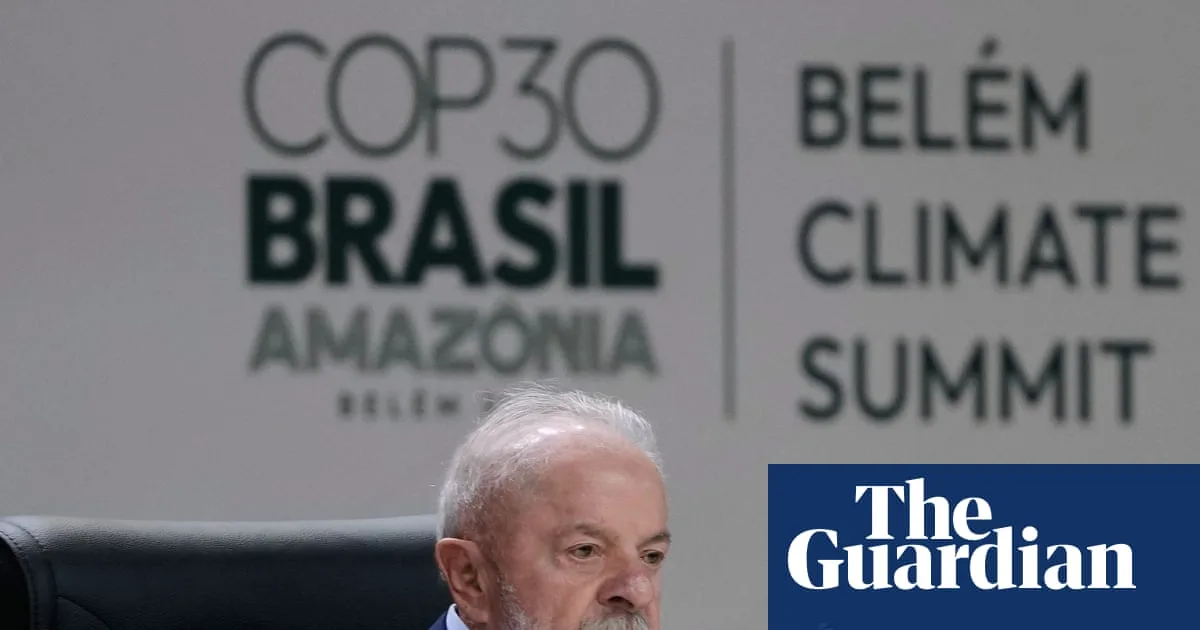
Brazilian President Luiz Inácio Lula da Silva has welcomed global leaders to the heart of the Amazon for a landmark climate summit, positioning himself as a champion for rainforest conservation while grappling with domestic political pressures that threaten to undermine his environmental commitments.

The Amazon's Climate Crossroads

Speaking at the opening of the Cop30 summit in Belém, Lula emphasised the urgent need for roadmaps to reverse deforestation and overcome fossil fuel dependency. "I am convinced that despite our difficulties and contradictions, we need roadmaps to – in a fair and planned way – reverse deforestation, overcome dependence on fossil fuels and mobilise the resources necessary for these objectives," the president declared.

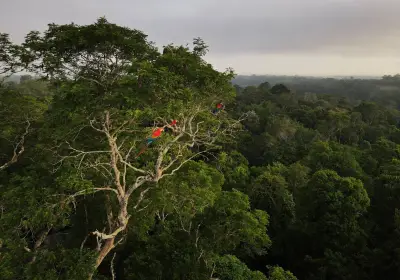
This gathering marks the first major climate summit hosted within the Amazon rainforest itself, symbolising both the region's critical importance in global climate regulation and the mounting threats it faces from human activity.

Progress and Contradictions in Forest Protection

The Brazilian government arrives at the summit with some impressive environmental credentials. Forest clearance in the Brazilian Amazon has fallen by 50% over Lula's current term in office, with the latest annual figures showing the smallest area of deforestation in 11 years.

This achievement is largely credited to Environment Minister Marina Silva, who has implemented robust measures against illegal land invasions, logging and wildcat mining. The success has translated into significant emissions reductions, with the Climate Observatory estimating Brazil's emissions have fallen by 16.7% – likely the steepest decline among G20 economies.

However, these environmental gains exist alongside controversial government decisions that environmentalists argue could accelerate the Amazon's destruction.

Fossil Fuel Expansion Amid Climate Promises

Just three weeks before hosting the climate summit, Lula's administration approved drilling licences for oil and gas exploration at Foz do Amazonas, off the rainforest's coast. This move directly contradicts advice from the International Energy Agency, which warns that achieving Paris Agreement goals requires completely halting new fossil fuel development.

The government is also pushing forward with plans to upgrade the BR-319 highway between Manaus and Porto Velho, which conservationists fear will open up previously intact western Amazon regions to development pressures. Similarly, industrial mining proposals threaten the Yanomami Indigenous territory near the Venezuelan border.

Ehuana Yaira Yanomami, representing her community at the summit, expressed grave concerns: "We don't want our people to suffer, we are very worried and that's why we are speaking out, because illegal mining only brings suffering to our communities."

The Tipping Point Threat

Scientists warn that the Amazon is rapidly approaching a point of no return, beyond which it could irreversibly transition into savannah. Earth system scientist Antonio Donato Nobre, with twenty years of Amazon research experience, reports that the forest already shows alarming signs of breakdown.

"Droughts are increasingly severe, temperatures in some cleared areas have increased by up to 7C and degradation is accelerating even as deforestation slows," Nobre explained. He emphasised that a weakened rainforest means reduced cloud cover to reflect solar heat, potentially creating greater warming than greenhouse gases themselves.

Funding Forest Protection

At the summit, Brazil is championing its Tropical Forest Forever Facility, aiming to raise $125 billion for standing forest protection. The initiative has so far secured approximately $5.5 billion, including $3 billion from Norway and $1 billion each from Brazil and Indonesia, with smaller contributions from Portugal and the Netherlands.

This funding is critically needed to prevent the Amazon's collapse, which would have devastating global consequences for climate stability, water cycles and biodiversity.

Social Development Versus Environmental Protection

Lula's approach reflects his background as a union negotiator, often emphasising social benefits from Amazon investment while downplaying climate risks. During a pre-summit tour of forest communities, he promised improved healthcare, education and housing but made no mention of climate concerns in his public remarks.

Local communities, however, are experiencing climate impacts firsthand. Luis Antonio Bentes de Sousa, a village leader, described how last year's record drought left communities stranded and unable to grow traditional crops. "It is getting hotter and drier," he said. "I worry for my children and grandchildren."

The summit represents a critical test of whether world leaders can reconcile economic development with environmental protection, and whether Lula can balance his social priorities with the urgent need to preserve the Amazon for future generations.