California Files Legal Challenge Against Trump Administration Over Coastal Oil Pipeline Restart
California Attorney General Rob Bonta has initiated a significant legal action against the Trump administration, filing a lawsuit on Friday 23 January 2026 over federal approval for an oil company's plans to reactivate two offshore pipelines along the state's coastline. The lawsuit represents a major escalation in the ongoing conflict between California and federal authorities regarding environmental regulations and energy policy.
Federal Approval Sparks State Opposition
The legal challenge specifically targets the Trump administration's approval of Houston-based Sable Offshore Corporation's proposal to restart production in waters off Santa Barbara County, an area still recovering from a devastating 2015 oil spill. This marks the first substantial offshore oil drilling initiative in decades following the Trump administration's removal of regulatory barriers that had previously restricted such activities.
Democratic Attorney General Rob Bonta emphasized California's regulatory authority during a news conference, stating: "The federal administration has no right to usurp California's regulatory authority. We're taking them to court to draw a line in the sand and to protect our coast, beaches and communities from potentially hazardous pipelines." The state maintains oversight of pipelines running through Santa Barbara and Kern counties.

Environmental Concerns and Historical Context
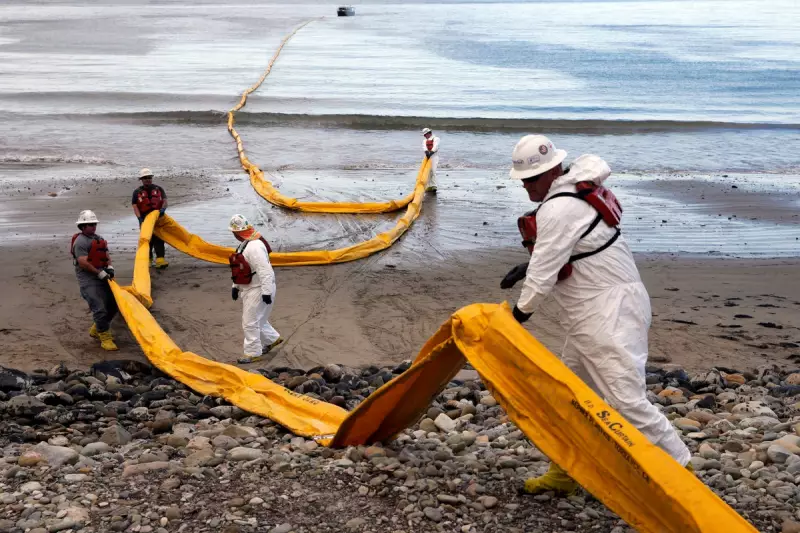
The lawsuit highlights substantial environmental risks associated with restarting the pipelines. One of the pipelines Sable seeks to reactivate was responsible for California's worst oil spill in decades during 2015, when more than 140,000 gallons (3,300 barrels) of oil gushed into coastal waters. The spill created extensive environmental damage, blackening beaches along 150 miles (240 kilometers) from Santa Barbara to Los Angeles and devastating marine ecosystems.
The 2015 incident polluted biologically rich habitats supporting endangered whales and sea turtles, killed numerous pelicans, seals, and dolphins, and severely impacted the local fishing industry. Following this disaster, drilling platforms in the area were permanently shut down, making the current proposal particularly controversial among environmental advocates and coastal communities.
Federal Versus State Jurisdictional Battle
The legal confrontation centers on jurisdictional authority between federal and state governments. While California controls waters within 3 miles (5 kilometers) of shore, the drilling platforms in question are located 5 to 9 miles (8 to 14 kilometers) offshore in federal waters where state regulators have limited influence. Sable Offshore Corporation has indicated determination to proceed with production even if confined to federal waters, despite facing multiple legal challenges.
The Pipeline and Hazardous Materials Safety Administration, the U.S. Transportation Department agency that approved Sable's plan, defended the decision: "Restarting the Las Flores Pipeline will bring much needed American energy to a state with the highest gas prices in the country." Sable Offshore Corporation declined to comment on the ongoing lawsuit.
Political and Policy Implications
This legal action occurs within a broader political context of shifting energy policies. President Donald Trump signed an executive order on the first day of his second term reversing former President Joe Biden's ban on future offshore oil drilling along both East and West coasts. A federal court subsequently invalidated Biden's order to withdraw 625 million acres of federal waters from oil development.
In November, the federal administration announced plans for new offshore oil drilling off California and Florida coasts, proposals that have received strong support from the oil industry but faced criticism from environmental groups and coastal communities concerned about ecological impacts.

Local Opposition and Environmental Advocacy
California Assemblymember Gregg Hart, a Democrat representing Santa Barbara, condemned the federal approval: "California will not allow Trump and his Big Oil friends to bypass our essential environmental laws and threaten our coastline." He argued that restarting the pipelines ignores painful lessons learned from the 2015 disaster.
Environmental advocates expressed similar concerns. Alex Katz, executive director of the Environmental Defense Center in Santa Barbara, remarked: "It's crazy that we are even talking about restarting this pipeline." The organization was originally formed in response to California's catastrophic 1969 oil spill, highlighting longstanding environmental concerns in the region.
California's Energy Transition
The lawsuit aligns with California's broader energy policy direction. The state has been systematically reducing fossil fuel production while promoting clean energy alternatives for years. This movement has gained particular momentum in Santa Barbara County, where elected officials voted in May to begin phasing out onshore oil and gas operations, demonstrating local commitment to environmental protection and sustainable energy transition.
The legal battle between California and the Trump administration represents a critical test of state versus federal authority in environmental regulation and energy policy, with significant implications for coastal protection, energy independence, and climate change mitigation efforts.