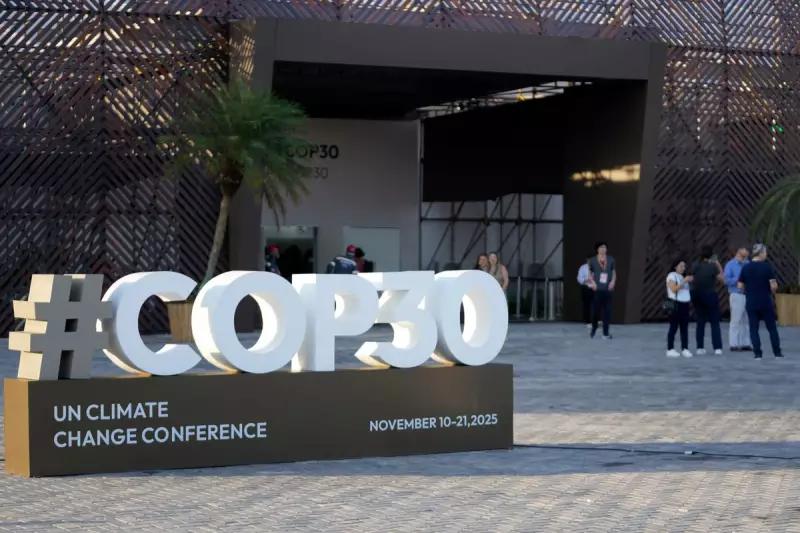
World leaders, activists, and climate experts are descending upon the city of Belem in Brazil for the 30th United Nations Climate Change Conference, known as COP30. The summit, which commenced on Saturday, 8th November 2025, is taking place at the gateway to the Amazon rainforest, with the ambitious goal of uniting nations to combat the most severe effects of human-caused climate change.
The stakes for this year's conference are exceptionally high, as experts warn that the opportunity to avert catastrophic climate change is rapidly diminishing. With climate-related disasters already threatening billions of lives globally, the pressure is on for world leaders to accelerate their efforts.
A Focus on Forests, Indigenous Peoples, and Food Systems
Hosting the summit in Belem has been widely praised for placing a spotlight on the critical roles of Indigenous communities and forest conservation in the fight against climate change. While previous COPs have heavily emphasised the transition to clean energy, this year's talks are also expected to address the necessary transformation of global food systems.
The Brazilian government is championing a new initiative called the Tropical Forests Forever Facility. This programme is designed to financially reward countries for protecting their forests. However, it remains uncertain whether world leaders will commit sufficient funds to ensure its success.
Logistical Hurdles and a Stark Reality Check
The practicalities of hosting tens of thousands of attendees in Belem have proven challenging. With accommodation stretched, delegates have resorted to booking rooms on cruise ships in the harbour or staying in by-the-hour 'love motels', while some activists are considering camping.
Attendees have been warned to expect oppressively hot and humid weather, prompting the host country to advise a more informal dress code. Some experts and locals suggest this discomfort serves as a necessary reality check, particularly for delegates from wealthier nations, highlighting the vulnerability of poorer communities to climate-driven disasters.
A Decade After Paris: Progress and Shortfalls
This year's summit marks ten years since the landmark Paris Agreement, the first global pact to tackle climate change. However, data from the European climate service Copernicus reveals that the planet's annual temperature has already surged by approximately 0.46 degrees Celsius (0.83 degrees Fahrenheit) since then, one of the largest decadal increases on record.
The Paris Agreement aimed to limit global warming to 1.5 degrees Celsius above pre-industrial levels, a target many scientists now believe is unlikely to be met. Despite this, progress has been made; renewable energy is now cheaper than fossil fuels in most parts of the world. Current national pledges, if fulfilled, could prevent just over a full degree of warming.
This year, countries were expected to arrive with updated national climate plans. Notably, the United States, one of the world's largest polluters, will not be submitting its plan, having withdrawn from the Paris Agreement. Many other national plans have been criticised as insufficient.
Unlike the historic Paris summit, COP30 is not anticipated to produce a landmark new deal. Instead, it is being framed as an 'implementation COP', focused on strengthening existing commitments and funding for climate adaptation and deforestation prevention. While some, like former UN climate chief Christiana Figueres, urge a focus on action over new agreements, others, such as Panama’s environment minister, have expressed scepticism about the talks' potential for tangible outcomes.