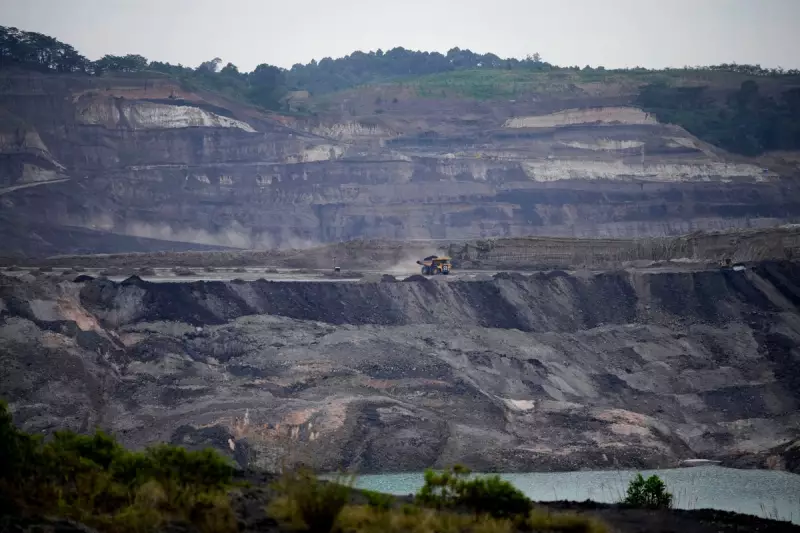
Southeast Asia's Coal Surge Threatens Renewable Energy Transition
Southeast Asia's appetite for coal is expanding at a pace unmatched anywhere else globally, casting a long shadow over efforts to reduce carbon emissions and combat global warming. This troubling trend directly undermines progress in the region's shift toward cleaner energy sources.
Accelerating Coal Consumption Across the Region
According to a recent International Energy Agency report, regional coal demand is projected to increase by more than 4% annually through the end of this decade. This surge is primarily driven by escalating electricity requirements as economies develop across Southeast Asia's population of over 600 million people.
Indonesia, with approximately 285 million inhabitants, is expected to account for more than half of this growing coal consumption, followed closely by Vietnam. These developments raise serious questions about the viability of the $15.5 billion Just Energy Transition Partnership agreements both nations signed in 2022 to fund their renewable energy transitions.

Conflicting Priorities: Energy Security Versus Climate Action
"We're standing on two opposite grounds—wanting to build clean energy, but not letting go entirely of coal," explained Katherine Hasan, an analyst with the Centre for Research on Energy and Clean Air. This sentiment reflects the region's difficult balancing act between economic development and environmental responsibility.
Coal currently supplies just over one-third of Southeast Asia's electricity, making it the world's third-largest coal-consuming region after India and China. While global coal demand is expected to plateau as alternatives expand, Southeast Asia is moving in the opposite direction, driven primarily by cost considerations and energy security concerns.
Indonesia's Critical Role in Regional Energy Transition
As the world's largest coal exporter and Southeast Asia's biggest carbon emitter, Indonesia's energy policies significantly influence the entire region's climate trajectory. The country recently backtracked on its commitment to phase out coal by 2040, with its updated climate pledge rated "critically insufficient" by Climate Action Tracker.
"If Indonesia cannot transition away from coal, then why would other developing countries?" questioned Dinita Setyawati of think tank Ember. "For Indonesia, it's not so much a fear of the unknown, but a reluctance to change and the inertia of change."
This reluctance persists despite mounting climate costs, including deadly floods and landslides that claimed over 700 lives last year, events exacerbated by climate change.
Vietnam's Energy Crossroads
Vietnam presents a particularly complex case, having dramatically expanded its solar generating capacity from just 4 megawatts in 2015 to 16 gigawatts a decade later, with ambitious plans to reach 73.4 gigawatts by 2030. Yet simultaneously, the country imported a record 65 million metric tonnes of coal in 2025, representing a 2.6% volume increase from the previous year.
This contradictory approach reflects caution following severe power shortages in 2023, when drought conditions reduced hydropower output and caused approximately $1.4 billion in economic losses. To sustain its targeted GDP growth of around 10% annually through 2030, Vietnam aims to increase electricity sales to match Germany's current annual energy consumption.
Infrastructure Challenges and Political Realities
Vietnam's power grid is already straining under the rapid but uneven rollout of renewables, compounded by years of underinvestment in transmission equipment. The government estimates needing about $18 billion by 2030 to upgrade the system, but committed funding currently covers only a fraction of this requirement.
A recent regional survey by Singapore's ISEAS–Yusof Ishak Institute revealed growing public preference for delaying coal phase-out until 2030 or even 2040, as concerns about adequate power supplies and costs outweigh climate change worries. Governments across Southeast Asia are echoing this pragmatic logic.

Diminishing Momentum for Energy Transition Partnerships
The momentum for JETP-backed projects in Indonesia and Vietnam is unlikely to accelerate this year, according to Putra Adhiguna of the Energy Shift Institute. Indonesia's cancellation of early retirement for a West Java coal plant, combined with the 2025 U.S. withdrawal from JETP under the Trump administration, has undermined confidence in tangible project implementation for 2026.
"JETP was basically a brute force attempt to do a transition," Adhiguna observed. "Governments were trying to bulldoze through... But fundamentally there are things that take a bit of time and political commitment to happen."
The Path Forward Amid Competing Pressures
As Southeast Asia navigates this decisive decade, the region faces the dual burden of extreme weather impacts from climate change while simultaneously addressing urgent energy needs for economic development. The tension between immediate energy security requirements and long-term climate commitments continues to shape policy decisions across the region.
With coal still underpinning energy security for many Southeast Asian nations, and billions of dollars' worth of fossil fuel infrastructure at stake, the transition to renewable energy faces substantial economic and political hurdles that extend beyond mere technological capability.