When winter storms unleash their fury across Britain, blanketing roads and pavements with snow and ice, the instinctive response for most households and councils is to reach for salt. While effective at melting treacherous surfaces, this common practice carries significant environmental consequences that many remain unaware of.
The Salt Dilemma: Effectiveness Versus Environmental Harm
Rock salt, scientifically known as sodium chloride, remains the most widely used and economical de-icing product across the United Kingdom. However, its limitations become starkly apparent during severe cold snaps. "There's a critical temperature threshold around -9°C where rock salt essentially stops working," explains Martin Tirado, CEO of the Snow and Ice Management Association. "Beyond this point, applying more salt yields diminishing returns."
Alternative formulations like calcium chloride and magnesium chloride perform better in extreme cold by releasing heat that accelerates ice melting. These products, however, come at a premium—often costing twice as much as conventional rock salt—and share similar environmental drawbacks through their chloride content.

The Ecological Toll of Winter Salting
All chloride-based de-icers pose multiple threats to the environment. They can contaminate freshwater sources, damage vegetation including shrubs, trees, and grass, and accelerate the deterioration of concrete surfaces like pavements and driveways. The problem extends beyond immediate application areas as runoff carries these pollutants into waterways.
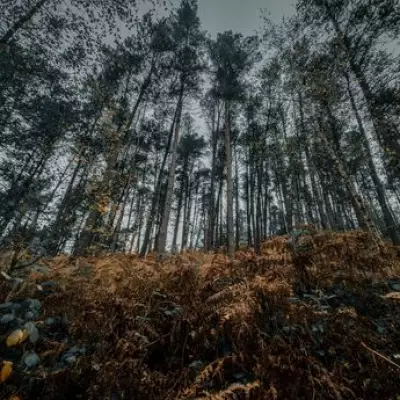
"Rock salt represents the most damaging option for plant life," states Pamela Bennett, a horticulture professor. "It affects vegetation through two pathways: soil absorption that dries out roots, and airborne particles that directly damage foliage, particularly evergreens." The characteristic brown leaf tips seen on roadside plants each spring often indicate excessive salt exposure.
Safer Alternatives for Ice Management
Innovative solutions are emerging to address these environmental concerns. Calcium manganese acetate, a biodegradable liquid de-icer, was specifically developed as an eco-friendlier replacement for rock salt, though its higher cost limits widespread adoption.
More creative approaches include de-icing products that encapsulate chlorides within beet juice or beet extract coatings. These formulations offer multiple advantages: faster ice melting, effectiveness at lower temperatures, and reduced runoff. Meanwhile, Korean company Star's Tech is pioneering a product derived from invasive starfish that slowly releases chloride material, minimising corrosion and environmental damage.
Practical Considerations for Homeowners
Beyond product selection, strategic approaches to snow clearance can significantly reduce environmental impact. Experts emphasise the importance of proactive shovelling rather than waiting until storms conclude. "For accumulations exceeding 7-10 centimetres, multiple clearing sessions prove more effective than a single post-storm effort," advises Tirado.
Proper application technique matters equally. "The key is moderation and even distribution," notes David Orr, director of Cornell's Local Roads Program. "We need to adjust expectations—surfaces don't need to be perfectly bare to be safe."
Non-Salt Options and Their Limitations
Abrasives like gravel and sand provide temporary traction improvements but introduce their own environmental issues. Sand runoff can smother aquatic vegetation in freshwater ecosystems and, when mixed with clay-heavy soils, can create a concrete-like substance that inhibits plant growth.
For pet owners, salt alternatives offer particular appeal. "Dogs' paw pads can become dry or develop cuts from sharp salt crystals," explains Alison Manchester, a veterinary professor. "Animals often lick their paws to relieve discomfort, potentially ingesting harmful amounts of salt that can cause vomiting."
As climate patterns evolve and environmental awareness grows, the conversation around winter maintenance is shifting from mere effectiveness to balanced solutions that protect both public safety and ecological health. The challenge lies in finding approaches that work within practical constraints while minimising long-term environmental damage.