The Victorian Society has unveiled its annual list of the ten most endangered Victorian and Edwardian buildings in England and Wales, highlighting structures ranging from Teesside's iconic Transporter Bridge to a former railway men's club in Barrow-in-Furness and a disinfecting station in East London.
Teesside Transporter Bridge at Risk
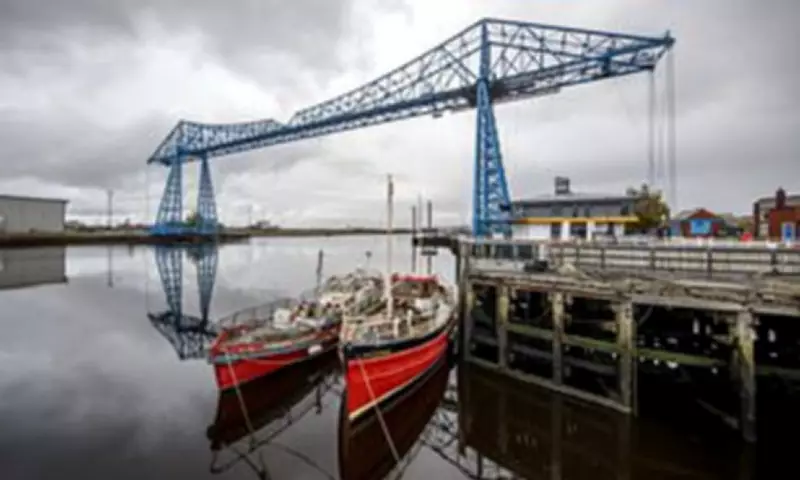
The Grade II*-listed Tees Transporter Bridge, opened in 1911, is one of Britain's most remarkable engineering feats and a defining landmark of the north-east. It served as a vital transport link for over a century, carrying workers and goods across the River Tees, but closed in 2019 due to structural concerns. The bridge is jointly owned by Stockton-on-Tees and Middlesbrough councils, but the estimated £60 million needed for repairs is beyond their means. The Victorian Society is calling for a coordinated national response to secure its future.
James Hughes, director of the society, said: 'The Tees Transporter Bridge is one of Britain's most remarkable feats of engineering and a defining landmark of the north-east. Its future cannot be left to uncertainty. A clear strategy, supported at national level, is urgently needed to secure both its structure and its continued role in the life of the region.'

Griff Rhys Jones, the society's president, added: 'You don't need me to tell you that people love this bridge. It is a symbol. It is a monument. And more than that, it is a link and a potential working part of Stockton and Middlesbrough. Got to be saved. Got to be operational again. If we can find money for new bridges, we can find money for this great survivor and all that it means.'
Former Strand Railway Station and Railway Men's Club
In Barrow-in-Furness, the former Strand Railway Station and Railway Men's Club, a Grade II listed building constructed in 1863, is also endangered. It is a significant survivor of the town's rapid industrial growth, when vast quantities of iron ore were transported via the Furness Railway. The building later served as a railwaymen's club for 101 years before closing in 2008 due to financial pressures. Now owned by an absentee landlord, it is in visible decline. The Victorian Society has called for sensitive restoration to bring it back into active use, noting that it 'presents a clear opportunity for regeneration'.
Faenol Mausoleum in North Wales
A secluded mausoleum in north Wales, described as an 'architecturally significant funerary building', is in a state of visible decay. The Grade II listed Faenol Mausoleum, built in the late 1870s, stands within an octagonal enclosure and has suffered vandalism, including graffiti and damage to its stained glass. It was intended as the burial place of the Assheton-Smith family, whose wealth came from the Dinorwig slate quarry. The wider Faenol estate has hosted major cultural events. James Hughes said: 'This is a rare and evocative building that forms part of the historic fabric of the wider landscape. Its current condition is a direct result of fragmented ownership and a lack of coordinated care. With the right intervention, it could once again become a valued and accessible heritage asset.'
Other Endangered Buildings
The list also includes Hackney Borough Disinfecting Station in London (Grade II, built 1901), New Market Buildings in Bridgnorth (Grade II, 1855-1859), Oakes School in Huddersfield (Grade II, 1873), Parndon Hall in Harlow (Grade II, 1867), St Michael's RC Cemetery Chapel in Sheffield (Grade II, 1898), Derby School of Art (Grade II*, 1876), and the Former Library and Mechanics Institute in Devonport (Grade II, 1843-44).
James Hughes concluded: 'This year's list demonstrates both the richness of our Victorian and Edwardian heritage and the scale of the ongoing challenge in securing its future. These buildings were created with foresight, ambition and a strong sense of civic purpose. Too often today they are left without clear ownership, investment or direction. With the right commitment, every one of them could have a viable future; what is needed now is the will to act.'