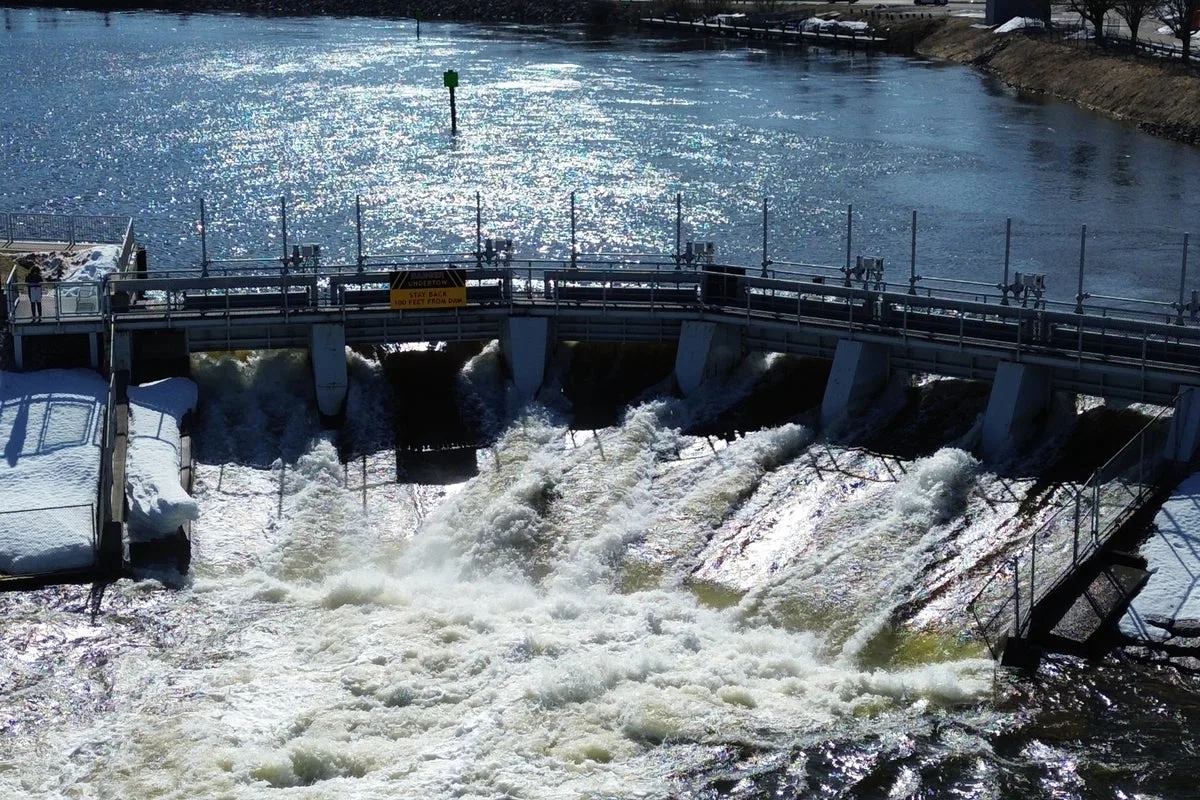
Local, state and federal officials were aware of the dangers posed by the Cheboygan Lock and Dam for years before floodwaters pushed it to the brink of collapse, records show. Yet they failed to compel private owners to repair the nonfunctional hydro plant connected to the publicly-owned dam, a critical piece of its ability to pass floodwaters downstream.
The facility that houses the plant, once a Charmin toilet paper mill, changed hands repeatedly over decades as it fell into disrepair. Now taxpayers are helping to bankroll a desperate effort to bring the plant back online before the dam fails and sends a wall of water toward downtown Cheboygan.
Records show the Federal Energy Regulatory Commission (FERC) sent warning letters for years to a shifting cast of owners while granting multiple extensions. Among the issues cited were missing inspection records and malfunctioning equipment crucial to passing water in the event of a flood. As far back as 2019, regulators warned about cracked concrete and damaged retaining walls and gates.

In 2021, FERC told the then owners that 'multiple items are overdue and completion dates are rapidly approaching.' The plant was cited 16 times in 10 months for safety violations by the Occupational Safety and Health Administration before a fire closed it altogether in September 2023. That prompted more orders for repairs and more extensions from FERC.
State Senator John Damoose said after touring the dam that the solution 'keeps getting kicked down the road … now we’ve got a whole community in peril because it was mismanaged by private owners.' He added, 'This is a problem that could happen all over the state.' Governor Gretchen Whitmer acknowledged 'there’s no simple answer' due to a 'complicated web of privately owned and publicly owned dams.'
The crisis comes six years after the privately-owned Midland dams failed following a similar pattern of regulatory delay. Michigan legislators vowed to make dam safety a priority after Midland, but ultimately did not act on proposed reforms.