England Must Destine 7% of Land to Nature and Renewables to Hit Green Targets
New data indicates that approximately 7% of England's land, an area roughly two-and-a-half times the size of Cornwall, will need to be allocated for nature conservation, forests, and renewable energy to meet the UK's environmental targets. This revelation comes from the government's first published land use framework, which maps how land is currently used and how it can be adapted to address changing needs.
Balancing Development and Environmental Protection
Ministers aim to mitigate debates over housing development versus nature protection by providing detailed mapping of England's land use for the first time. They have described current land use as "highly inefficient" and are introducing measures to streamline development while enhancing environmental resilience.
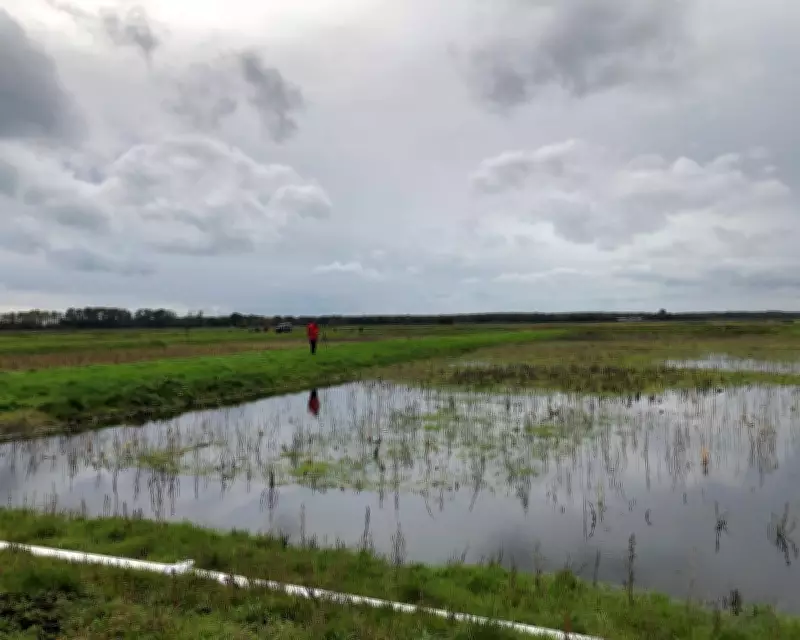
Under new rules, housing developments within walking distance of existing train stations will receive a "default yes" approval. Housebuilders will also be required to incorporate ponds, wetlands, and improved urban drainage schemes into their projects to combat the increasing risk of flooding.

Farmers and Land Use Adaptation
Farmers will be informed whether their land would be better suited for forestry, wetland, or peatland restoration, or other non-farming uses. Where appropriate, they will be encouraged through new incentives rather than coerced. The UK's outdated classifications of agricultural land will be updated to reflect modern needs.
A high priority will be placed on restoring England's peatlands, with farmers advised on optimal land use. However, this will not include an outright ban on development such as wind or solar farms on degraded peatland.
Renewable Energy and Additional Measures
Only about 1% of England's land is estimated to be needed for solar and wind farms and other renewable energy sources, according to the report. However, this estimate may require updating, as the Department for Environment, Food and Rural Affairs has admitted it did not account for increased water and energy needs from the construction of new AI datacentres.
Other key measures in the 56-page report include:
- Encouraging the "multi-use" of land, such as livestock grazing alongside wind and solar farms, and integrating wildlife protection and nature restoration on arable land.
- Urging local authorities to establish nature reserves in both urban and rural areas.
- Implementing closer scrutiny and tighter regulation of grouse moors, exceeding EU rules.
- Consulting on "making landowner liability more proportionate," which could facilitate public access to certain areas, though no new "right to roam" is included.
- Publishing a national soil map and establishing a new land use unit.
- Planning for landscape changes under global heating scenarios of 2C and 4C above preindustrial levels.
Government and Stakeholder Responses
Environment Secretary Emma Reynolds emphasized the importance of food security, stating, "Food security is national security, and this government is making a clear long-term commitment to maintain domestic food production at current levels. Our most productive agricultural land will be safeguarded for food security."
She added that nature recovery would be treated as a national priority, with plans to publish a spatial map of England's critical natural assets to guide recovery efforts.
Nature Minister Mary Creagh highlighted the potential for integrated development, saying, "We can do infrastructure, nature and housing all together, creating beautiful places where people want to live."
Farmers and campaigners have broadly welcomed the framework. Tom Bradshaw, president of the National Farmers' Union, called it "a step in the right direction" but noted that achieving all objectives within existing land is ambitious and requires clear guidance and incentives.
Martin Lines of the Nature Friendly Farming Network stressed the need for a clear funding pipeline from both public and private sectors to deliver the report's goals.
Tom Lancaster, head of land, food and farming at the ECIU thinktank, pointed out the urgency of the matter, citing recent poor harvests due to the climate crisis and emphasizing that a coherent land use approach is essential for building resilience to climate shocks.