Mexico Announces Sweeping Environmental Measures Following Investigation Revelations
The Mexican government has unveiled a comprehensive strategy to tackle industrial pollution, implementing significant fines and establishing a groundbreaking air-monitoring network. This decisive action comes directly in response to investigative reports by the Guardian and Quinto Elemento Lab, which exposed alarmingly high levels of heavy-metal contamination in communities surrounding industrial facilities.
Unprecedented Enforcement and Monitoring Initiatives
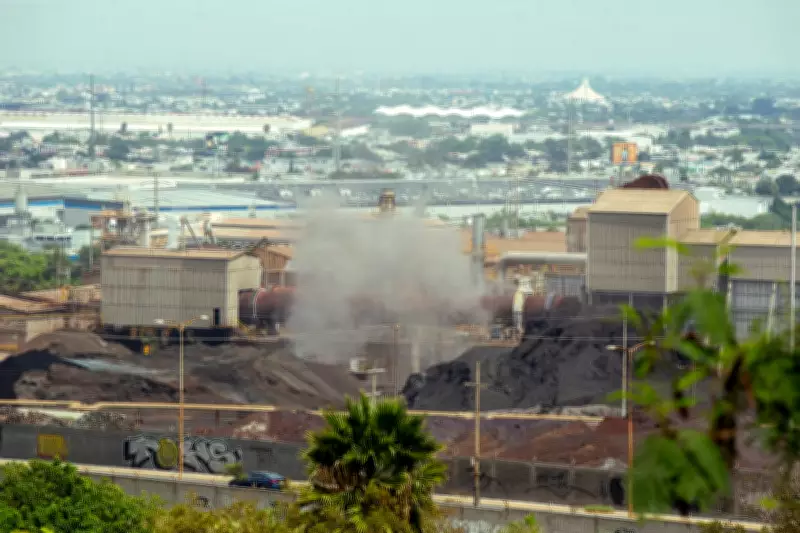
Central to the government's response is a substantial $4.8 million fine levied against Zinc Nacional, a company that processes hazardous waste imported from the United States. Simultaneously, authorities have committed to deploying "the first of its kind in Latin America" atmospheric monitoring network specifically designed for industrial emissions. This system will track pollutants including dangerous heavy metals, though specific operational details and geographical scope remain under development.
Mariana Boy Tamborrell, Mexico's federal attorney for environmental protection, described these actions as a "watershed moment" for environmental regulation. She confirmed that the enforcement wave began when the initial investigative stories were published in early 2025, leading to Zinc Nacional agreeing to address environmental damages identified by regulators.

Groundbreaking Agreement with Zinc Nacional
The agreement with Zinc Nacional represents a landmark in Mexican environmental policy. The company must implement 24 corrective measures alongside the financial penalty. Key requirements include relocating certain operations away from residential areas in densely populated Monterrey, constructing new containment and water treatment facilities, remediating contaminated land, reforesting 12 acres, and establishing ongoing emissions monitoring.
In their official statement, Zinc Nacional acknowledged some contamination on their property while attributing it to previous site operators. The company maintained that their current emissions fall "well below regulatory parameters" and emphasized their commitment to reducing environmental impact while supporting local employment and expanding green spaces.
Scientific Validation and Community Concerns
Martín Soto Jiménez, a leading toxicology researcher at the National Autonomous University of Mexico who collaborated on the soil sampling, hailed the agreement as "a historic step forward for environmental justice." He particularly emphasized the potential of the new monitoring network, stressing that its effectiveness depends on making real-time data publicly accessible to citizens and scientists alike.
Despite these developments, community members expressed significant reservations. Soil samples collected for the investigation revealed shocking contamination levels, with one primary school showing lead concentrations 1,760 times higher than US health risk thresholds. Neighbors like Ricardo González voiced disappointment that the government's announcement focused primarily on contamination within plant boundaries rather than addressing health impacts in surrounding communities.
Cristóbal Palacios, another local resident, called for complete transparency regarding remediation details and future air quality data. "All of us who live near the company should be able to see, with our own eyes, the numbers [the government] says they're going to obtain," he insisted, highlighting the need for enforceable deadlines and public accountability.
Broader Regulatory and Legislative Reforms
Beyond the specific case against Zinc Nacional, Mexico's environmental regulator Semarnat has initiated broader policy changes. The agency is working to update industrial air-pollution standards, some unchanged for decades, including proposals to reduce permissible particulate matter emissions by 50%. Simultaneously, soil contamination standards are undergoing comprehensive review.

Federal senator Waldo Fernández, who oversees Mexico's trade negotiations with the United States, is drafting legislation to limit toxic waste imports and mandate heavy metal emissions monitoring. His proposed bill, scheduled for introduction in February, aims to restrict imports of materials generating pollution with arsenic, lead, cadmium, and other toxic elements while strengthening regulations for permitted imports.
Growing Citizen Activism and Legal Challenges
The investigative reports have galvanized civil society responses across Monterrey. Two citizen groups have launched distinct initiatives: one gathering signatures for a referendum to align air quality standards with international guidelines, and another—the prominent Group of 6 activists—filing a December lawsuit demanding federal investigation of regional industrial air emissions.
Liliana Flores, a Group of 6 founder, characterized the situation as "environmental crimes that threaten health and life," noting that thousands of Monterrey residents die annually from air pollution-related illnesses. "It doesn't matter if you are rich or poor," she observed. "Here, 100% of all of us who live in the metropolitan area are affected."
This multifaceted response represents Mexico's most significant environmental enforcement action in recent years, directly linking investigative journalism to substantive policy changes and regulatory reforms aimed at protecting public health and ecological integrity.