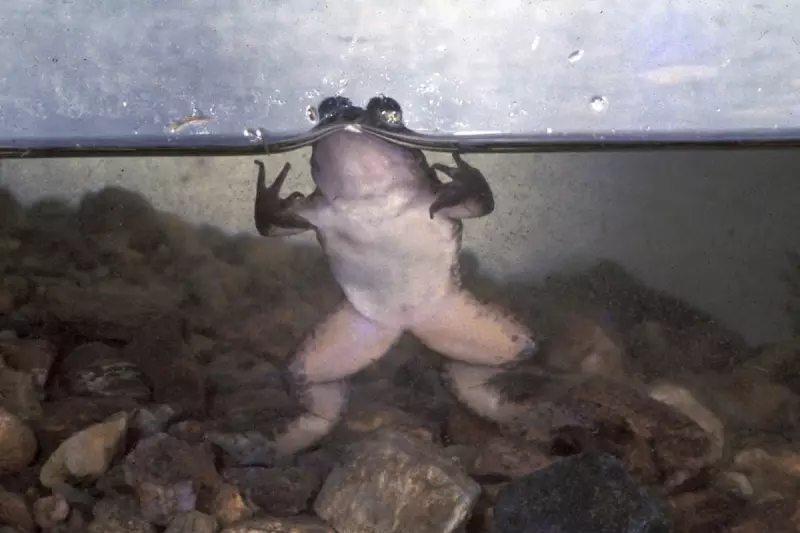
In the snow-gum studded landscapes of Australia's Kosciuszko National Park, a desperate battle is unfolding to prevent the disappearance of one of the continent's most visually striking amphibians. The Southern Corroboree Frog, a black and yellow patterned species smaller than a human thumb, now teeters on the brink of extinction with fewer than 50 individuals estimated to remain in the wild.
The Precarious State of an Australian Icon
This critically endangered species faces an existential threat from chytrid fungus, a devastating pathogen that has decimated amphibian populations worldwide. The fungus attacks the frog's skin, crucial for respiration and hydration, ultimately causing cardiac arrest. Conservationists estimate the wild population has declined by over 80% in recent decades, pushing this unique amphibian perilously close to disappearing forever.
Dr. David Hunter, a senior threatened species officer, delivers a sobering assessment of the situation. "We're down to the last few individuals in the wild," he states, highlighting the critical nature of current conservation measures. The frog's survival now depends entirely on human intervention through captive breeding and reintroduction programs.
Unlikely Allies: Science and Poetry Unite
In an innovative approach to conservation advocacy, Australian poet Mark Tredinnick has lent his voice to the cause through his work Corroboree. His poetry captures both the ecological and cultural significance of the species, describing it as "a small, bright, tough music in the dark" - a poignant metaphor for hope amidst environmental crisis.
This collaboration between science and humanities represents a growing recognition that technical conservation efforts alone may not be sufficient. "We need both the science and the poetry," Tredinnick argues, suggesting that cultural connection might be as vital as biological understanding in motivating protective action.
The political dimension of this conservation crisis came to the forefront when New South Wales Environment Minister Penny Sharpe personally visited the frog's alpine habitat. Her involvement signals the increasing political recognition of the species' precarious position and the need for governmental support in conservation initiatives.
Captive Breeding: A Lifeline for the Species
Conservation efforts now centre around several key strategies:
- Captive breeding programs at specialised facilities including Taronga Zoo
- Wild egg translocation to protect future generations from disease
- Habitat protection in Kosciuszko National Park
- Disease research to combat the chytrid fungus threat
These programs have achieved some success, with conservationists now releasing hundreds of eggs and juvenile frogs back into protected habitats annually. However, the long-term survival of the species remains uncertain without continued human management of both the frogs and their environment.
The Southern Corroboree Frog's struggle represents a broader global amphibian crisis, with chytrid fungus having caused the decline or extinction of approximately 500 species worldwide. This Australian conservation battle therefore carries significance beyond national borders, offering insights that could inform preservation efforts for other threatened amphibians globally.
As this multifaceted conservation effort continues, it demonstrates that saving a species requires more than biological intervention - it needs political will, scientific innovation, and cultural engagement working in concert. The fate of this small, brightly patterned frog will test whether human dedication can outpace environmental threats in time to prevent another permanent loss to global biodiversity.