Greenland Shark Mysteries Unravelled: Sighted, Ancient, and Misunderstood
Greenland Shark Secrets: Sighted, Ancient, Misunderstood

Greenland Shark Mysteries Unravelled: Sighted, Ancient, and Misunderstood

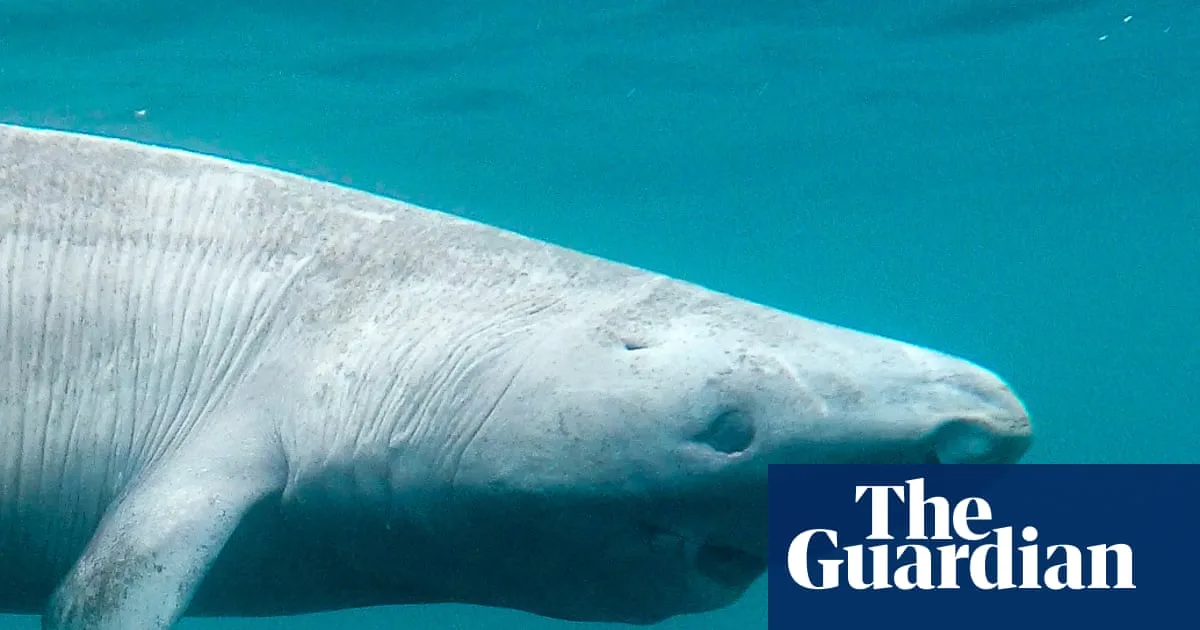
For decades, the scientific community has clung to two core beliefs about Greenland sharks: they are the oldest living vertebrates and they are functionally blind. Described by researchers as looking 'already dead', these enigmatic creatures have remained one of the least understood species on the planet, drifting in the twilight waters of the Arctic with a clumsy, near-sightless demeanour.

A Groundbreaking Discovery Challenges Blindness Assumptions

This month, however, a groundbreaking study has upended these long-held notions. Researchers from five universities worldwide have found that Greenland shark retinas are structurally pristine and capable of detecting light and contrast, despite cloudy eyes and parasitic copepods dangling from their corneas. This discovery, based on extensive genetic sequencing and molecular analysis, reveals that the sharks successfully withstand harsh Arctic conditions and parasitic assaults.

Nigel Hussey, a leading Greenland shark expert, notes that this aligns with his observations of the sharks displaying finely tuned movements and a greater range of activity than previously thought. 'We absolutely underestimate them,' he says, emphasising their status as 'absolutely incredible animals'.

Questioning the 500-Year Lifespan and Other Myths

The research also casts doubt on the widely cited estimate that Greenland sharks can live up to 500 years. A 2016 study used carbon dating to suggest some sharks might have overlapped with historical figures like William Shakespeare, but Hussey cautions that this method has margins of error for shorter time frames. 'This type of dating method is challenging to use for ageing animals that are hundreds of years old,' he explains, calling for further validation.

Even the name 'Greenland shark' is a misnomer, as they are not confined to deep waters but often appear in shallow Arctic regions due to frigid temperatures. Their potential as global circumnavigators, with sightings in Caribbean waters, raises questions about their management and scale of movement across oceans.

The Enigma of Reproduction and Climate Change Impacts

Amidst these revelations, profound unknowns persist, particularly regarding reproduction. The last pregnant female was documented in 1950, and scientists still lack knowledge about where they reproduce or litter sizes. Jena Edwards, a marine ecologist, highlights the challenges: 'We're taking blind shots in the dark. We have so little data that we make a hypothesis based on what we know, but need so much more research.'

The rapidly changing Arctic climate, warming faster than anywhere else on Earth, adds another layer of uncertainty. While Greenland sharks, as generalist feeders, may adapt by moving to deeper, colder waters, Hussey expresses concern over how little is known about their reproductive habits in this shifting environment.

Oral Histories and Predatory Behaviours

Oral histories from Inuit hunters suggest Greenland sharks may be more capable predators than assumed, with reports of attacks in shallow waters. Hussey speculates they could ambush mammals at breathing holes in ice, challenging the stereotype of them as mere scavengers. 'If all they can do is scavenge, how the hell have they managed to live on this planet for so long?' he questions, urging a reevaluation of their capabilities.

Eric Ste Marie, a doctoral student, likens studying these sharks to assembling a thousand-piece puzzle with only a handful of pieces. 'We're trying to kind of come to a complete picture of this animal, using only a small snapshot of their lives,' he says, underscoring the ongoing quest to unravel the secrets of Greenland sharks in the face of climate change and scientific hubris.