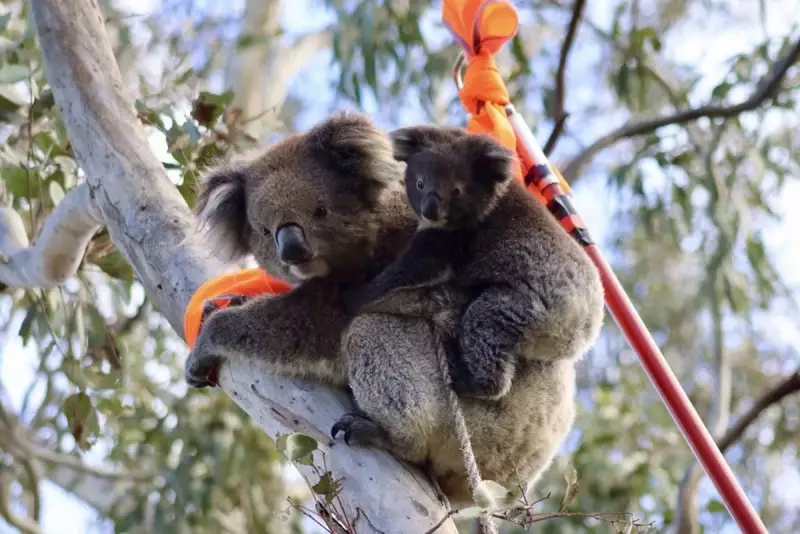
Conservationists in Australia are grappling with an unexpected and complex dilemma as certain regions experience a dramatic surge in koala populations that threatens to overwhelm local ecosystems. While these iconic marsupials remain endangered across much of eastern Australia due to habitat destruction, specific areas are now facing the opposite problem: too many koalas for the environment to sustain.
The Population Paradox
According to recent national surveys, Australia's total koala population ranges between 729,000 and 918,000 individuals, with significant declines documented along the eastern seaboard. However, this overall picture masks a troubling regional imbalance. South Australia's Mount Lofty Ranges now hosts approximately 10 percent of the country's total koala population, creating what researchers describe as an unsustainable concentration of animals in a limited geographical area.
"Koalas are in steep decline across much of eastern Australia, but in south Australia's Mount Lofty Ranges, the opposite problem is happening: a booming koala population," explains ecologist Frédérik Saltré from the University of Technology Sydney. "This should be good news, but these numbers are concerning."

Ecological Strain and Future Projections
New research published in the journal Ecology and Evolution reveals alarming projections for these concentrated populations. Without intervention, scientists predict koala numbers in these regions could increase by an additional 17 to 25 percent over the next quarter-century. This growth would intensify pressure on already-strained food resources, vegetation, and surrounding ecosystems.
"Many areas now have koala densities far beyond what the ecosystem can sustain," Dr Saltré warns. "In the next few decades, following this trajectory, there will almost certainly be a terrible situation of mass koala starvation and death."
The current situation presents conservationists with what study co-author Katharina Peters from the University of Wollongong describes as "a difficult conservation dilemma." Traditional population management approaches, such as culling or relocation, raise significant ethical concerns and prove particularly challenging for such an iconic native species.
Modelling Management Solutions
Researchers employed advanced computer modelling to explore potential solutions to this ecological challenge. Their findings suggest that fertility control focusing on adult females represents the most viable approach. The study indicates that treating approximately 22 percent of adult female koalas annually would effectively stabilise population growth in affected regions.
Scientists estimate this fertility control strategy would cost around $24 million Australian dollars over a 25-year implementation period. "Fertility control focusing on adult females emerged as the most cost-effective strategy," the researchers noted in their published findings.
Comparative Conservation Investment
This proposed expenditure represents less than one-fifth of the Australian government's investment in wildlife recovery following the devastating 2019–2020 Black Summer bushfires. The comparative affordability of this proactive management approach highlights its potential as a sustainable long-term solution to an increasingly urgent conservation problem.
The research underscores the complex realities of modern wildlife conservation, where success in population recovery can create new ecological challenges requiring sophisticated, science-based management strategies. As koala densities continue to exceed sustainable limits in specific regions, conservationists must balance ethical considerations with ecological necessity to ensure the long-term stability of both koala populations and their habitats.