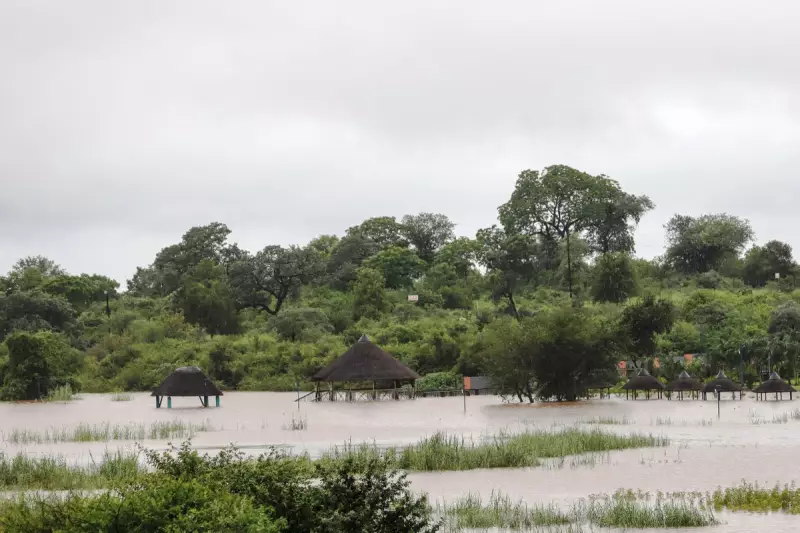
South Africa's world-renowned Kruger National Park is confronting a monumental recovery challenge following catastrophic flooding that has caused extensive damage to critical infrastructure. The iconic game reserve, which serves as a major economic driver for both local communities and international tourism, will require up to five years and significant financial investment to fully restore.
Extensive Damage and Temporary Closure
Severe flooding earlier this month forced the temporary closure of the entire park after heavy rainfall caused multiple rivers to overflow their banks. According to South Africa's Minister of Forestry, Fisheries and the Environment Willie Aucamp, fifteen tourist camps within the reserve remain completely inaccessible due to floodwaters, with some facilities suffering substantial structural damage.
While emergency services successfully evacuated hundreds of visitors and staff without any loss of human life, the logistical and financial implications are substantial. Initial damage assessments indicate repair costs will exceed 500 million rand, equivalent to approximately £22 million, with the restoration of bridges, roads, and other essential infrastructure projected to span several years.

Climate Change Intensifying Regional Weather Patterns
The devastating floods represent part of a broader pattern of increasingly severe weather events affecting southeastern Africa, which scientists attribute to climate change impacts on the Indian Ocean. Neighbouring Mozambique is simultaneously grappling with similar flooding that has displaced tens of thousands of residents in recent days, highlighting the regional scale of the environmental crisis.
Minister Aucamp emphasised the unprecedented nature of the disaster during a statement to Reuters, noting: "The recent floods that we've experienced have had a devastating effect on the park. The indication is that it will take as long as five years to repair all the bridges and roads and other infrastructure."
Wildlife Adaptation and Human Safety Concerns
Despite the dramatic scenes witnessed by journalists – including completely submerged bridges and hippos swimming among treetops – park officials report limited immediate concern for wildlife populations. Animals typically demonstrate natural survival instincts during flooding events by seeking higher ground and adapting to changing conditions.
However, authorities have issued specific warnings to nearby communities regarding displaced crocodiles that may have moved beyond their usual habitats due to the flooding, creating potential safety risks for local residents. This represents an additional challenge for wildlife management teams already dealing with the extensive infrastructure damage.
Economic Impact and Long-Term Recovery
The closure of tourist facilities represents a significant economic blow to the region, as Kruger National Park serves as a vital tourism destination attracting visitors from across South Africa and internationally. The extended recovery timeline means that local businesses dependent on park tourism will face prolonged financial challenges.
Environmental experts suggest that the flooding events underscore the urgent need for climate-resilient infrastructure planning in protected areas across southern Africa. As extreme weather becomes more frequent, conservation authorities must develop more robust disaster response strategies and infrastructure designs capable of withstanding increasingly severe environmental conditions.
The recovery effort at Kruger National Park will involve multiple government departments, conservation organisations, and engineering teams working collaboratively to restore access while maintaining essential wildlife protection measures throughout the reconstruction process.