A Spider 'Megacity' Unlike Any Other
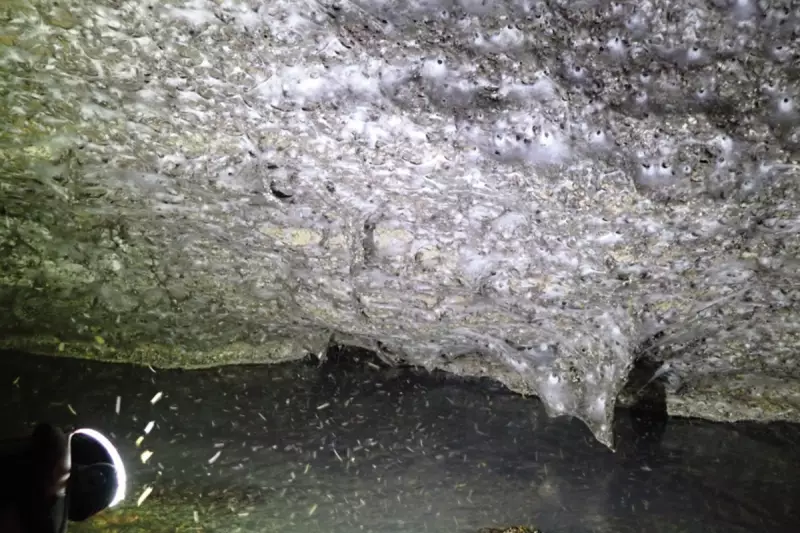
In an astonishing discovery that challenges our understanding of arachnid behaviour, researchers have uncovered what is believed to be the world's largest known spider web. This colossal structure, spanning an incredible 100 square metres, was found within a cave straddling the border between Albania and Greece.
A Cooperative Metropolis of Solitary Species
The vast web functions as a bustling 'megacity', housing a staggering population of over 100,000 spiders. This arachnid metropolis is composed of two distinct species: approximately 69,000 domestic house spiders and 42,000 sheet weaver spiders. The finding, reported by Vishwam Sankaran on Friday 07 November 2025, is groundbreaking because both of these species are typically solitary and fiercely territorial. This is the first documented case of such a massive cooperative web being woven by multiple individuals from different, normally non-social spider species.
Life in the Lightless Depths
The spiders have thrived in the cave's harsh, lightless environment by adapting to a unique and self-sustaining food chain. Microbes within the cave provide sustenance for midges, which in turn become the primary prey for the vast spider population. DNA analysis conducted by the research team, including I. Urak, has revealed a further extraordinary detail: the cave-dwelling spiders are genetically distinct from their surface-dwelling relatives. Scientists suggest that the perpetual darkness of the cave may be a key factor, not only in their physical evolution but also in enabling this unprecedented peaceful coexistence.
This 'spider megacity' is more than just a record-breaking web; it is a window into the remarkable adaptability of life in the most extreme environments on our planet.