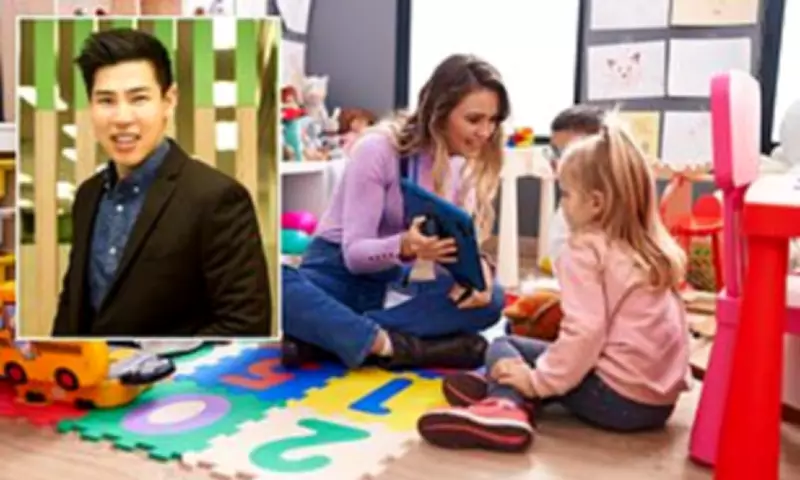
Working Father Issues Urgent Warning to Parents About Sick Children in Childcare
A concerned working father from Sydney has issued a heartfelt plea to parents, urging them to refrain from sending their sick children to childcare facilities, even when symptoms appear minor like "just a sniffle." Dr Vincent Candrawinata, a clinical nutritionist with a PhD from the University of Newcastle, emphasised that this common practice is often a "selfish" move with far-reaching consequences.
The Viral Revolving Door in Family Homes
Dr Candrawinata revealed that his own household has transformed into what he describes as a "revolving door of viruses" since the beginning of 2026. His family has endured a relentless cycle of coughs, fevers, runny noses, and stomach bugs, with the past three weeks alone bringing hand, foot and mouth disease, croup, and rhinovirus infections.
The root cause? Parents who knowingly send visibly unwell children to daycare centres, sometimes even administering paracetamol beforehand to mask symptoms at drop-off. His two-and-a-half-year-old daughter unexpectedly contracted these illnesses at her childcare facility, sparking his public appeal.

Understanding Parental Pressures While Protecting Communities
"As working parents, we understand the pressure and the limitations, as well as the challenges when it comes to caring for our kids while also earning money for our family," Dr Candrawinata explained. However, he stressed that what many consider a "harmless act" actually creates unsafe working conditions for daycare staff and educators.
"Everybody deserves to work safely without feeling that they are putting their own well-being at risk," he continued. "I'm not judging people's choices. In a sense, I'm just begging people to think twice before they do something that could have a bigger impact on others."
The Domino Effect of Daycare Virus Transmission
In a detailed opinion piece, the father outlined how "common sense" should prevail when children show any signs of illness, no matter how minor. He described the typical transmission pattern: "One child walks into daycare with a virus. Within days, it spreads through the room. Then it goes home to siblings, parents and grandparents... Then it circles back again."
This cycle creates significant disruptions for working families through lost productivity and difficult employer conversations. For vulnerable family members, the consequences can extend far beyond mere inconvenience to potentially serious health complications.
"We have already taken significant time off work this year to care for our daughter, and it is only mid-February," Dr Candrawinata shared. "We are fortunate to have flexibility. Many families do not. For parents with limited leave, this cycle can be devastating."
Nutritional Resilience and Community Responsibility
As a clinical nutritionist, Dr Candrawinata noted that his family's healthy diet with minimal ultra-processed foods has helped them recover relatively quickly from these illnesses. "I know how to keep my family healthy, which is why the recovery period is short and the severity is not that bad," he said.
However, he expressed concern for friends and family members whose children "spend more time sick than being at daycare." He emphasised that while childcare centres often receive blame as disease breeding grounds, the facilities themselves typically work diligently to prevent outbreaks.
"People talk about it as if it is the daycare's fault, when in fact it isn't. They actually try their best to prevent any outbreak," he clarified. "I personally think it is very unfair that the educators have to unnecessarily put themselves at risk."
Clear Guidelines and Parental Solidarity
Dr Candrawinata offered straightforward advice: if your child exhibits a fever, persistent cough, vomiting, diarrhoea, or appears "clearly unwell," keep them away from childcare until they fully recover. "It really is that simple," he stated.
He challenged the normalization of constant illness as "just part of it," suggesting that "sometimes the most powerful health intervention is not something you add. It is a decision you make before you leave the house."

The father concluded with a message of solidarity: "The only way this can stop is if all of us take responsibility and are accountable. After all, as the saying goes, it takes a village. I truly do not want to judge people or to preach. It is simply one parent to another. At the end of the day, it is about our kids."
Parental Responses and Shared Experiences
Dr Candrawinata's appeal resonated deeply with other parents, sparking numerous accounts of similar experiences. One mother of three shared a particularly distressing story about her newborn baby spending the first four weeks of life in hospital after her eldest child brought home an illness from school.
"Absolutely agree with you. Do not send your sick child to daycare or school," she wrote. "When number one child started school, came home sick after three days and passed it on to number two, then dad, then mum, then baby. Nanny got sick trying to help out and that left five of us very ill for a period of two-and-a-half weeks."
Other parents expressed empathy for those facing work pressures while acknowledging broader responsibilities. "Yes I can empathise with parents who simply can't afford to take days off work to care for their sick children," one commenter noted. "But then you gotta ask, did you really think things through about the responsibilities of having kids?"
Another added perspective regarding childcare staff: "We also need to sympathise with the staff who can catch everything going round, use up their sick leave and then have to take leave without pay, when people sometimes knowingly send sick children."