UK Doctors Celebrate Landmark Birth Following Pioneering Womb Transplant
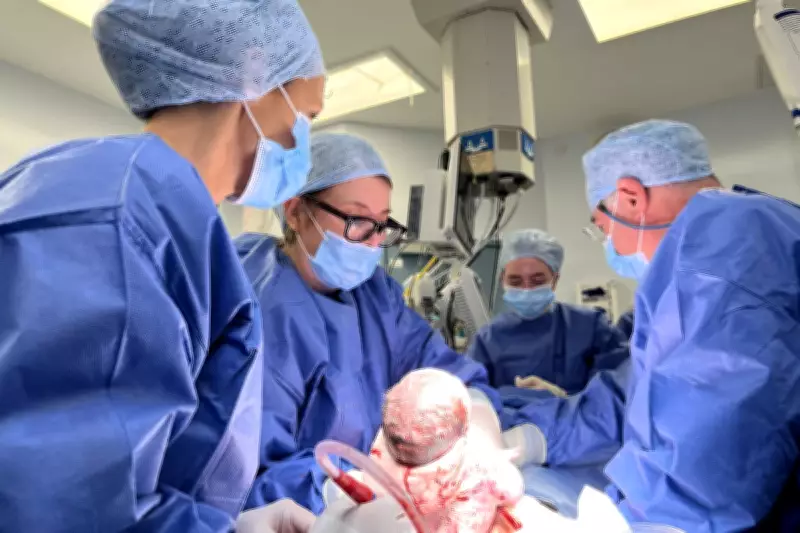
Medical professionals have expressed profound joy following the birth of baby Hugo Powell, delivered in London after his mother received a groundbreaking womb transplant from a deceased donor. Born in December at Queen Charlotte’s and Chelsea Hospital, Hugo weighed a healthy 6lb 13oz (3.1kg), representing a monumental achievement in reproductive medicine after a successful pregnancy.
Medical Team's Emotional Response
Bryony Jones, a consultant obstetrician at Imperial College Healthcare NHS Trust who has now delivered both babies born in the UK following womb transplants, shared her delight. Speaking to the Press Association, she remarked: "I have the best job – delivering any baby is really exciting. But this baby was particularly special, especially as we had seen the patient right from the start. We had the whole of the team with us on that day, so it is very exciting, and we’re all delighted."
Ms Jones explained that she and other doctors who volunteer their time through the charity Womb Transplant UK maintain complete honesty with patients. They acknowledge the limited global experience in caring for women who have undergone uterine transplants, but emphasize that many skills from managing other organ transplant recipients and complex pregnancies are transferable.

Groundbreaking Surgical Achievement
Isabel Quiroga, consultant surgeon and clinical lead for organ retrieval at the Oxford Transplant Centre, has performed both womb transplants in the UK. She highlighted the technical challenges, noting that internationally there have been more early failures with deceased donor transplants compared to living donor procedures.
"This is a ground-breaking operation," she stated. "The fact that we have the third in Europe, the first in the UK, is very, very important. And of course, it opens the door maybe to other women who do not have living donors, to have the opportunity to be mothers with these type of donors."
Miss Quiroga emphasized the precious time window for using organs from deceased donors, which her team estimates at approximately 12 hours. She expressed continued awe for donor families who make such procedures possible, stating: "These families want to help others. They want to give life and to give health to other patients. I’m incredibly grateful."
Comprehensive Patient Care
Women receiving womb transplants require extensive medical supervision, including additional appointments, extra scans to monitor fetal development within the transplanted womb, and regular blood tests. Remarkably, more than thirty expert staff members collaborate in the care of each womb transplant patient, ensuring comprehensive support throughout the pregnancy journey.
Future Prospects and Funding Challenges
Professor Richard Smith, clinical lead at Womb Transplant UK and consultant gynaecological surgeon at Imperial College Healthcare NHS Trust, revealed that the charity requires additional funding to continue its pioneering programme. To date, surgeons have performed five womb transplants in the UK – two involving living donors and three using deceased donors, all funded by the charity.
Professor Smith is currently engaged in discussions with NHS leaders regarding potential future NHS funding for women who have no alternative means of having their own biological children. "Both the living and deceased programmes have got capacity for expansion," he explained. "We’re constrained mainly by cash."
He highlighted the broader potential impact, noting that while most current patients were born without a womb, many more women have lost their uterus due to cancer or haemorrhage. "Probably, we know 5,000 women in the UK are born with no womb, but we also know there’s probably in total about 15,000 women of reproductive age who would potentially like to have a womb," he concluded, underscoring the transformative potential of this medical advancement.