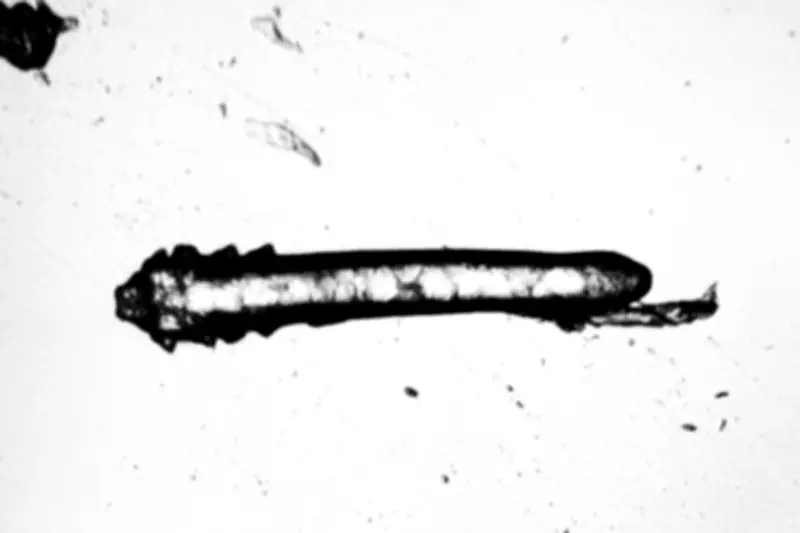
The Microscopic World Living on Your Skin
Your skin is not a solitary frontier but a thriving habitat teeming with microscopic life. While bacteria and fungi often dominate discussions about the skin microbiome, an entire ecosystem of mites coexists with us, largely unnoticed. Among these, demodex mites—tiny eight-legged relatives of spiders—are particularly prevalent, residing inside hair follicles and pores, especially on the face. Almost every adult human carries these microscopic creatures, yet their presence is rarely a cause for alarm.
Symbiotic Relationships and Biological Balance
Contrary to their reputation as invaders, demodex mites are best described as symbionts, organisms that live alongside us as part of a shared biological system. They feed on skin oils and dead cells, spending most of their lives tucked safely within pores. At night, they emerge to move across the skin, mate, and lay eggs. For the vast majority of people, this activity goes entirely unnoticed, highlighting their typically benign role in our skin's ecology.
In a recent episode of the Strange Health podcast, hosted by Katie Edwards and Dan Baumgardt, the intricate dynamics of these microscopic housemates are explored. The podcast delves into why the idea of mites can feel unsettling and examines when their presence transitions from normal to problematic. According to Alejandra Perotti, a professor of invertebrate biology at the University of Reading, mites are not an indicator that something has gone awry. Human skin is inherently a habitat, not a sterile barrier, and this balance is crucial for overall health.

When Mites Become a Medical Concern
However, this balance can shift under certain conditions. In some individuals, demodex populations may increase dramatically, particularly if the immune system is compromised or the skin barrier is disrupted. Such surges have been linked to skin conditions like rosacea and blepharitis, which can cause redness, irritation, and inflamed eyelids. Importantly, the mites themselves may not be the primary driver of these symptoms; instead, the immune response to them or associated microbes might be responsible.
Other mites inhabit our environments in different ways. Dust mites, for example, live in bedding, clothing, and carpets, feeding on fungi that grow on shed skin. While they do not bite, their waste products can trigger allergic reactions in sensitive individuals, contributing to asthma, eczema, and hay fever symptoms. Then there are disease-causing mites, such as those responsible for scabies, which burrow into the skin to lay eggs, leading to intense itching and inflammation. Cases of scabies have been rising in parts of the UK and Europe, especially in settings like care homes, schools, and student accommodation where close contact is common.
Dispelling Myths and Reducing Stigma
It is essential to dispel common misconceptions about these organisms. Scabies, for instance, has nothing to do with cleanliness; it spreads through prolonged skin-to-skin contact and is treatable with prescribed creams and coordinated treatment of close contacts. The stigma attached to it often causes more distress than the condition itself. Similarly, head lice—often mistakenly grouped with mites—are actually insects that spread through head-to-head contact and are common among children, regardless of hygiene practices.
The visceral reaction many people have to mites stems partly from our evolved disgust response, which helps us avoid disease. However, this instinct can blur the line between normal biology and genuine medical issues. In reality, humans are not solitary organisms but complex ecosystems. Most microscopic life on our skin is either harmless or beneficial, with only a small number of species causing disease. When problems arise, they are medical in nature, not moral.
Understanding these microscopic inhabitants matters more than fearing them. By listening to podcasts like Strange Health, which features insights from experts like Perotti, we can learn to distinguish between everyday biology and real health concerns, fostering a more informed and less anxious perspective on our own skin's hidden world.