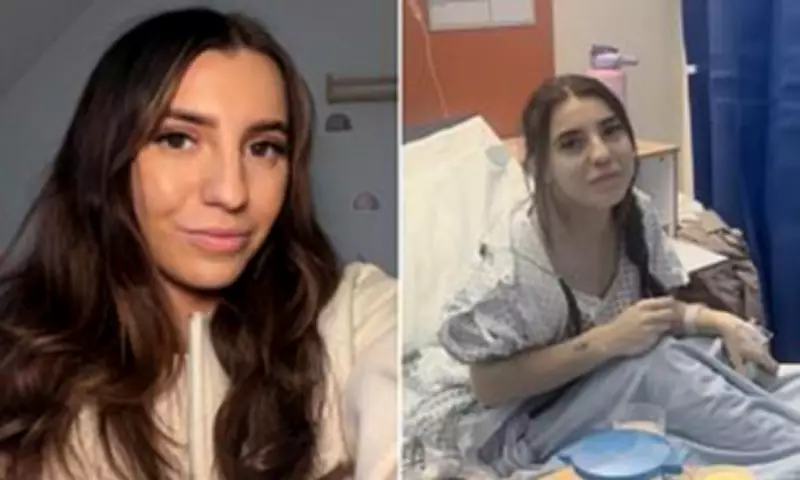
Georgina Hayward was performing a routine task of shaving her armpits when she detected an unusual lump in her right breast. The 30-year-old beauty therapist, residing in Leicester, immediately scheduled an appointment with her general practitioner. She had also been experiencing a persistent tingling and itching sensation in her breast, alongside fatigue, which she initially attributed to the demands of caring for her young child.
A Mother's Initial Concerns
Ms Hayward recounted her symptoms, stating, 'Where the lump was, I was having a tingly, active feeling in that area, and it was a bit itchy. I also had tiredness, which I blamed on being a mum. I have a two-year-old little girl, and I was getting up with her quite a few times in the night, so I didn't think anything of it.' She speculated that the changes might be related to having stopped breastfeeding six months prior, assuming it was a normal post-lactation adjustment.
Urgent Medical Referral and Diagnosis
Her GP referred her for an urgent appointment within two weeks, where she underwent an ultrasound. Due to her mother's history of breast cancer, medical professionals also performed a biopsy. On November 26, Ms Hayward received the devastating news: she had been diagnosed with grade three breast cancer.

Grade three cancers are known for their rapid growth and higher likelihood of spreading compared to grades one or two. Because of their aggressive nature, they often require chemotherapy and do not respond to hormonal therapy alone. Ms Hayward is currently awaiting staging of her cancer, which will determine its size and whether it has spread, ultimately guiding her future treatment plan.
The Emotional Impact of Diagnosis
'I had to wait two weeks for those results, and that's when they pulled me back in and told me that they had found breast cancer,' she shared. 'It was really hard at the time—I was thinking it couldn't be real. I'm only 30; you don't expect these things. You hear of other people getting it, but you don't expect it to happen to you. It was a really big shock.'
She added, 'I'm still waiting for the cancer to be staged now, but at the time they told me it was invasive breast cancer, which had started in the milk duct. It was grade three, which was the most aggressive grade, which is really scary to hear.'
Choosing a Mastectomy for Peace of Mind
The mother of two made the difficult decision to undergo a mastectomy to improve her chances of survival and reduce the risk of cancer recurrence. On January 6, 2026, she had a nipple-sparing mastectomy, a procedure that preserves most of the healthy breast skin, the nipple, and the areola.
Ms Hayward explained her reasoning: 'I thought in my head that the mastectomy was better because I've heard from other people that if you just have the lump removed, sometimes you don't get clear margins. I thought for peace of mind I would have a mastectomy. I know with having just the lump off, it would always be in the back of my mind if all the cancer has been taken away.'
Reflecting on the experience, she said, 'It was scary waking up and wondering what my breast was going to look like, but to be fair, I'm happy with how it looks. It's a big thing, being a woman and being young.'
Future Plans and Reconstruction
Ms Hayward plans to have reconstructive surgery within the next six to twelve months. 'I've had a breast expander put in at the minute while I'm waiting for my other results to come back, depending on what treatment I need,' she noted. 'And then I can have my permanent implants put in, which I'm having on both sides so my breasts match. That will happen in six months to a year's time, depending on what treatment I need next.'

A Call to Action for Women's Health
Ms Hayward is now urging other women to regularly check their breasts and seek medical advice if they notice any changes. 'Be checking monthly because that's something that I rarely did,' she advised. 'Make sure that if there's any difference at all—not just lumps—skin changes and things like that, then go straight to your doctors. See what they say, and they will refer you if they think it's needed, and if you're still not sure, push for your referral to put your mind at ease. Go straight away if you notice any changes because it's better to know than to be in a worse outcome.'
Broader Context: Rising Breast Cancer Trends
This personal story unfolds against a backdrop of concerning trends in breast cancer. Recent data suggests that breast cancer deaths in the UK are projected to soar by more than 40 percent by 2050. In 2022, just over 12,000 women lost their lives to the disease, but this number is expected to exceed 17,000 by mid-century, according to the World Health Organization.
While women in the UK have some of the lowest chances of developing breast cancer in Europe, they still fare worse than those in France and Sweden. Additionally, patients in the UK are more likely to die from the cancer compared to women in America.
Experts from the International Agency for Research on Cancer, part of the WHO, have examined data from over 50 countries, including the UK. They attribute the projected surge in cases to a rising and ageing population combined with unhealthy lifestyles, warning that it is 'vital' for health officials to act now. This comes as alarming research indicates a global increase in breast cancer cases among individuals under 50, a phenomenon that continues to puzzle medical experts.