Nihal's Helmet: A Life Shielded from the Sun's Deadly Rays
Nihal, a young woman living with xeroderma pigmentosum (XP), a rare genetic disorder, faces an extraordinary challenge: her risk of developing skin cancer is estimated to be 4,000 times higher than that of the general population. This condition, often called "Children of the Moon," causes extreme sensitivity to ultraviolet light, making even brief sun exposure potentially life-threatening. Despite this, Nihal remains resolute in pursuing an active and fulfilling life, documented by photojournalist Paul-Louis Godier.
Daily Rituals and Protective Gear
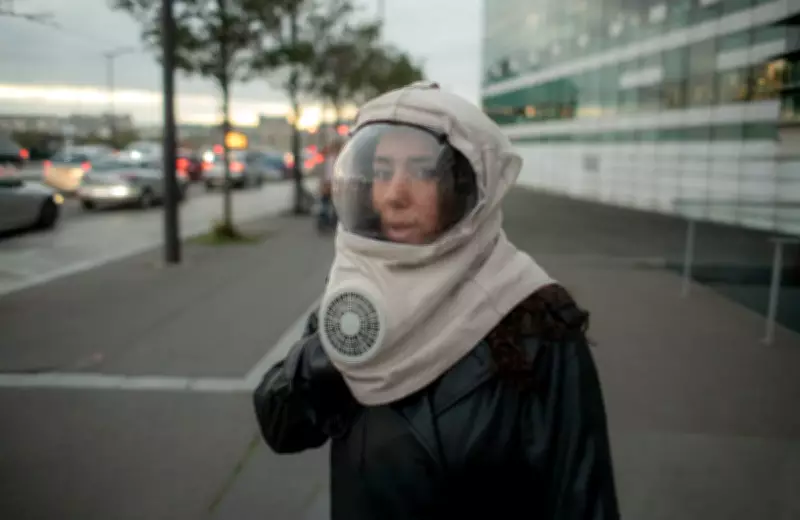
Nihal's daily routine is governed by meticulous precautions. She wears a custom-designed helmet, a long leather coat, and gloves to shield herself from UV rays. This outfit, reminiscent of science fiction, is essential for her survival. Before venturing outside, she uses a small black monitor to check ultraviolet levels. Only when the readout drops to zero, typically after sunset, can she safely remove her helmet. Her protection extends to high-top Converse shoes, a preference since childhood, and regular medical checkups to monitor for melanoma development.
Her helmet, developed and funded by the French organisation "Enfants de la Lune," includes an internal ventilation system to prevent fogging and a transparent shield for better visibility. However, it has its limitations, such as hair getting caught in the vents, requiring frequent adjustments. Nihal embraces her helmet as a distinctive signature, though it often draws curious glances, with some mistaking it for COVID-19 protection.

Early Diagnosis and Family Struggles
Diagnosed at age two and a half in Algeria, Nihal's mother, Nassima, recalls noticing her daughter hiding from the sun during beach trips. A doctor warned that in Algeria's extreme climate, Nihal might not survive beyond five years, leaving the family devastated. With no cure available, they relocated to France for better care. The initial years were tough, but her parents found a school willing to install UV filters throughout the building, enabling her education.
Nassima faced additional anguish when pregnant with triplets shortly after Nihal's diagnosis, fearing they might inherit the same condition. Fortunately, this did not occur, but the emotional toll was profound. Nihal remembers childhood struggles, wearing a balaclava and ski goggles before getting her helmet, which led to classmates viewing her as an alien and communication difficulties.
Building a Future Against the Odds
Now living in Saint-Étienne, southeastern France, Nihal has completed studies in fashion and communication and works as a freelancer. She recently married Ayoub, whom she met on social media in 2024, in a religious ceremony at home in May 2025. This union marks a personal victory, as many doubted she would reach adulthood. Nihal dreams of starting a family, already planning names and hoping for two children, determined to pass on her resilience.
She participates in annual gatherings organised by "Enfants de la Lune," connecting with over 100 others affected by XP in France. These events provide a space to share challenges and momentarily forget hardships. Nihal also uses her platform to raise awareness, such as appearing on French television to discuss her condition, ensuring her story reaches millions.
Despite the constant vigilance required—avoiding not just sunlight but also some artificial lights—Nihal pursues indoor sports like judo and boxing and enjoys nighttime bike rides. Her journey exemplifies courage, as she strives to live an almost normal life and make up for lost youthful experiences, proving that even in the face of incurable illness, determination can light the way.