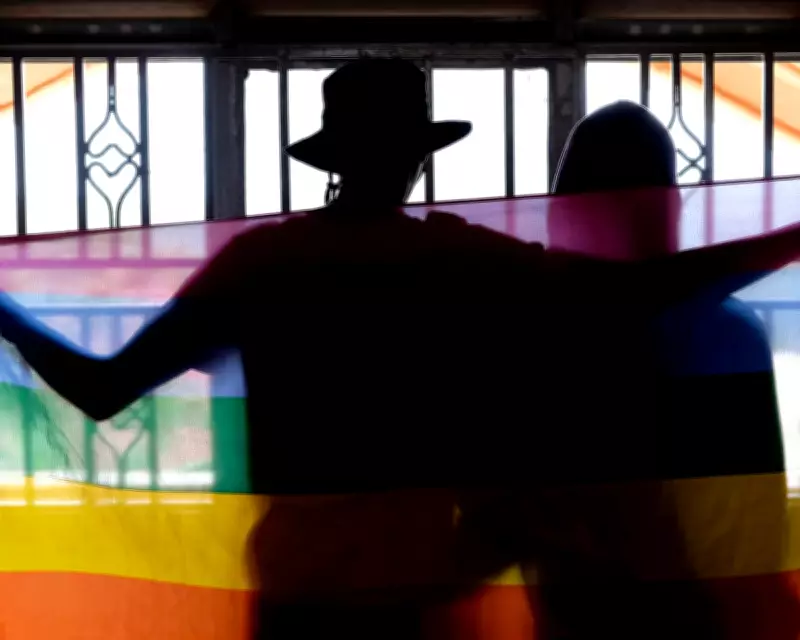
Landmark ONS Study Reveals LGB+ Life Expectancy Gap in England and Wales
A groundbreaking analysis from the Office for National Statistics has uncovered a significant disparity in life expectancy between LGB+ individuals and their heterosexual counterparts in England and Wales. This first-ever examination of mortality data by sexual orientation reveals that people identifying as gay, bisexual, or another minority sexual orientation live approximately one year less on average.
Detailed Breakdown of the Statistics
The comprehensive study, which utilised data from the 2021 census alongside death registrations, provides a detailed picture of this health inequality. For men who identified as LGB+, the life expectancy was calculated at 59.4 years, which is 1.2 years lower than the 60.7 years recorded for men identifying as straight.
Among women, the gap was slightly narrower but still pronounced. Those identifying as LGB+ had a life expectancy of 63.0 years, compared to 64.0 years for women who identified as straight, representing a difference of 0.9 years.

Further Analysis by Specific Sexual Orientation
When the data is broken down further by specific sexual identities, the figures become even more revealing. The life expectancy for men and women who identify as gay or lesbian was 59.3 years and 62.8 years respectively. For those identifying as bisexual, the figures were 59.6 years for men and 62.9 years for women.
Greg Ceely, head of population life events at the ONS, provided important context regarding these findings. He stated: "People who identified as gay or lesbian had a slightly lower life expectancy than those identifying as straight or heterosexual. Life expectancy can be impacted by a range of factors, so we can't tell from this analysis whether sexual orientation is the driver of the difference seen."
Expert Commentary on Societal Factors
Leading academic Laia Becares, professor of social science and health at King's College London, offered a crucial interpretation of these statistics. She emphasised: "Sexual orientation itself is not a risk factor, but the way sexual minority people are treated in society is."
Professor Becares elaborated on the mechanisms behind this disparity, explaining: "Experiencing discrimination and exclusion is associated with increased stress, smoking, and drug use, all of which sexual minority people have been found to be more likely to engage in."
Connection to Previous ONS Findings
This new analysis follows closely on the heels of another significant ONS report published last month, which found that LGB+ people in England and Wales are more likely to die by suicide, alcohol-related disease, and drug overdoses than straight people. Together, these studies paint a concerning picture of health outcomes within sexual minority communities.
Methodological Notes and Limitations
The ONS has classified this data as experimental, with several important methodological considerations. Life expectancy was estimated from age 20, as only individuals aged 16 or over were asked the sexual orientation question in the census. Furthermore, the analysis was unable to examine differences by gender identity due to what the ONS described as "uncertainty associated with the responses" to questions around gender identity in the 2021 census.
This pioneering research marks the first time the national statistics body has examined how life expectancy differs by sexual orientation, providing vital evidence for policymakers and health professionals working to address health inequalities across the United Kingdom.