South African Surgical Marathon Restores Sight to Over 130 Patients
Gladys Khoza, an 84-year-old South African woman, has regained her ability to see her family after undergoing a life-changing cataract operation. This transformative procedure was part of a remarkable surgical marathon that restored vision to 133 individuals across two hospitals over two weekends last month.
The Moment of Revelation
"Wow!" whispered a delighted Khoza as a nurse carefully removed her bandage the day after surgery, bringing the world back into clear view. When asked if she could see the nurse, Khoza responded with a broad grin, "Very well."
For Khoza, who had been unable to see anything from one eye due to cataracts and had long-standing issues with her other eye, this simple 15-20 minute procedure represents a monumental improvement in her quality of life. "I just wanted to be able to see," she explained. After nearly a year of waiting, she can now enjoy seeing loved ones, reading her Bible, and watching her favorite late-night soap operas.

The Cataract Crisis in South Africa
Patients within South Africa's public health system often endure waiting lists spanning years for cataract operations. Officials revealed that some individuals selected for these recent surgeries had been waiting since 2019 to regain proper vision.
Cataracts represent a common, typically age-related condition where the eye's lens becomes clouded, serving as the leading cause of curable blindness worldwide. The surgical solution involves replacing the clouded lens with an artificial alternative.
Dr. Tebogo Fakude, one of the volunteer surgeons who performed operations at two regional hospitals near Johannesburg, shared a personal connection to the cause. With his own mother being blind, he described sight restoration as "beautiful" because it alleviates depression and reduces feelings of being a burden.
Global and Local Vision Impairment Statistics
According to World Health Organization data, over 2 billion people globally suffer from some form of vision impairment. For approximately half of these individuals, the problem could have been prevented or they remain awaiting treatment.
Nearly 100 million people worldwide are affected by cataracts, with half still requiring access to surgery. In Africa, this figure escalates dramatically, with a Lancet medical journal study published in March indicating 75% of people lack surgical access.
South Africa faces particularly severe challenges, with health groups reporting a backlog exceeding 240,000 people waiting for cataract operations. In Gauteng province alone—where the surgical marathon occurred—over 35,000 people suffer from cataract-related blindness.
Surgical Marathon Mechanics
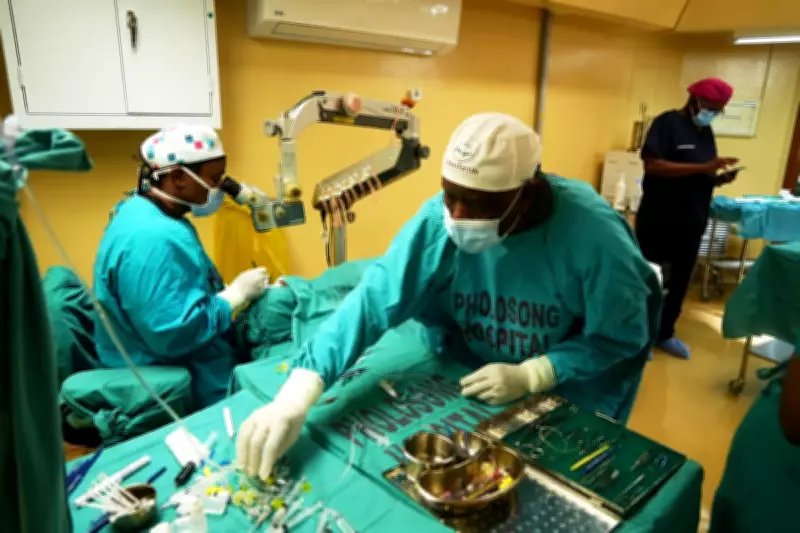
During the three-day surgical marathon at Pholosong Regional Hospital, a new patient entered the operating theater approximately every 30 minutes. Soothing gospel music played through speakers to maintain medical team morale.
Eye specialists worked meticulously through microscopes, making tiny incisions, removing clouded lenses, and inserting artificial replacements. At peak efficiency, two surgeons operated concurrently on separate patients to accelerate the pace, completing 60 surgeries during the marathon's final weekend.
Historical Context and Future Commitments
Surgical backlogs present a significant problem in South Africa, where government-run hospitals serve more than three-quarters of the nation's 62 million residents. Limited resources typically prioritize emergency procedures and serious operations over elective surgeries like cataract removal.
The Health Department initiated these surgical marathons on Mandela Day in 2023 to honor the legacy of South Africa's first Black president, Nelson Mandela. These events have evolved into public-private partnerships occurring several times annually to enhance healthcare access.
The ministry has committed to using surgical marathons as a strategy to eliminate medical backlogs. Previous initiatives have addressed prostate conditions, cleft palates, and stomach issues, with cataracts becoming the latest focus.

Dr. Fakude noted that South Africa diagnoses approximately 300,000 new cataract cases annually. The World Health Organization emphasizes that cataract operations represent "one of the most cost-effective medical procedures," serving as powerful tools to restore independence, dignity, and opportunities.
Patient Perspectives and Future Hopes
Molefe Mokoena, a 72-year-old patient who suffered from cataracts for four years, expressed excitement about regaining his independence. "I want to see my great-grandchildren," he shared. "I want to drive my car, and I'm happy about this."
For Gladys Khoza and the 132 other patients who received sight-restoring surgery, this medical marathon has transformed daily existence, proving that coordinated healthcare initiatives can dramatically improve lives despite systemic challenges.