Temporary Accommodation 'Torture' for Neurodivergent Children in England
A groundbreaking report has revealed that temporary accommodation in England subjects neurodivergent children to conditions that amount to "torture" and constitute a form of "child cruelty". The research, conducted by King's College London through the all-party parliamentary group for households in temporary accommodation, highlights the particularly severe impact on children with special educational needs and disabilities.
Psychologically Excruciating Conditions
The report found that while temporary accommodation is damaging for any child, it has a particularly devastating effect on neurodivergent children. Researchers concluded that "continuing to house them in such conditions – despite evidence of the damage it causes – can be considered as a form of torture and child cruelty".
Parents described how their neurodivergent children had become withdrawn or hypervigilant due to multiple factors including:

- Chronic uncertainty about their living situation
- Severely restricted space and lack of outdoor access
- Unsafe environments with security concerns
- Removal of familiar supports and routines
The report states that "the pace and frequency of moves between different TA spaces is overwhelming for neurodivergent children, resulting in a semi-permanent state of meltdown".
Alarming Statistics and Real-Life Impact
Between April and June 2025, there were 172,420 children living in temporary accommodation across England. This short-term housing, provided by local councils for people experiencing homelessness, can include hotels, hostels, B&Bs or private rentals.
Although designed to be temporary, many families remain in such accommodation for years. The report found that respondents in their call for evidence stayed in temporary accommodation for an average of 4.5 years.
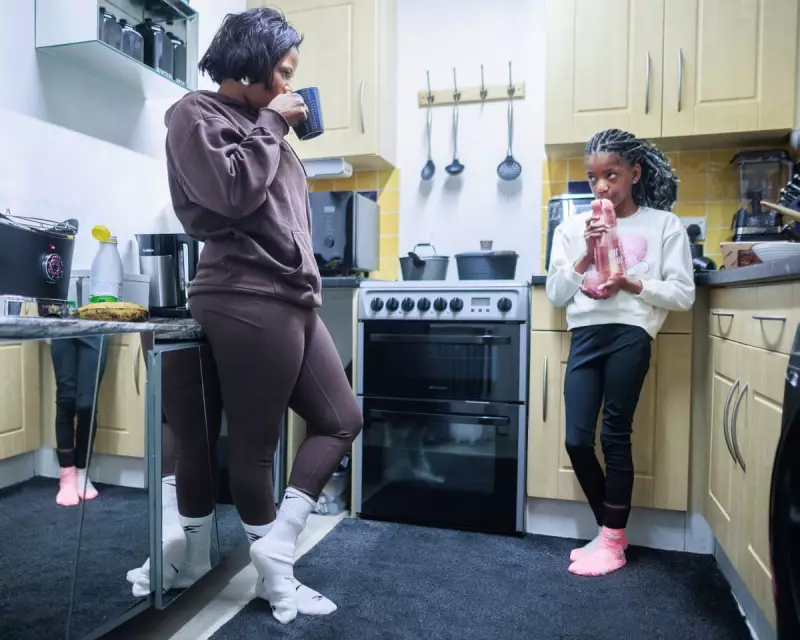
The case of Agatha Phiri and her nine-year-old daughter Elizabeth illustrates the human cost. After leaving the asylum system, they spent a year in temporary accommodation in Oldham. Elizabeth, who has ADHD and suspected autism, experienced catastrophic effects from their living conditions.
"She says noise makes her body feel pain and triggers her a lot. We had to experience that every single day for a whole year in that temporary accommodation," Phiri explained.
They lived in a tiny room in shared accommodation with just a kettle and microwave. At night, other residents with drug or alcohol issues would bang on their door and windows, while police would arrive with sirens blaring. The constant noise and disruption left Elizabeth with severe anxiety that persists even after they moved to permanent housing.
Systemic Failures and Recommendations
Neurodivergent children typically rely on routine, predictability and safe environments, but temporary accommodation often involves being moved at short notice with disruption to schooling, therapy and support networks. The report notes this can "place the child in a state of emotional deprivation that can become psychologically excruciating".
Professor Philip Alston, former UN special rapporteur on extreme poverty and human rights, described the report as "groundbreaking because it forces us to confront a neglected dimension of child rights". He emphasised that neurodivergent children have been "largely absent from global and national discourse".
The report makes several key recommendations:
- Incorporating the UN convention on the rights of the child into UK law
- Changing restrictive visitor rules to allow respite and support for parents
- Avoiding placement of neurodivergent children in mixed accommodation with shared facilities
- Preventing moves out of area or repeated relocations
Siobhain McDonagh, MP and chair of the APPG for households in temporary accommodation, stated that the report shows the "horrifying reality for the children at the sharp end of this crisis". She added that "it is morally unjustifiable that these children are forced to endure conditions tantamount to prison".

The housing crisis and cost of living pressures have pushed increasing numbers of families into precarious living situations, with the number of people in temporary accommodation soaring in recent years. This report brings urgent attention to the specific vulnerabilities of neurodivergent children within this growing crisis.