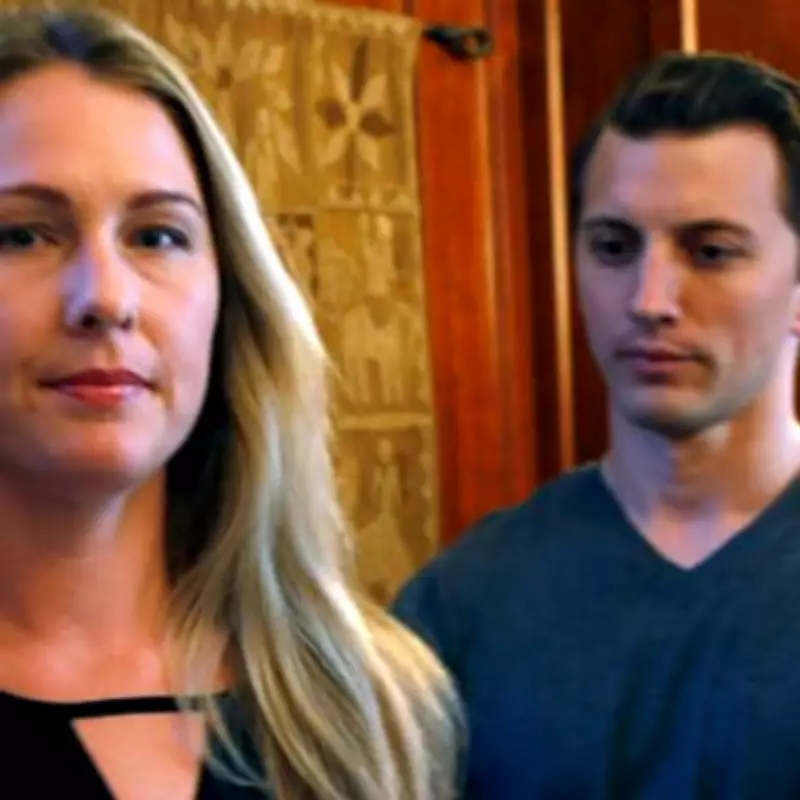
Real Life 'Gone Girl' Victim Endures Kidnapping, Rape, and Police Disbelief
In a harrowing case that mirrors the plot of the bestselling novel Gone Girl, a woman was kidnapped, held for ransom, and repeatedly raped over 48 hours, only to face accusations from authorities that she fabricated the entire ordeal. Denise Huskin and her boyfriend Aaron Quinn lived through a nightmare in 2015 when masked intruders broke into their Vallejo, California home, forcing them to ingest a drug cocktail that rendered them unconscious.
A Terrifying Abduction and Ransom Demands
The assailants, dressed in wetsuits and masks, abducted Denise and transported her to a property over 150 miles away in South Lake Tahoe. Meanwhile, Aaron received threatening messages from the kidnapper, demanding two payments of $8,500 for her safe release, with strict warnings not to involve the police. He awoke to texts insisting on silence, as a pre-recorded message had foretold Denise's kidnapping and promised her freedom after 48 hours.
When Aaron sought help from the Vallejo police, he was swiftly treated as a suspect in his girlfriend's disappearance, subjected to intense interrogation instead of receiving support. This initial response set the tone for a series of investigative failures that would compound the couple's trauma.

Release and Immediate Accusations
After two days of captivity, the masked captor released Denise near her family's home in Huntington Beach, nearly 500 miles from the abduction site. Upon her reappearance, authorities immediately accused her of orchestrating her own kidnapping, drawing parallels to the Gone Girl storyline where a character fakes an abduction to frame her husband.
Denise revealed in the Netflix documentary American Nightmare that she had initially denied being raped due to threats from her abductor, who warned he would kill her family if she disclosed the assault. This denial, coupled with the sensational Gone Girl comparison, fueled police skepticism.
Police Misconduct and Public Shaming
Vallejo police spokesperson Lt. Kenny Park held a press conference on the day of Denise's release, publicly stating that the couple had fabricated the incident, accusing them of wasting resources and instilling fear in the community. He demanded an apology from them, rather than offering sympathy or aid.
Denise's lawyer, Doug Rappaport, recounted in the documentary that an FBI agent further doubted her story, explicitly referencing the Gone Girl film and asking, "Haven't you seen the movie?" This confirmation bias among investigators delayed justice and exacerbated the victims' suffering.
Justice Served and Aftermath
The actual perpetrator, Matthew Muller, was eventually apprehended by Sergeant Misty Carausu and convicted in 2017, receiving a 40-year prison sentence. In 2018, the city of Vallejo reached a $2.5 million settlement with the couple, though it admitted no wrongdoing. While the police later issued an apology, none of the officers involved faced discipline; in fact, the lead detective, Mat Mustard, was awarded officer of the year in 2015.
Reflecting on the ordeal in 2021, Denise told People magazine, "When I was kidnapped, I didn't know if I was going to live to see another day. And then to have people attacking you on social media, the whole 'Gone Girl' label - a whole persona was placed on me that had nothing to do with who I am."
Today, Denise and Aaron are married and have two children, having rebuilt their lives after enduring not only a violent crime but also a devastating lack of belief from those meant to protect them.