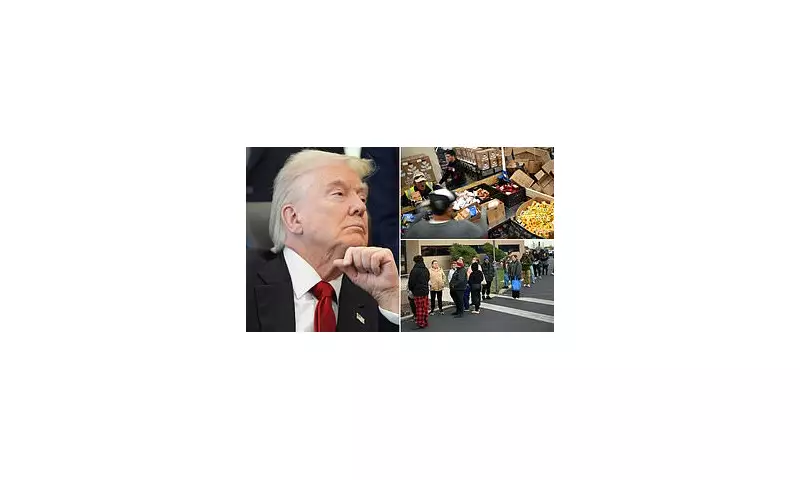
The Trump administration's efforts to restrict food stamp funding during the federal shutdown have triggered an unprecedented crisis at food banks nationwide, leaving millions of Americans uncertain how they will afford basic groceries.
Legal Battle Over Vital Food Assistance
Last Friday, the Supreme Court temporarily blocked a lower court ruling that would have compelled the administration to fully fund the Supplemental Nutrition Assistance Program (SNAP) for November. This pause grants the White House additional time to contest the mandate that critics describe as essential for protecting food security for 42 million Americans, representing approximately one in eight US households.
Monica Lopez Gonzales, chief marketing and communications officer at Feeding America, described the situation as 'catastrophic' in comments to Fortune. 'Right now 42 million people are having a hard time affording groceries, and their lives are being disrupted because their benefits have been disrupted,' she stated.
Food Banks Stretched to Breaking Point
Feeding America, the nation's largest hunger-relief network operating 200 food banks and 60,000 pantries, has reported a dramatic sixfold increase in traffic to its online food-bank locator since the shutdown began. The organisation now records more than 28,000 daily visitors seeking assistance.
'The lines are getting longer, and the food is running out early,' Gonzales observed. 'We see veterans, older adults, moms, and kids - everyone was stressed.'
The SNAP programme typically costs approximately $9 billion monthly to operate. The administration had planned to cover only 65 percent of benefits using contingency funds, until US district judge Jack McConnell in Rhode Island ordered full funding through agriculture reserves.
Human Cost of Political Standoff
Feeding America warns that the bureaucratic conflict overlooks the immediate reality that nearly 50 million Americans already faced hunger, including 14 million children. Recent polling reveals alarming statistics:
- 83% of affected households were skipping meals or buying less food
- 85% were resorting to cheaper, less nutritious options
'SNAP is the first line of defense against hunger,' Gonzales emphasised. 'When it's disrupted, every other part of the safety net shakes.'
With the shutdown appearing likely to continue, Feeding America is urgently requesting donations, advocacy, and volunteer support to help meet soaring demand. However, Gonzales stressed that 'Anything that we do cannot replace SNAP.' She concluded: 'We need everyone - government, business, and communities - to work together so we could finally end hunger in America.'