Starmer's Brexit Shift: From Pretence to Pragmatic Realignment with Europe
In opposition, Keir Starmer strategically pushed Brexit to the margins of political debate, but as prime minister, he has swiftly learned that Europe remains central to Britain's core interests, regardless of whether it is openly discussed. This avoidance of past painful arguments has proven to be a significant handicap when formulating plans for the nation's future, a development that was entirely predictable given the evolving nature of international relations.
The Manifesto Mirage and Electoral Expediency
Labour's 2024 general election manifesto treated Brexit as a historical event, something Boris Johnson had conclusively "done" in 2020, fulfilling his campaign pledge from the previous year. Starmer promised only minor tweaks to the terms while preserving the substance, an approach that indulged public fatigue with the issue and was electorally expedient to avoid alienating former Labour supporters who had voted leave in the referendum. However, this stance ignored the dynamic reality of the European Union, an ever-evolving project in a world of constant flux that responds to international crises, inevitably affecting Britain as its ex-member neighbour.
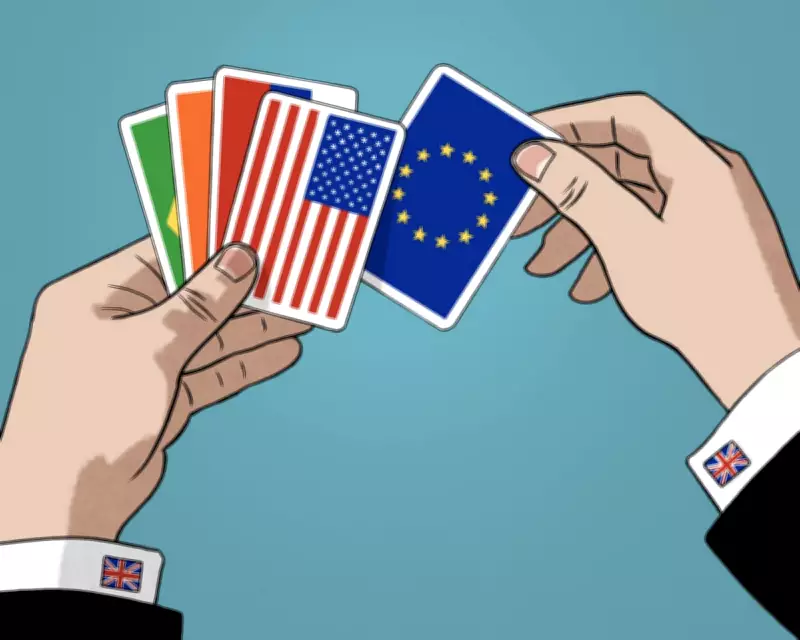
The relationship cannot be settled into a steady state; the options perpetually oscillate between more Brexit or less, never achieving stability. Johnson understood this perpetual motion, structuring his deal to accelerate separation over time under the theory that divergence from EU rules would grant Britain a competitive advantage. This Eurosceptic fantasy assumed that open, low-tariff trade was an immutable global fact and that Britain could negotiate on equal terms with entire continents like the United States.

Global Realities Expose Brexit Delusions
The colossal wrongness of this view is now starkly exposed by global events. Vladimir Putin's territorial aggression, Donald Trump's geopolitical vandalism, and China's emergence as a superpower nearing parity with the United States combine to form an irresistible case for Britain to make common cause with Europe. This necessitates reversing Johnson's divergence ratchet and moving towards closer integration.
Downing Street has signalled acceptance of this logic through a gradual shift in rhetoric. Starmer once claimed Brexit could be made to work, but now lists it alongside the Covid pandemic as an affliction. Chancellor Rachel Reeves identifies closer integration with Europe as "the biggest prize" in a dash for economic growth, highlighting the government's new direction.
Dynamic Alignment and Legislative Powers
To facilitate a more intimate relationship, the government proposes legislation granting ministers open-ended powers to adopt EU standards across various economic sectors without requiring parliamentary permission in every instance. This "dynamic alignment" aims to ease business access to the single market and enhance Britain's appeal as an investment destination.
Naturally, the Conservatives and Reform UK are appalled, objecting to the circumvention of legislative scrutiny via so-called Henry VIII powers, despite similar mechanisms being used by Brexit architects for automatic dealignment. The core grievance remains ideological, equating any application of single market rules to colonisation by Brussels. Nigel Farage condemns the proposed bill as "a backdoor attempt to drag Britain back under EU control."
Navigating Brexit Obstacles and Future Challenges
The government insists on opt-outs and a scrutiny mechanism to prevent Britain from becoming a passive moon orbiting planet Europe, though practical implementation remains unclear as multisectoral economic alignment exists only in Whitehall imaginations. Technical negotiations with the EU are currently limited to veterinary and agricultural goods.

As Starmer pushes further in this direction, he will collide with familiar Brexit obstacles. The European Commission will reject "cherrypicking" from the single market, insisting that non-members pay subscription fees and accept free movement of people alongside goods. This trade-off between undiluted national sovereignty and border blurring for economic gains is inescapable, with membership offering an elegant solution through British influence in EU institutions—a model dismissed by Eurosceptics as xenophobic conspiracy rather than reality.
Public Opinion and Strategic Imperatives
Opinion polls consistently show a clear majority of voters believe Brexit has gone badly, and the logic of pooling resources with continental neighbours grows stronger amid global instability. Farage's fawning advocacy for Trump underscores his unreliability as an arbiter of UK interests.
Starmer recognises that current conditions permit a more assertive EU integration agenda, but bold strides are constrained by red lines—no free movement, single market membership, or customs union—drawn when Labour preferred to change the subject. This paucity of ambition slows negotiations on modest manifesto goals, as the EU, preoccupied with internal affairs, may offer only superficial deals to a pro-European prime minister, with clauses insuring against backsliding by a Reform UK successor.
A Call for Bolder Leadership
Starmer's stealthy approach to Europe, chipping away at Brexit by delivering benefits, should be reversed. Winning big arguments at home earns goodwill for better deals in Europe. To transform the relationship and break the cycle of suspicion, Starmer needed a less timid mandate. It is not too late for an unpopular prime minister to reframe Brexit as a tragic mistake to be corrected, not a deal to revise. Events have refuted every Eurosceptic myth, and strategic, economic, and political facts are now dynamically aligned for a change of course, urging Britain to move beyond the bog of Johnson's lies and false Faragist promises.