Australia Announces Major Defence Budget Increase Amid Global Tensions
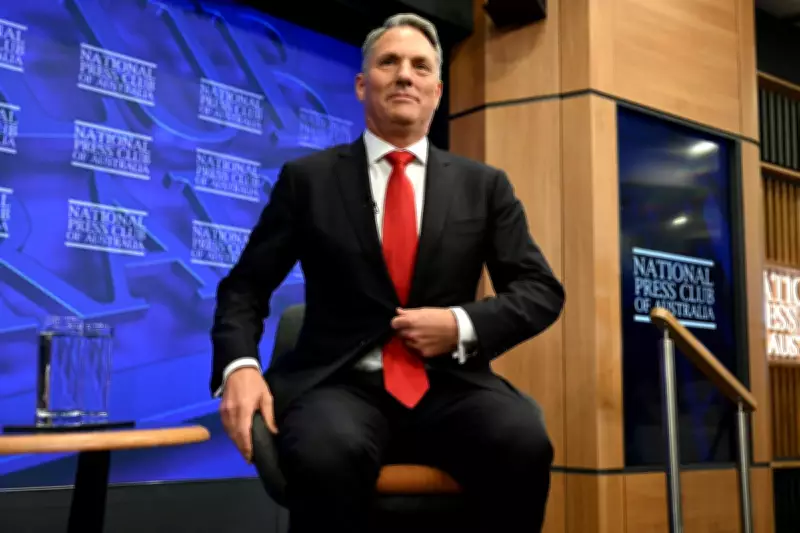
Australia's defence minister has declared that the ongoing conflict involving Iran has significantly complicated the global strategic environment, prompting the nation to implement a substantial increase in military expenditure. Defence Minister Richard Marles made this announcement on Thursday, revealing updated defence plans that include billions in additional funding over the coming decade.
Defence Strategy Update and Financial Commitment
Minister Marles released the latest two-year update to Australia's defence strategy, outlining plans for an additional 53 billion Australian dollars, equivalent to approximately 38 billion US dollars, in defence spending over the next ten years. This financial commitment represents a significant escalation in Australia's military investment as the nation navigates what Marles described as its most complex and threatening strategic circumstances since the conclusion of World War II.
The defence budget is projected to grow from 2.8% of GDP this year to 3% by 2033, reflecting the government's assessment of increasing global instability. When questioned about how much more complex Australia's strategic position has become since the United States and Israel initiated military action against Iran in February, Marles responded that he did not believe anyone could provide an honest answer to that question.

Global Strategic Complications and Nuclear Concerns
"It greatly complicates the global strategic landscape," Marles stated during his press conference. "The world feels less safe." Despite these complications, the defence minister emphasized Australia's continued support for the strategic objective of preventing Iran from developing a deployable nuclear weapon capability.
Marles clarified that his government's decision to increase defence spending to 3% of GDP was not a direct response to pressure from the administration of US President Donald Trump. This clarification came following the Pentagon's release of its National Defense Strategy in January, which had urged US allies to take greater responsibility for their own security arrangements.
Independent Decision-Making and Alliance Relationships
The defence minister stressed that Australia was making its own independent resourcing decisions based on national security assessments. "What that has yielded to date is, under our government, the biggest peacetime increase in defence spending that our nation has seen," Marles declared.
The updated spending strategy will prioritize Australian self-reliance in defence matters, though Marles was careful to distinguish this from military self-sufficiency. "This is not about jettisoning alliance relationships," he explained. "To the contrary, alliances, especially with the United States, will always be fundamental to Australia's defence."
Major Defence Investments and AUKUS Partnership
Australia's most substantial defence investment to date is expected to be a fleet of at least eight submarines powered by US nuclear technology, facilitated through the AUKUS partnership with the United States and Britain. This ambitious project represents a cornerstone of Australia's long-term defence strategy and capability enhancement.
The submarine program is projected to cost between 268 billion Australian dollars, approximately 193 billion US dollars, and 368 billion Australian dollars, around 264 billion US dollars, over a thirty-year period. This massive investment underscores Australia's commitment to strengthening its maritime defence capabilities in response to evolving regional and global security challenges.
The defence minister's announcement comes at a time of heightened international tension, with the conflict involving Iran creating ripple effects across global security arrangements. Australia's increased military spending reflects both immediate concerns about regional stability and long-term strategic planning for national defence in an increasingly unpredictable international environment.