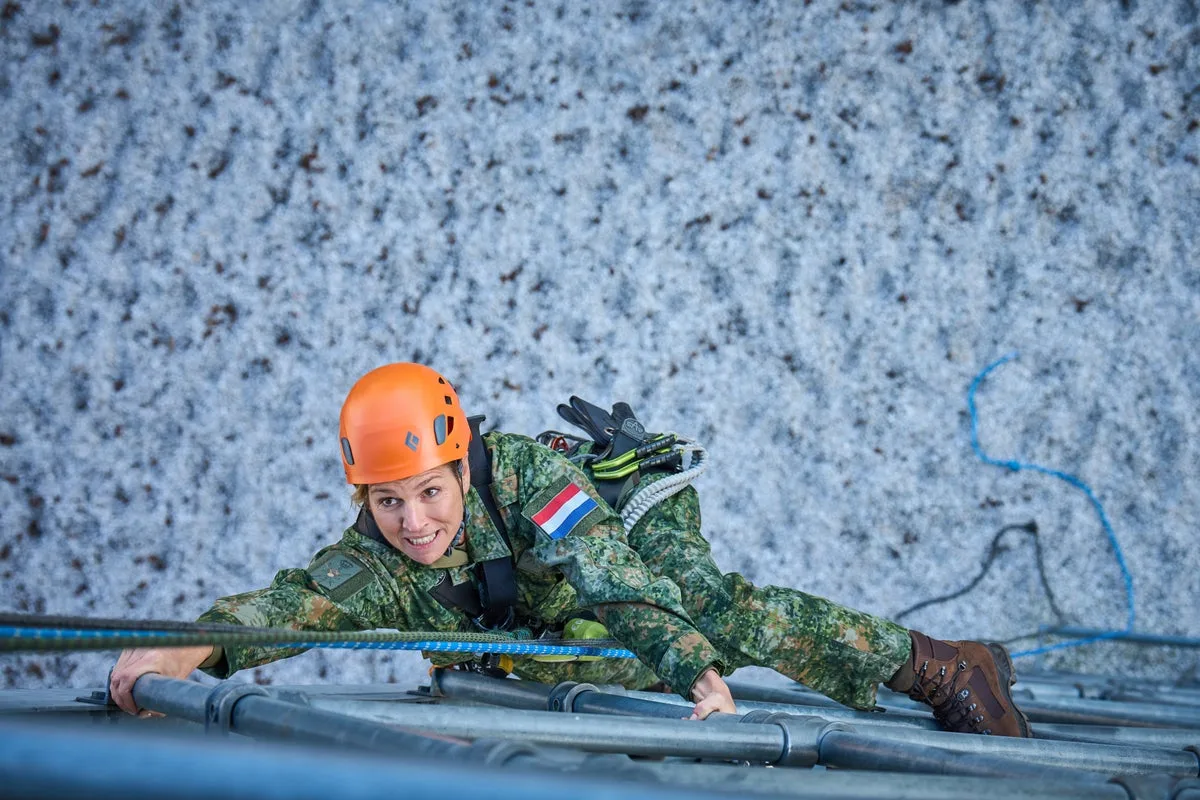
The Dutch military is undertaking a significant recruitment drive, aiming to more than double its volunteer reservist force as it responds to evolving security threats across Europe. With plans to increase overall military personnel from 80,000 to 120,000 by 2035, the initiative has garnered broad political support and received a notable boost from the enlistment of Queen Maxima and her eldest daughter, Princess Amalia of Orange.
Royal Influence Boosts Recruitment
The involvement of the Dutch royal family has proven instrumental in attracting new recruits. Queen Maxima and Princess Amalia, the heir to the throne, have enrolled as volunteer reservists, with images of the queen training on a shooting range circulating globally. This phenomenon, dubbed the 'Amalia effect' by the Defence Ministry, has led to a surge in applications that the military is now working hard to accommodate.
State Secretary for Defence Derk Boswijk acknowledged the impact, stating, 'It's really a thing. It's very inspiring to see how members of our royal family inspired people to join our armed forces.' He noted that while there are currently around 9,000 reservists, the target is to reach at least 20,000 by 2030. However, the influx has created challenges, including shortages of training capacity, housing, uniforms, and weapons. 'We have more applications than we can handle,' Boswijk said, describing it as a 'luxury problem.'
European Context and Growing Threats
The Netherlands' recruitment drive mirrors broader European efforts to expand and modernize militaries amid heightened tensions following Russia's war in Ukraine and uncertainties about U.S. commitment to NATO. EU and NATO officials warn that Russian President Vladimir Putin could be ready to launch an attack elsewhere in Europe within three to five years, particularly if he succeeds in Ukraine. New NATO plans require allies to prepare for large-scale battles with more mobile, rapidly deployable forces.
A corporal in the reserve battalion, speaking anonymously due to her service's nature, noted a shift in mindset. 'When I first joined, there was almost no risk or almost no threat… and now it's changing so we are more aware of it,' she said. The focus has moved toward 'green things,' infantry tactics, reflecting a renewed emphasis on national defence.
Other Nations' Approaches
Germany is considering better pay and conditions for short-term recruits, along with enhanced training flexibility, aiming to attract volunteers without reviving conscription. France is launching a program in September to recruit 3,000 volunteers aged 18-25 for ten months of service, with a target of 50,000 per year by 2035. In northern and eastern Europe, where the Russian threat is felt most acutely, some nations maintain conscription. Finland has a male draft and voluntary system for women; Sweden reinstated gender-neutral partial conscription in 2017, using a lottery if volunteers fall short; Denmark and Latvia have similar systems, with Latvia reviving its draft in 2023.
The Netherlands never fully abolished conscription but has suspended call-ups since 1997, with no immediate plans to resume them. Instead, the Defence Ministry aims to make military service attractive to a diverse cross-section of society, recognizing that threats now extend to cyberspace. 'We need all kinds of skills, to keep our society, our country, our allies safe. So, yes, we need also people wearing hoodies, having blue hair, who can game perfectly,' Boswijk added.
Motivations of New Recruits
Historical lessons also drive enlistment. Lisette den Heijer, attending a recent reservist information evening, recalled learning in primary school that German forces conquered the Netherlands in five days during World War II. 'I don't want history to repeat itself,' she said. A private first class in the reserve battalion, who works for a defence-related company and spoke anonymously, noted a shift from peaceful operations in 2018 to focusing on protecting vital infrastructure, including guarding last year's NATO summit in The Hague.
Reservist Duties and Training
Dutch reservists commit to 300 hours of service annually, including regular weekend exercises. Traditionally deployed for domestic security and guarding sites, they are not sent on overseas combat missions but can assist in national emergencies, such as flooding. During a recent exercise in eastern Netherlands, troops emerged from a forest with Colt C7 rifles, scanning for threats, and practiced tactics like capturing a soldier from a foxhole. The weekend mission concluded with high-fives before they returned to civilian jobs.