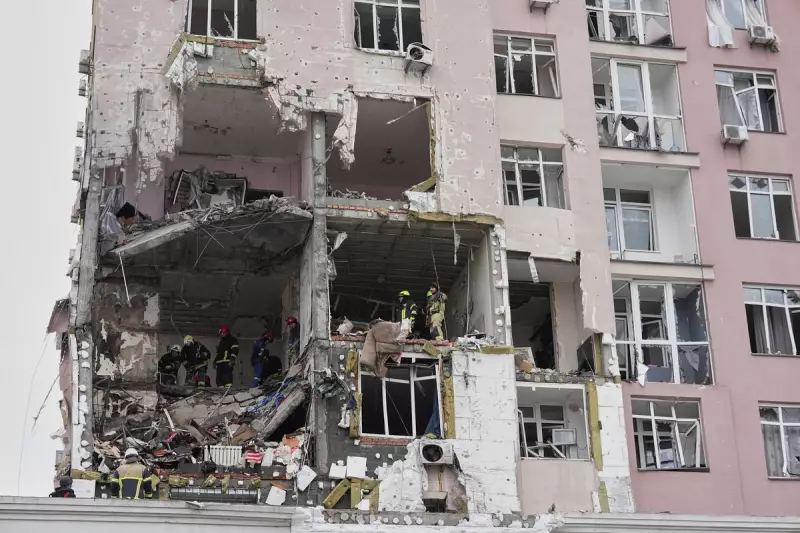
Ukrainian President Volodymyr Zelensky has denounced a major Russian drone and missile assault on the capital Kyiv as "sick", which struck as the city endured sub-zero temperatures, leaving a significant portion of residents without heating.
Scale of the Attack and Immediate Aftermath
The assault, which took place on Saturday 27 December 2025, involved a massive barrage of ordnance from Russian forces. Nearly 500 drones, predominantly of the Shahed type, were launched alongside 40 missiles. The bombardment resulted in damage to at least ten residential buildings, and tragically, two children were reported injured in the attack.
According to Ukraine's Interior Minister, Ihor Klymenko, the strikes affected seven separate locations across Kyiv. Emergency services were forced to evacuate people from underneath the rubble of structures that had partially collapsed. The timing of the attack exacerbated the humanitarian crisis, as it critically damaged energy infrastructure.

A Capital Left in the Cold
The consequences of the bombardment were severe for the civilian population. Approximately one-third of Kyiv was left without a heating supply during a period of intensely cold winter weather. This created a dangerous situation for thousands of residents, compounding the direct physical destruction caused by the drones and missiles.
Fires were reported to be raging across multiple districts of the city following the sustained drone bombardment, further straining emergency response capabilities. The attack represents one of the largest coordinated drone offensives on the capital in recent months, highlighting the ongoing intensity of the conflict.
Political Context: Upcoming Trump-Zelensky Talks
The military assault comes at a politically sensitive moment. President Zelensky is scheduled to meet with US President Donald Trump in Florida to discuss a potential peace deal for Ukraine. In a statement ahead of the meeting, Zelensky indicated that his proposed agreement was "90 per cent ready".
However, President Trump appeared to set a firm precondition for any deal, directly stating that Zelensky's proposals would require his personal approval. "He doesn't have anything until I approve it," Trump remarked, underscoring the pivotal role he sees for the United States in any future negotiations to end the war.
The juxtaposition of the brutal aerial attack on Kyiv with the delicate diplomatic preparations sets a stark backdrop for the crucial talks between the two leaders, with the humanitarian situation in Ukraine adding urgent pressure for a resolution.