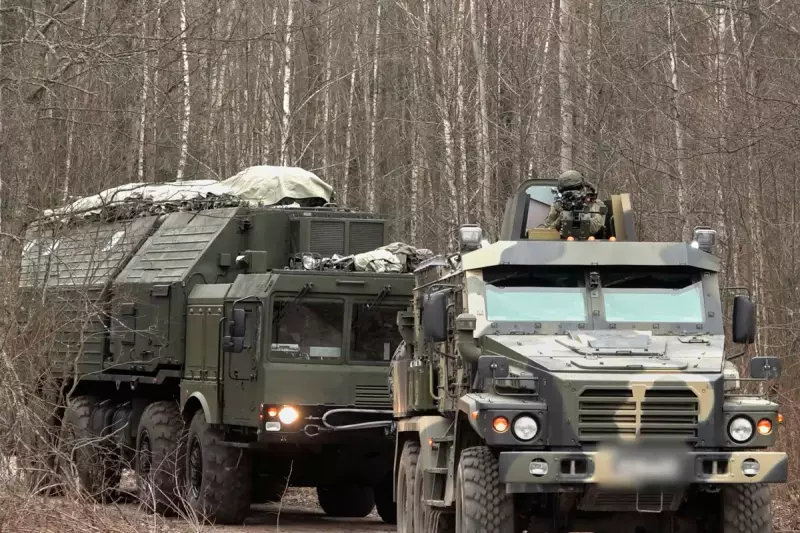
Vladimir Putin has dramatically raised the stakes in ongoing peace negotiations by boasting of the deployment of advanced, nuclear-capable missiles in Belarus. This move comes at a critical juncture, just as talks aimed at ending the conflict in Ukraine appeared to be gaining momentum.
Missile Deployment and Escalating Rhetoric
On Tuesday, Russia released images confirming the presence of its intermediate-range Oreshnik missile systems on Belarusian territory. President Putin claimed the weapons can achieve speeds of up to Mach 10 and are effectively immune to interception. Sergei Karakayev, the chief of Russia's missile forces, has previously asserted that these systems "can strike targets across the entire territory of Europe".
This show of force follows a sharp rise in tensions after Moscow accused Ukraine of orchestrating a drone attack on Putin's personal residence. Russia alleged that 91 drones were involved, labelling the act "state terrorism". Foreign Minister Sergei Lavrov vowed that "such reckless actions will not go unanswered". However, the Kremlin has provided no evidence for the attack. When pressed, spokesperson Dmitry Peskov stated evidence might not exist if the drones were all shot down, deferring further inquiry to the Ministry of Defence.

Ukrainian President Volodymyr Zelensky dismissed the accusation as a "complete fabrication" designed to sabotage the latest round of US-brokered negotiations. Germany has echoed concerns that Russia's claims could be used as a pretext for further military escalation.
Diplomatic Manoeuvres and International Reaction
The missile deployment casts a shadow over fragile diplomatic efforts. Zelensky confirmed on Tuesday that Ukraine remains committed to talks and is ready to meet Putin in any format. This followed a meeting with former US President Donald Trump at Mar-a-Lago on Sunday, which Trump described as "positive" and "terrific", claiming "a lot of progress" had been made. However, Trump also expressed support for Putin regarding the alleged drone attack, saying it left him "very angry".
International leaders offered cautious optimism mixed with wariness. Poland's Prime Minister, Donald Tusk, noted that "peace is on the horizon" and recent developments offered hope for a quick end to the war, but stressed this was "far from 100 per cent certain". German Chancellor Friedrich Merz called for transparency, writing on X: "Now we need transparency and honesty from everyone – including Russia."
War's Toll and Continuing Aggression
Despite Russia's displays of military strength, new data reveals the severe cost of the nearly four-year conflict. A BBC report found that obituaries for Russian soldiers published in 2025 were 40% higher than in 2024. While around 160,000 deaths have been confirmed by name, experts estimate the true figure could be between 243,000 and 352,000.
On the ground, attacks continue. Russian strikes targeted civilian port infrastructure in the Black Sea ports of Pivdennyi and Chornomorsk, wounding at least one person. Ukrainian Deputy Prime Minister Oleksiy Kuleba condemned it as another attempt to disrupt logistics and complicate shipping.
In a move labelled as particularly callous, Ukrainian authorities condemned Russia for reopening the Donetsk Academic Regional Drama Theatre in Mariupol this week. The theatre was destroyed by a Russian airstrike in March 2022; an Associated Press investigation found evidence that approximately 600 people were killed in the attack. The Ukrainian City Council accused Russia of "singing and dancing on bones" by holding a celebratory event at the site.