An SAS veteran has finally revealed the critical decision that doomed the legendary Bravo Two Zero patrol during the First Gulf War, more than three decades after the ill-fated mission.
The Fateful Decision That Changed Everything
Robert Craft, a 68-year-old former SAS soldier, has spoken exclusively about the 1991 operation that saw eight special forces operators sent behind enemy lines to hunt Saddam Hussein's Scud missiles. The mission ended in disaster, with three men dead and four captured. Only one, Chris Ryan, survived after a gruelling escape to Syria.
Mr Craft, who served 14 years in the SAS after a decade in the Parachute Regiment, was part of a sister patrol called Bravo One Eight. He reveals that the entire operation hinged on a choice made by American General Norman "Stormin'" Schwarzkopf, commander of coalition forces during Operation Desert Storm.

"The truth is those patrols should never have happened," Craft states. He explains that the British Director of Special Forces briefed Schwarzkopf that the UK could deploy two entire vehicle-borne SAS squadrons – A and D Squadrons – comprising over 100 men. Their task was to enter Iraq before the air war began, positioning themselves to destroy Scud launchers before they could fire.
Air Superiority Overruled Ground Forces
General Schwarzkopf, confident in the coalition's complete air dominance, rejected the plan. "Stormin' Norman said that by then they would have complete air superiority and he didn't see the reason to send in two squadrons," Craft recounts.
This decision proved catastrophic. When the air war commenced, bad weather and cloud cover prevented satellites from tracking the mobile Scud launchers. Saddam's forces subsequently fired missiles towards Israel, precisely the scenario the coalition aimed to avoid to prevent a wider regional conflict.
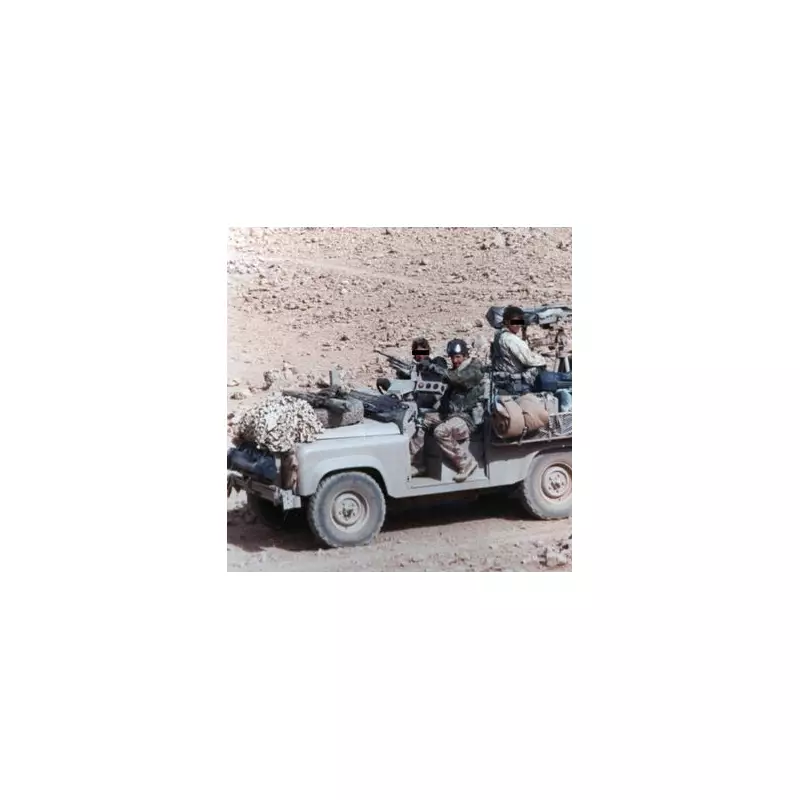
In a rushed response, the reserve B Squadron was ordered to insert three eight-man patrols – Bravo Two Zero, Bravo One Eight, and Bravo One Nine – deep into the Iraqi desert. They were deployed with minimal support: two Chinook helicopters and just a couple of Land Rovers between them. Bravo Two Zero and another patrol were on foot.
A Mission Aborted and a Legend Born
Craft's own patrol, Bravo One Eight, was aborted almost immediately. Upon landing, they found the terrain "too flat" with no undulations to conceal them, and a main road visible 25-30 kilometres away. They returned to base.
Days later, Bravo Two Zero was reported missing. Craft recalls the sombre mood at basecamp. "They're all mates of ours," he said. When asked where to start searching, Craft told his commanding officer, "Well, if I was them I wouldn't expect you to come looking for me, because why would you risk flying into the unknown with limited aircraft?"
Craft is adamant the tragedy could have been averted. "It probably wouldn't have happened if Schwarzkopf had listened to the UK Director of Special Forces," he asserts. "If he'd sent in the full squadrons from the beginning... They would have been much more supported."
Following the aborted mission, Craft later rejoined the fight with D Squadron, engaging in a nine-hour firefight to destroy a Scud installation and capturing a key Iraqi prisoner – whom he nicknamed "Lance Corporal Red Socks" after giving him his own red Millets socks.
Asked why he never wrote a book like the famed Bravo Two Zero, Craft smiled: "I never got caught. And nobody wants to read that do they." His account now provides the missing piece to one of modern warfare's most harrowing and iconic stories, revealing how a single command decision sealed the patrol's fate.