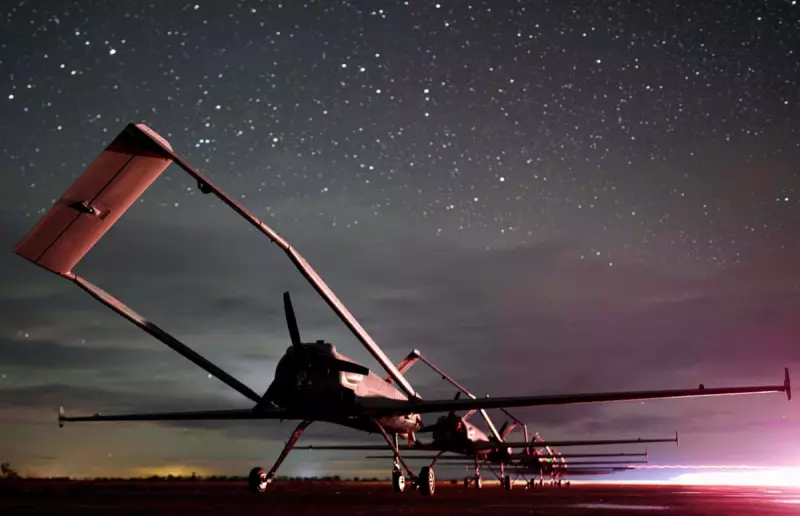
Ukrainian forces have executed a daring long-range strike, hitting a Russian-operated oil drilling platform in the Caspian Sea, more than 700 kilometres from the nearest Ukrainian territory. The attack represents a significant escalation in Kyiv's ability to project force and target Moscow's critical energy infrastructure far beyond the traditional battlefield.
A Bold Strike in Russia's Strategic Backyard
The incident occurred on Saturday, 20 December 2025, according to reports from Ukrainian military intelligence, known as the GUR. The target was the "Iran Khazar" drilling rig, a facility operated by the Russian state-controlled energy giant Lukoil. The platform is situated off the coast of Dagestan, a republic within the Russian Federation, and is a key asset in Moscow's Caspian energy operations.
Ukrainian officials stated the strike was carried out using a combination of experimental long-range drones and modified Neptune anti-ship missiles. This innovative use of existing weaponry, adapted for ground attack, underscores Ukraine's evolving and resourceful military strategy. The attack damaged the rig's drilling derrick and living quarters, though the extent of the damage and any potential casualties remain unclear.

Signalling a New Phase of the Conflict
This operation is not an isolated event but part of a calculated campaign. It follows a series of Ukrainian strikes on Russian oil refineries and depots within Russia itself throughout 2024 and 2025. By hitting a target in the Caspian Sea, a body of water bordered by Russia, Iran, Kazakhstan, Turkmenistan, and Azerbaijan, Ukraine has demonstrated a dramatically extended operational range.
Analysts view this as a strategic message to Moscow: no part of Russia's lucrative energy export network is safe. The Caspian region is vital for Russian oil and gas exports, and attacks here threaten both economic revenue and logistical chains. The strike also challenges Russia's perceived defensive security in areas it considered well beyond the reach of Ukrainian capabilities.
Implications and the Russian Response
The long-term consequences of this strike are multifaceted. Militarily, it proves Ukraine's capacity to develop and deploy weapons that can strike deep into Russian territory and its maritime domains. This could force Russia to divert significant air defence resources to protect energy assets far from the front lines, potentially easing pressure elsewhere.
Economically, it injects new risk into Russia's energy sector, which is already under pressure from international sanctions. While the immediate impact on global oil prices was limited, repeated successful strikes could disrupt supplies and undermine investor confidence in Russian energy security.
Politically, the attack is a powerful symbolic blow, showcasing Ukrainian resilience and ingenuity. The Russian defence ministry has so far not officially commented on the incident, a silence that many interpret as an admission of a significant security failure. The strike reinforces a growing narrative of Ukrainian strategic initiative against a reactive Russian defence.
As the conflict continues, this attack on the Caspian Sea oil rig marks a pivotal moment. It confirms that Ukraine is committed to taking the war to Russia's economic heartland, using innovative tactics to overcome its resource constraints. The world now watches to see how Russia will adapt to this new and expanded threat dimension.