Tennessee to Nearly Double School Voucher Program with 35,000 Student Slots
Tennessee is set to significantly expand its universal school voucher program, with plans to nearly double its scope by directing approximately $260 million in public funds toward private schools. The state Senate voted 18-14 on Thursday to fund 35,000 vouchers for the 2026-27 academic year, following a similar House vote of 52-43 earlier in the week.
Legislative Approval and Funding Details
The Senate bill aligns with its House counterpart, though it includes 5,000 fewer vouchers than Governor Bill Lee's initial request of 40,000. The legislation now awaits the governor's signature to become law. This expansion comes just one year after the program's launch, reflecting a rapid scaling of the initiative.
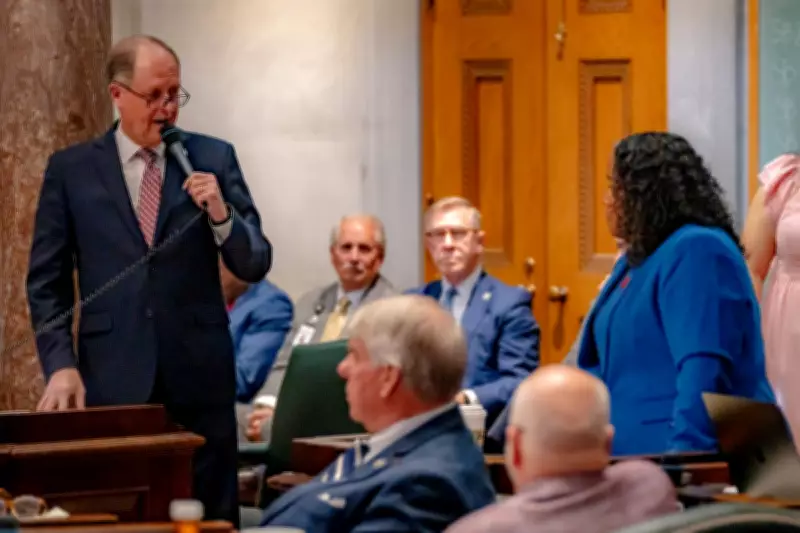
During an hour-long Senate floor debate, legislators discussed last-minute amendments that could affect state funding for local public school districts. Both Democrats and some Republicans voiced criticisms, highlighting concerns about the program's impact on rural schools and student privacy.

Changes to Hold-Harmless Provision
A key amendment alters the hold-harmless provision of the voucher program. Previously, school districts were reimbursed for all types of disenrollment to prevent loss of state funding due to vouchers. Under the new rule, districts will only be compensated for students who leave public school to accept a voucher and who provided their Social Security numbers at enrollment.
Senator Joey Hensley (R-Hohenwald) expressed concern, stating, "I'm worried about changing the funding floor and what that will do for our rural schools in the future. The people should be able to depend on us doing what we say we're going to do." Senator Jeff Yarbro (D-Nashville) argued this change effectively phases out the hold-harmless provision, noting, "Repeatedly this chamber has been asked to vote for something, and the year after it expands to something else."
Privacy and Legal Concerns
Federal law prohibits schools from requiring students to share Social Security numbers. When questioned, Senate Majority Leader Jack Johnson (R-Franklin) clarified that the amendment does not mandate collection, as "schools can ask for the Social Security number, but parents do not have to provide them." He explained that voucher recipients already provide this information, and the amendment uses it to track students moving from public to private schools.
Democrats raised privacy and safety issues. Senator Charlane Oliver (D-Nashville) linked the amendment to previous attempts to challenge Plyler v. Doe, a Supreme Court ruling ensuring all students' right to public education regardless of immigration status. She warned, "Parents will be afraid to enroll their children. This will have a chilling effect on undocumented families, potentially reducing enrollment and draining district funding under the TISA formula."
Senator Yarbro added that expecting schools to collect Social Security numbers violates federal privacy laws, citing past data breaches as a risk. "Some schools that used to collect this data stopped because of breaches. We're adding a privacy risk," he said.
Academic Performance and Parent Choice Debate
Opponents, including some Republicans, criticized expanding the program without evidence of academic improvement. Senator Richard Briggs (R-Knoxville) referenced a comptroller's report showing students in Tennessee's former voucher program underperformed compared to public school peers. "There's no examination showing these students perform at the same level as public school kids on the same tests," he stated.
Republican leadership countered by highlighting parent demand, with over 56,000 families applying this year. They argued that parent choice is a crucial measure of success. Senator Johnson emphasized, "We focus on test scores, but if a parent believes public school isn't meeting their child's needs, we should give them an option. That's our constitutional obligation."
The expansion reflects ongoing national debates over school choice, funding equity, and educational outcomes, with Tennessee at the forefront of voucher program growth.