US Anti-War Movement Intensifies with Protests Targeting Senators
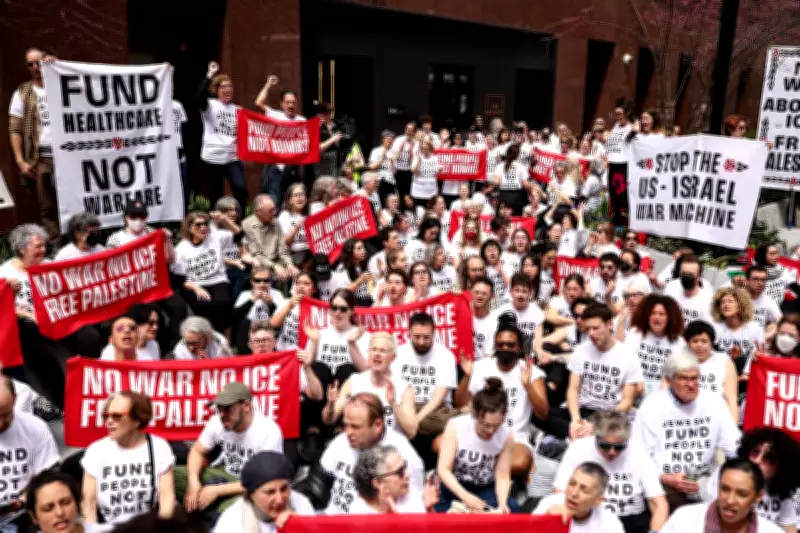
On Monday afternoon, a significant demonstration unfolded outside the Manhattan offices of New York Senator Kirsten Gillibrand. Dozens of participants, initially dressed in casual-business attire, shed their outer layers to reveal matching shirts emblazoned with the slogan "FUND PEOPLE, NOT BOMBS". This protest was part of a broader movement against the United States' ongoing military support for Israel, as conflicts rage in Iran, Lebanon, and Palestine.
Arrests and Activism in New York
The action, which included high-profile figures such as Chelsea Manning, actor Hannah Einbinder, and artist Molly Crabapple, aimed to pressure Gillibrand and Senate Minority Leader Chuck Schumer. Protesters voiced strong disapproval of the US sending additional weapons to Israel. The demonstration escalated when nearly a hundred individuals, including Manning, actor Hari Nef, and congressional candidate Darializa Avila Chevalier, were arrested after shutting down traffic on Third Avenue.
Organized by groups like Jewish Voice for Peace and About Face: Veterans Against the War, the protest called on the senators to support joint resolutions of disapproval introduced by Senator Bernie Sanders in March. These resolutions seek to block the transfer of hundreds of millions of dollars in bombs and bulldozers to Israel. This marks the fourth such vote, with Schumer and Gillibrand having previously resisted similar measures.

Global Context and Political Backlash
Monday's event was one of hundreds of protests across the United States and globally, including in Israel, opposing US war-making since the onset of conflicts involving Trump and Israel in Iran. At earlier rallies, such as the No Kings protests in late March, countless demonstrators highlighted bombings in Iran. In recent months, activists have consistently questioned the ballooning US funds allocated to war, juxtaposing this against domestic issues like deportation sprees, cuts to public benefits, and civil rights rollbacks.
"New Yorkers are sick and tired of hearing that there's not enough money for their childcare, their healthcare, and yet every day we wake up and watch billions of dollars being spent on slaughter," said Chevalier at the protest. Polling data supports this sentiment, showing the war is measurably unpopular, with roughly 50% opposition since its inception, and many voters lacking confidence in the president's approach to Iran.
Legislative Efforts and Electoral Implications
Bridget Moix, general secretary of the Friends Committee on National Legislation, noted that congressional phones were ringing off the hook when the US went to war with Iran. On Tuesday, FCNL hosted a lobby day on Capitol Hill, advocating for "No War at Home or Abroad". Although the joint resolutions of disapproval are unlikely to succeed, organizers hope to pressure Democratic holdouts by linking Israel's arms sales to the war's unpopularity.
Election analyses suggest Democrats lost credibility in the 2024 election due to Joe Biden and Kamala Harris's support for Israel. A recent memo from Data for Progress and the Institute for Middle East Understanding warns that if Democratic leadership fails to strongly oppose American war-making, they risk future electoral losses. Republicans also face backlash for inadequate opposition to the war and weapons provision to Israel, according to IMEU Policy Project communications director Hamid Bendaas.
Historical Comparisons and Civil Disobedience
Moix and Bendaas compared current anti-war sentiment to the Iraq war era, noting how perspectives have shifted over time. "Many members of Congress came around and regretted their votes for [the Iraq] war," said Moix. Recent acts of civil disobedience extend beyond targeting elected officials on specific legislation. The joint resolutions and war powers resolution votes coincide with tax day in the US, where there is growing interest in withholding income tax to protest government spending on war or immigration enforcement—a longstanding form of anti-war resistance.

For Hari Nef, Monday's action represented her first time risking arrest. "I think you have to do a lot of mental gymnastics these days not to feel absolutely insane about what's happening geopolitically," she said. "Putting your body on the line is the most powerful articulation of your beliefs, and that's what I'm willing to do today." This sentiment underscores the deepening resolve within the anti-war movement as it challenges US foreign policy and domestic priorities.