BBC Director-General Demands Urgent Investigation Into BAFTA Broadcast Incident
The director-general of the BBC has ordered a fast-tracked investigation into the corporation's broadcast of Sunday's BAFTA ceremony. This follows significant controversy after a racial slur was aired during the awards show, shouted involuntarily by a Tourette's syndrome sufferer while two black actors were on stage.
MPs Demand Answers Over 'Serious Mistake'
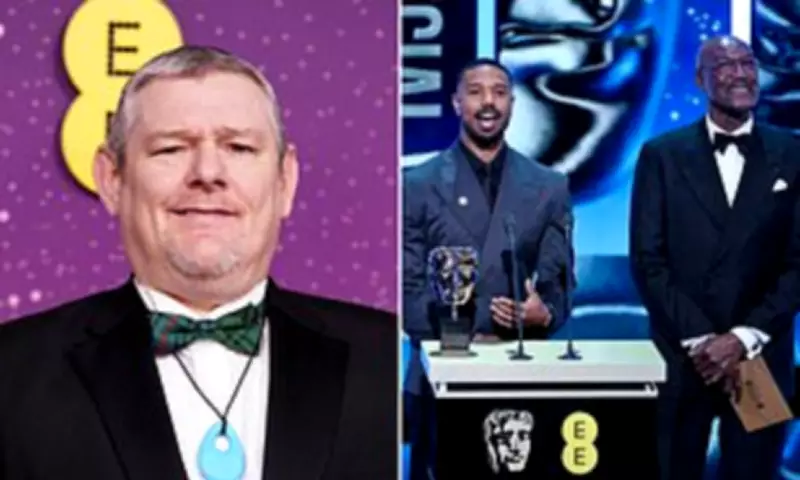
Members of Parliament have demanded immediate answers regarding what has been described as a 'serious mistake.' The incident occurred when John Davidson, 54, shouted the N-word while actors Michael B. Jordan and Delroy Lindo were presenting an award at London's Royal Festival Hall.
Davidson, whose life story inspired the film I Swear, suffers from severe Tourette's syndrome with uncontrollable tics that sometimes cause him to shout expletives or deeply offensive language. Despite the ceremony not being broadcast live and having a two-hour time delay, BBC producers failed to edit out the outburst before transmission.

BBC Launches Urgent Probe
On Wednesday, a BBC spokesperson confirmed the launch of an urgent investigation, stating: 'The BBC has been reviewing what happened at BAFTA on Sunday evening. This was a serious mistake and the director-general has instructed the Executive Complaints Unit to complete a fast-tracked investigation and provide a full response to complainants.'
The announcement came after MPs on Parliament's Culture, Media and Sport Select Committee wrote to BBC boss Tim Davie demanding explanations about how the slur came to be broadcast despite the time delay. Committee chair Dame Caroline Dinenage specifically questioned why the offensive language wasn't removed during editing.
Multiple Apologies Issued
The BBC has issued multiple apologies for the incident, both to staff and to the public. The corporation acknowledged that the racial slur remained audible on both television broadcasts and the BBC iPlayer version for approximately twelve hours before being removed. According to BBC sources, producers responsible for editing the show 'simply did not hear the slur' shouted when Jordan and Lindo were on stage, though they had successfully edited out another occurrence.
In an official statement, the BBC said: 'Some viewers may have heard strong and offensive language during the Bafta Film Awards. This arose from involuntary verbal tics associated with Tourette syndrome, and as explained during the ceremony it was not intentional. We apologise that this was not edited out prior to broadcast and it will now be removed from the version on BBC iPlayer.'
BAFTA's Response and Fallout
Separately, BAFTA has launched what it describes as a 'comprehensive review' of the incident. The academy has apologized to Jordan and Lindo, admitting it had put guests in a 'difficult situation.' In a letter to members, a BAFTA spokesperson said: 'We are in contact with the studios involved and conversations are ongoing. We want to assure all our members that a comprehensive review is underway.'
The fallout has been significant. Following the ceremony, Delroy Lindo expressed disappointment that no one from BAFTA spoke to him and Jordan afterward. Additionally, film-maker Jonte Richardson has announced he is stepping down as a BAFTA judge over the academy's handling of the incident.
Davidson's Perspective and Condition
John Davidson has expressed being 'deeply mortified' by his involuntary outburst. He described feeling a 'wave of shame' over his tic and has issued swift apologies to those affected. Davidson was attending the ceremony because the film based on his life, I Swear, was nominated in five categories.
Davidson has suffered from a severe form of Tourette's since age 12. One of his most prominent symptoms is coprolalia, which causes involuntary shouting of socially inappropriate words or phrases. This condition famously led him to shout 'f*** the Queen' when receiving his MBE from Queen Elizabeth II in 2019.

Campaigners emphasize that such offensive language does not reflect the sufferer's beliefs or intentions and is entirely involuntary. Davidson has questioned why he was seated directly in front of a microphone during the BAFTAs, stating he had been under the impression any offensive outbursts would be edited out before broadcast.
Charity Calls for Understanding
Tourettes Action, a leading charity supporting those with the condition, has called for greater public understanding. A spokesperson said: 'We deeply understand that these words can cause hurt but, at the same time, it is vital that the public understands a fundamental truth about Tourette syndrome: tics are involuntary. They are not a reflection of a person's beliefs, intentions or character.'
The charity emphasized that people with Tourette's can say words or phrases they do not mean, do not endorse, and often feel great distress about afterward. These symptoms are neurological rather than intentional, representing a daily challenge for those living with the condition.
As investigations continue by both the BBC and BAFTA, the incident has sparked broader conversations about broadcasting standards, disability awareness, and the complex challenges of managing live events involving individuals with neurological conditions.