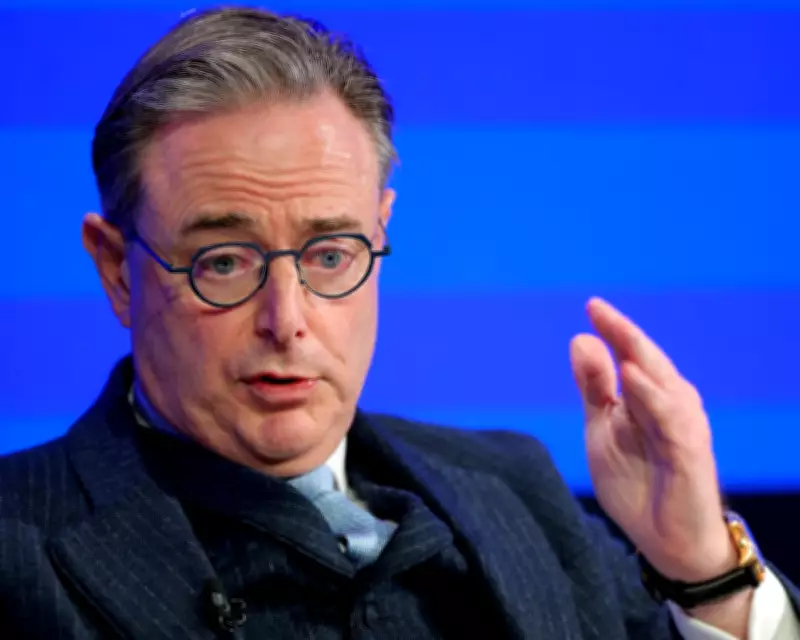
Belgian Prime Minister Bart De Wever has ignited a political firestorm across Europe by advocating for the normalisation of relations with Russia to restore access to cheap energy supplies. The Flemish nationalist leader's controversial remarks have drawn swift condemnation from within his own government and from international allies, who argue that such a move would embolden Vladimir Putin.
De Wever's Controversial Stance
In an interview with the Belgian newspaper L'Echo on Saturday, De Wever asserted that the European Union is "losing on all fronts" and must end the conflict in Europe's interest. He called for a dual strategy of rearmament alongside normalising ties with Russia to regain affordable energy, describing this approach as "common sense."
"In private European leaders tell me I am right, but no one dares say it out loud," De Wever claimed, suggesting widespread but unspoken support for his position among EU counterparts. He further argued that bringing Russia to its knees would require "100% support from the United States," adding that Washington sometimes appears closer to Putin than to Ukrainian President Volodymyr Zelenskyy.

Immediate Domestic Backlash
Belgium's Foreign Minister, Maxime Prévot, quickly distanced himself from the prime minister's comments. As a member of a centrist party within De Wever's coalition government, Prévot's rebuke carries significant weight. He emphasised that Russia continues to refuse European participation in negotiations while maintaining "maximalist demands."
"As long as this lasts, speaking of normalisation will be perceived as a sign of weakness that will sap European unity, which we need more than ever," Prévot stated. He warned that easing pressure on Moscow would amount to "giving Putin exactly what he wants."
International Concerns Echoed
The criticism extended beyond Belgium's borders when Lithuanian Foreign Minister Kęstutis Budrys addressed De Wever's comments on Monday. Budrys recalled Russia's demands from 2021, which preceded the full-scale invasion of Ukraine and included NATO removing troops and weapons from countries that joined the alliance after 1997.
This would effectively impact much of eastern Europe, including Poland, the Baltic states, and Balkan nations. "We know their demands coming back from '21. And that will be not only related to Ukraine, that will be related also to us and to the deployment of the forces and many other things," Budrys cautioned. He stressed that Europe must "collect our strength" and only engage with Russia from a position of power, citing the strategic use of frozen Russian assets held largely in Belgium.
History of Divergence from EU Mainstream
This incident is not the first time De Wever has positioned himself at odds with broader EU consensus. He previously played a key role in blocking the EU's proposed use of Russia's frozen assets to support Ukraine, arguing that Belgium could face legal liabilities to repay the funds. Instead, EU leaders agreed to a €90 billion (£78 billion) loan for Ukraine's war effort and public finances, though this plan faces ongoing obstruction from Hungary.
De Wever's preference for returning to cheap Russian energy also directly contradicts established EU policies. In December, the bloc committed to phasing out all Russian gas by November 2027 and reiterated its goal to end Russian oil imports by the end of that year.
EU Energy Commissioner's Rebuttal
EU Energy Commissioner Dan Jørgensen reinforced this commitment on Monday, stating that it is crucial to adhere to these targets. "We have been for too long dependent on energy from Russia, making it possible for Putin to blackmail us with energy, making it possible for Putin to weaponise energy against us," he told reporters.
Jørgensen emphasised that reverting to previous energy dependencies would be "a mistake for us to repeat what we did in the past," underscoring the EU's strategic shift away from Russian energy sources to prevent future coercion.
The ongoing debate highlights deep divisions within Europe regarding how to balance economic pressures with geopolitical principles, as leaders grapple with the long-term implications of the Ukraine conflict on energy security and international relations.